
How to Repair a Chimney Crown — Before the Next Monsoon Hits
Tier-by-tier on Valley roofs: when a $250–$400 sealer fixes it, when an $850–$1,400 rebuild is the right call, and the three-week May window that decides which.


The three weeks between Memorial Day and the official start of Arizona’s monsoon season are quieter than they look from the ground. From the roof, they’re loud — every south-facing chimney crown in the Valley is doing its final dry-season check-in. The difference between a $300 fix and a $1,400 rebuild usually comes down to what a homeowner notices in those three weeks. This is the field guide we wish more people read before they called us in July.
What a chimney crown actually is
The crown is the concrete or mortar slab on top of the chimney’s masonry. Its only job: shed water away from the brick or stucco below. It is not the cap — the cap is the metal-and-mesh fixture above it. The two get confused constantly.
Most Phoenix-area crowns are between 12 and 18 years old, which is roughly the lifespan of the cheaper concrete blends developers used through the 2000s. A roof-level inspection takes about 20 minutes and gives you an answer satellite imagery can’t.
Read the cracks before you touch anything

From the ground with a pair of binoculars, three things matter, in order of importance: the width of the cracks, whether the crown is separating from the brick at its edge, and water staining on the masonry below the crown.
- Tier 1 — Hairline. Thin cracks you can barely fit a fingernail into. Usually radial, fanning out from the flue opening. Sealable.
- Tier 2 — Structural. Cracks wider than a credit card edge, multiple intersecting cracks, or any crack with daylight visible from below. Needs rebuild.
- Tier 3 — Separated. The slab has lifted off the brick. You can see a gap at the perimeter. Chunks may already be on the ground. Full top-of-stack work.
The monsoon test — why we run it in late May
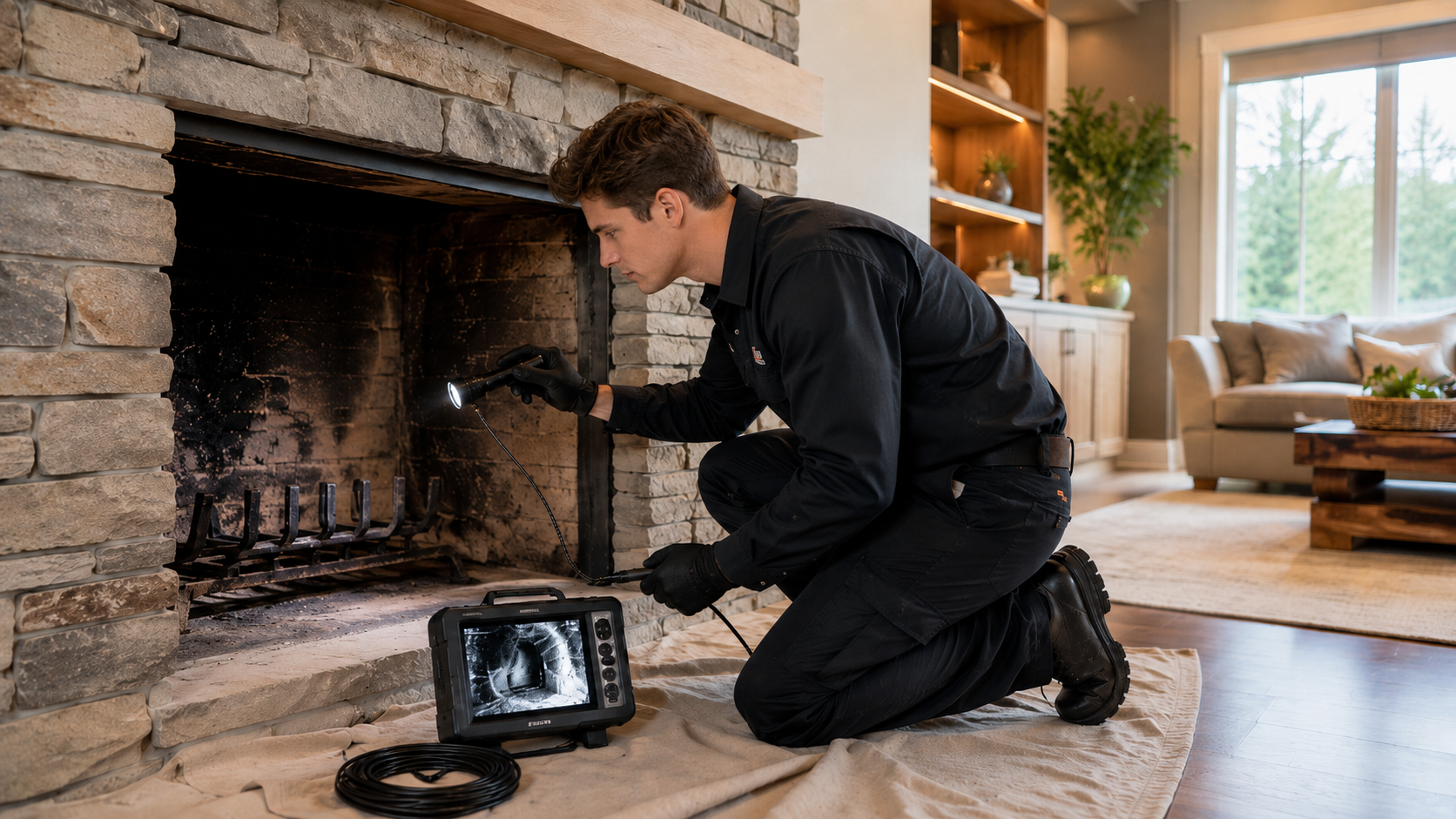
The test we run in late May is the same one you can run at home: a hose set to a gentle simulated-rain spray, run across the crown for three minutes, with a second person in the firebox watching for any moisture drip.
If your chimney leaks only after a monsoon storm, the crown is the first place we look. In Phoenix, a chimney that leaks during monsoon rain but is dry in winter is almost always a crown or flashing issue — not a liner issue.
Safety note: if water reaches drywall or any electrical junction, shut the breaker for that area before anything else. Do not climb onto a wet tile roof. Call and we’ll dispatch.

Seal it, or rebuild it? How we decide on the roof
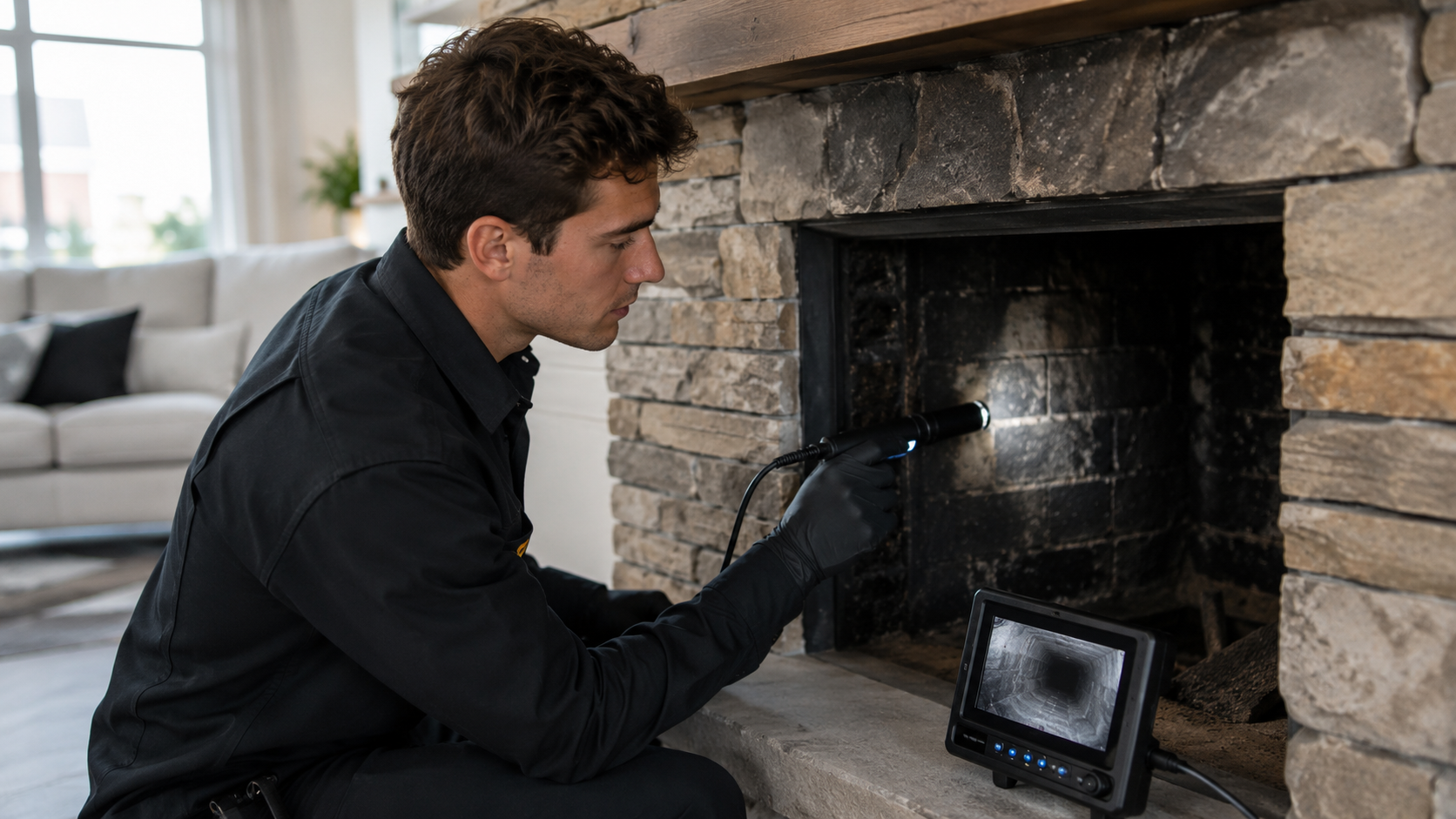
The decision tracks the three tiers above.
- Tier 1, hairline — seal. Crown sealing with SaverSystems CrownCoat or ChimneySaver. Extends crown life by ten-plus years. Cost band in the Valley: $250–$400. The single best preventive-maintenance dollar a chimney owner spends.
- Tier 2, structural — partial rebuild. Crown rebuild as a heavy skim coat or partial pour. Crown sealing and flashing repair together usually run $300 to $800; structural masonry can climb from there.
- Tier 3, separated — full rebuild. Per our cost FAQ: full repointing or a full crown rebuild runs $850 to $1,400. Often paired with cap replacement and a liner check.
A real example. We were called to a Gilbert chimney where a previous contractor had patched the crown three times with incompatible products. Each patch lasted one rainy season. We pulled it down, rebuilt it properly with CrownCoat, and the leak that had been there for years stopped on the first storm.
What we don’t recommend — even though everyone does
Two things you’ll see recommended online that we don’t agree with: applying sealer over a structurally compromised crown (“just to buy time”), and DIY mortar patches with bag mix from the hardware store. Both shorten the lifespan of the next real repair, and we end up tearing them off the following spring.
For an honest second opinion on what tier your crown is actually in, we provide a free roof inspection across the Valley — Phoenix, Scottsdale, Mesa, Tempe, Chandler, and Gilbert.

What this typically costs in the Valley
The numbers below come from our own service-page anchors and FAQ bank. We do not invent them.
- Crown sealing — $250 to $400.
- Crown rebuild (skim or partial) — $300 to $800 for crown-and-flashing class repairs.
- Full crown rebuild — $850 to $1,400.
- Cap replacement — $250 to $450.
For wider context, see annual chimney maintenance cost in Arizona and what chimney cleaning costs in Arizona.
When to call somebody — without making it weird
Call when the May hose test produces any moisture in the firebox, when you can see daylight in any of the crown’s cracks, or when the brick below the crown has new staining you didn’t see last fall. We don’t push, and the diagnostic is free.
Most weeks we can be on a Valley roof within the same week outside the October–December peak. Crown sealing is a half-day job; a rebuild is a full day. We diagnose first, quote in writing, and never upsell a rebuild when a seal will do.
Direct line: (602) 536-8034.
Jump to your city: Phoenix · Scottsdale · Mesa · Chandler · Gilbert · Paradise Valley.
Frequently Asked Questions
How much does a chimney crown repair cost in Phoenix?
Crown sealer (the sealer tier) runs $250–$400 and covers hairline cracks with no water penetration. A full crown rebuild runs $850–$1,400 and is the right call when the crown is separating from the brick or water has already entered the masonry. Most Valley crowns fall into one of these two tiers; intermediate patches are rarely worth the cost.
Can I seal a chimney crown myself?
Sealer products are available at hardware stores, but the deciding factor is whether you can read the crown correctly from the roof. Most homeowners who DIY the application on a crown that needed a rebuild end up paying for the rebuild anyway within 12 months — the sealer doesn’t hold over compromised structure. If you’ve done the May hose test and confirmed no firebox moisture, DIY is fine. If you haven’t, it isn’t.
How long does a crown rebuild take?
The pour itself is a two-day job — demolition and forming on day one, concrete pour and finishing on day two. The crown is touch-cured in 24 hours and fully cured in 7–10 days, during which time we recommend not lighting the fireplace.
Does homeowners insurance cover chimney crown repair?
Almost never for gradual wear, which is what the vast majority of crown cracks are. Insurance does cover crown damage from named storm events — a microburst, lightning strike, haboob with measurable impact — and from accidental damage like a tree fall. If your crown failed during a documented storm, we can write the inspection report to support the claim.
What’s the difference between a chimney crown and a chimney cap?
The crown is the concrete slab on top of the chimney’s masonry. The cap is the metal hood that sits inside the flue opening, blocking rain and animals from entering the flue itself. Both can fail; both are part of a complete chimney crown inspection.
Should I rebuild now or wait until after monsoon?
Rebuild before. A compromised crown taking a full monsoon season’s worth of rain typically pushes the repair scope from “crown only” to “crown plus flashing plus masonry repointing,” which is a different budget conversation. The three weeks between late May and June 15 are the right window in Phoenix.