
Is a Cracked Chimney Crown Serious? Here’s When to Call Right Away
Sometimes it’s a $250 crown seal. Sometimes it’s a full rebuild. Here’s how we tell the difference on Valley roofs — and the monsoon-season test that decides which one you’re dealing with.

Last August after a monsoon cell dumped three inches on the Arcadia area, we pulled a chimney crown apart that had hairline cracks nobody could see from the ground. The homeowner had been living with it for years — the only reason we caught it that day was that the seal had finally let go and water was coming down the firebox wall.
What a chimney crown actually is (30-second version)
The crown is the concrete or mortar slab on top of the chimney. Its job is one thing — shed water away from the masonry below. It is not the cap. The cap is the metal-and-mesh fixture above it.
Arizona crowns fail differently than national averages, and the reason is local. A 110° August day, a 60° August night, and monsoon rain hitting hot masonry — that cycle works the slab harder than four mild seasons in Ohio ever would. Slump-block stacks from the 70s and 80s, common across the Valley, are particularly prone to a slow seam crack.
What a serious crown crack actually looks like

We sort what we see on the roof into three tiers.
- Tier 1 — Hairline. Thin, single-line cracks you can barely fit a fingernail into. Usually radial, fanning out from the flue opening. Very common. Fixable with a sealant coat.
- Tier 2 — Structural. Cracks wider than a credit-card edge, multiple intersecting cracks, or any crack with daylight visible from below.
- Tier 3 — Separated. The slab has lifted off the brick. You can see a gap at the perimeter. Chunks may already be on the ground.
There is an Arizona-specific tell worth naming. Paradise Valley estates from the 80s have slump-block chimney crowns that crack along a predictable seam from thermal cycling — we see it on roughly one in three inspections in that zip code. That figure is from our own service history, not a third-party study.
The monsoon test — why August tells the truth
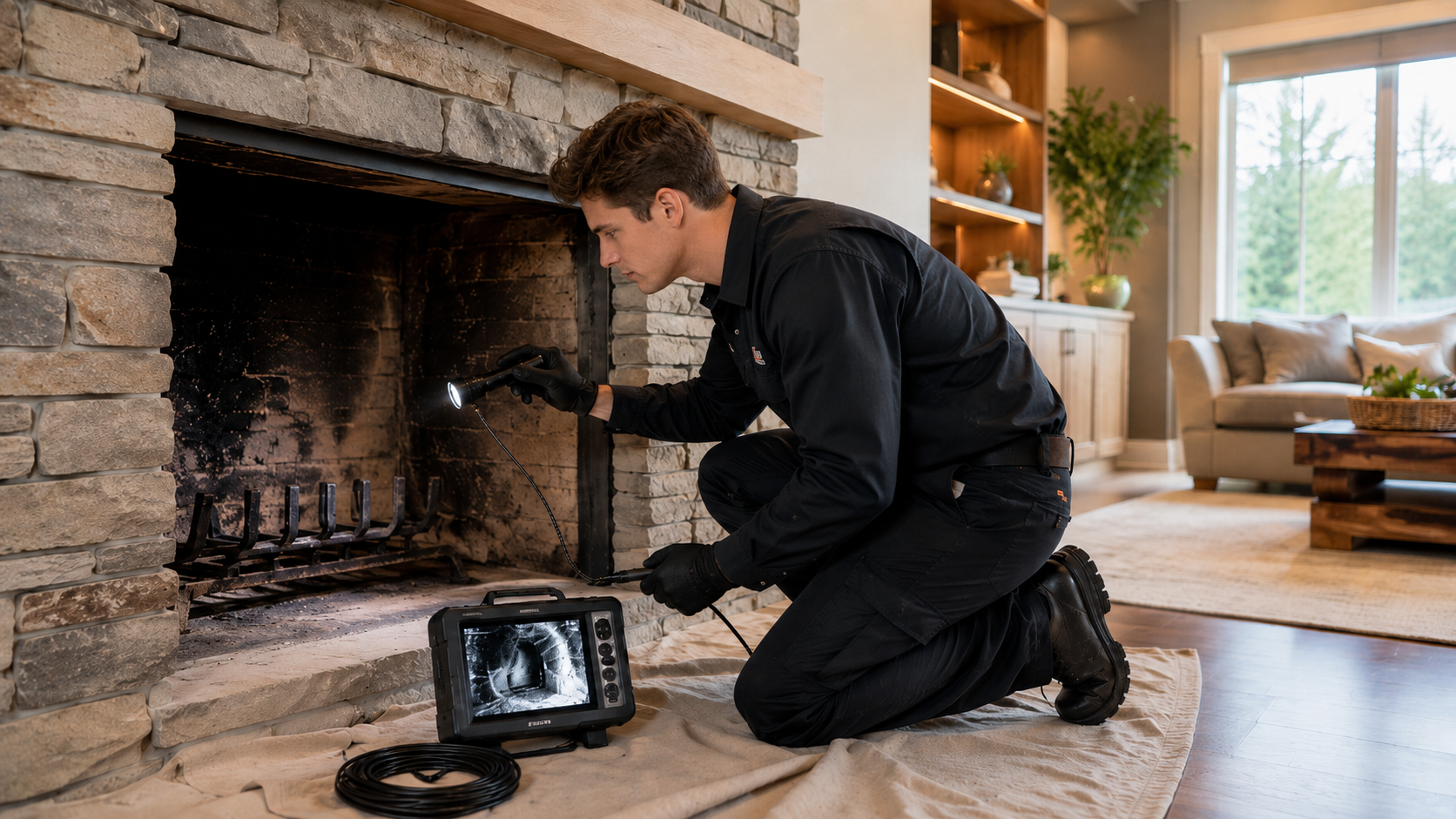
If your chimney leaks only after a monsoon storm, the crown is the first place we look. In Phoenix, a chimney that leaks during monsoon rain but is dry in winter is almost always a crown or flashing issue — not a liner issue.
The diagnostic order on the roof is top-down: crown, then cap, then flashing, then liner. Most leaks resolve at step one or two. The reason monsoon exposes cracks that dry months hide is simple. Water needs a path, and dust and soot pack hairlines closed all spring. The first heavy storm flushes them back open.
One safety note, in plain language: if water reaches drywall or any electrical junction, shut the breaker for that area before anything else. Do not climb onto a wet tile roof. Call and we will dispatch.
Seal it, or rebuild it? How we decide on the roof
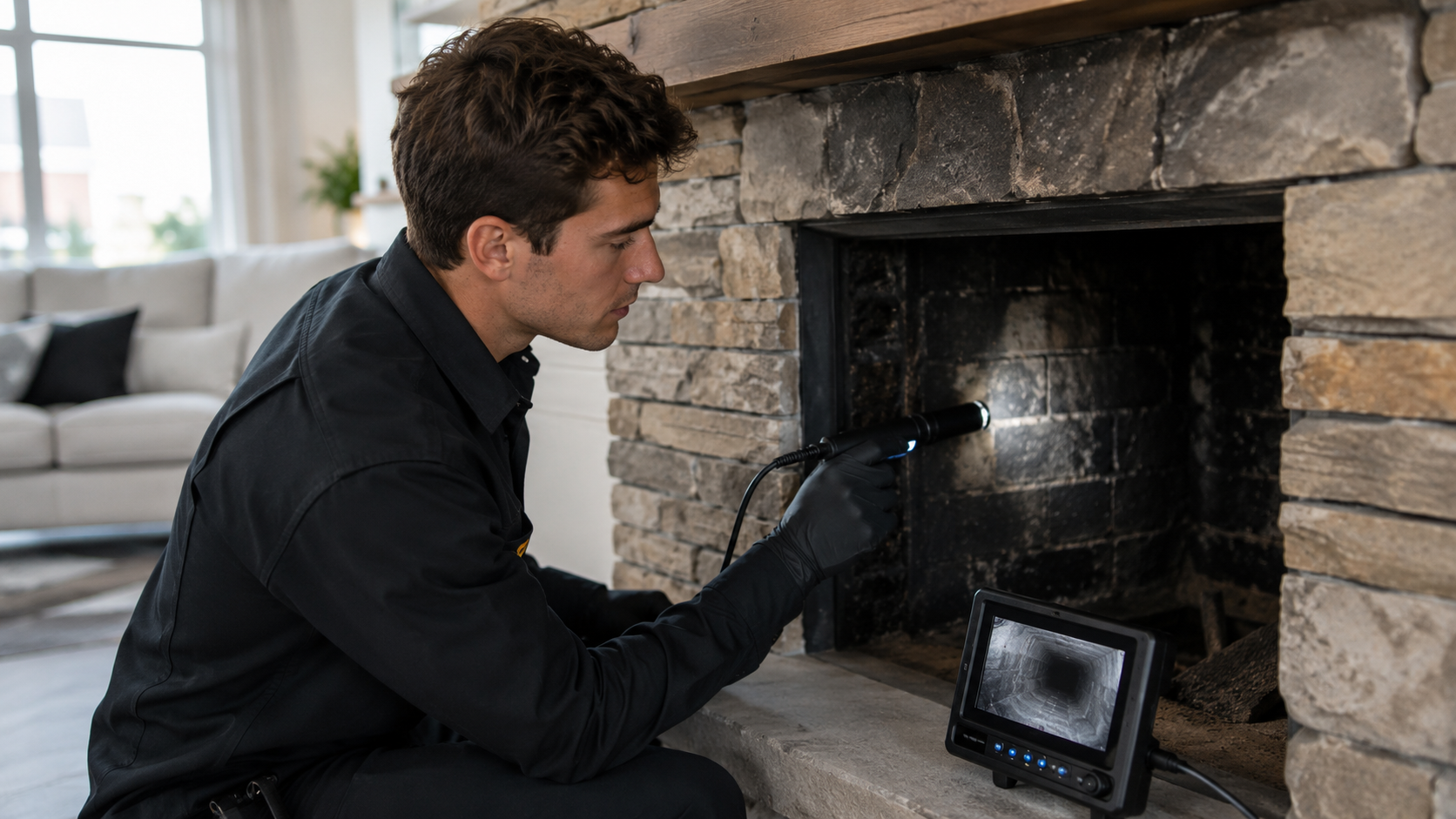
The decision tracks the three tiers above.
- Tier 1, hairline. Crown sealing with SaverSystems CrownCoat or ChimneySaver. Extends crown life by ten-plus years. Cost band in the Valley: $250–$400. It is the single best preventive-maintenance dollar a chimney owner spends.
- Tier 2, structural. Crown rebuild — either a heavy skim coat or a partial pour. Per our published cost ranges, crown sealing and flashing repair usually run $300 to $800; structural masonry work can climb from there.
- Tier 3, separated. Full top-of-stack work. Per our cost FAQ: full repointing or a full crown rebuild runs $900 to $2,200. Often paired with cap replacement and a liner check.
A real example. We were called to a Gilbert chimney where a previous contractor had patched the crown three times with incompatible products. Each patch lasted one rainy season. We pulled it down, rebuilt it properly with Crown-Coat, and the leak that had been there for years stopped on the first storm.
When “serious” becomes “right-now” serious
A cracked crown moves up the calendar fast in four situations.
- Active water. Water reaching the firebox, a drywall ceiling, or an electrical junction is an emergency call. See emergency chimney repair in Arizona.
- Storm event. Haboob, microburst, or lightning. Get eyes on the crown within thirty days. We once handled a Carefree chimney that had been struck by lightning during a July storm — no fire, but enough damage to the crown and liner that the whole top of the stack needed a rebuild. See storm-damage chimney repair.
- Cracked crown plus missing cap. That combination invites animal nesting in the flue. Bundle the fix.
- Pre-listing or pre-purchase. In Phoenix, Scottsdale, and Paradise Valley closings, title companies often name the inspector, and a cracked crown almost always shows up as a Level 2 contingency item.
What this typically costs in the Valley
The numbers below come from our own service-page anchors and FAQ bank. We do not invent them.
- Crown sealing — $250 to $400.
- Crown rebuild (skim or partial) — $300 to $800 for crown-and-flashing class repairs.
- Full repointing or full crown rebuild — $900 to $2,200.
- Cap replacement — $250 to $450.
Bundling matters. In Mesa we recently consolidated three separate chimney issues on the same home into one visit — crown sealing, cap replacement, and a flue scrub. The homeowner saved about thirty percent versus three separate trip charges. If your inspection finds two or three small items, ask whether they can ship in one visit.
For the wider context, see annual chimney maintenance cost in Arizona and what chimney cleaning costs in Arizona.
Can you DIY a crown seal?
Yes, for Tier 1 hairlines — with three conditions. You are comfortable on a tile roof. You have a dry-weather morning window. You can wire-brush the crown clean and prep it without leaving loose debris.
No for Tier 2 or Tier 3. A skim coat over a structural crack hides the problem for one season and traps moisture under the new layer. We have had to chisel exactly that off, and the rebuild that follows is harder and more expensive than the one that would have been done in the first place.
If a tile roof and a kneeling pad in August do not sound like a great Saturday, that is the answer.
How we’d handle it — and how to book
Most weeks we can be on a Valley roof within the same week outside the October–December peak. Crown sealing is a half-day job; a rebuild is a full day. We diagnose first, quote in writing, and never upsell a rebuild when a seal will do.
Direct line: (602) 536-8034.
Jump to your city: Phoenix · Scottsdale · Mesa · Chandler · Gilbert · Paradise Valley.
Frequently Asked Questions
How much does chimney repair cost in Arizona?
Typical chimney repairs in the Valley run $189 to $1,500 depending on scope. A cap replacement is usually $250–$450, crown sealing $250–$400, and full repointing or crown rebuild $900–$2,200. Structural masonry work can run higher. We diagnose first and quote in writing.
How much does chimney repair cost (more general bands)?
Repair costs vary widely by scope — crown sealing and flashing repair usually run $300 to $800, while liner replacement or structural masonry work can reach several thousand. We diagnose first and quote before any work begins.
Why is water leaking down my chimney during monsoon season?
The three usual suspects are a cracked crown, a missing or damaged cap, and failed flashing where the chimney meets the roof. Monsoon storms expose existing defects — leaks don’t start in July; they just become visible in July.
Why is my chimney leaking during rain (any season)?
Leaks during rain usually trace back to a cracked chimney crown, failed flashing where the chimney meets the roof, or a missing or damaged cap. Arizona monsoon rains expose these weaknesses fast — water finds the path of least resistance and follows it down.
What do I do if my chimney is leaking right now?
If water is actively coming in, place a bucket or towel, and if it’s reaching electrical or drywall, shut off the breaker for that area. Don’t try to climb onto a wet roof. Call us and we’ll dispatch.
How much does chimney flashing repair cost?
Flashing repair in the Phoenix area typically runs $300 to $900 depending on roof type, chimney size, and how much sealant and counter-flashing work is required. Many crown leaks are actually flashing leaks — we test both before recommending a fix.