
Gas Fireplace Won’t Light? A Phoenix Troubleshooting Guide
A field-tested walkthrough for the four most common reasons a gas fireplace stops working — what you can safely check yourself, and where to stop and call a specialist.
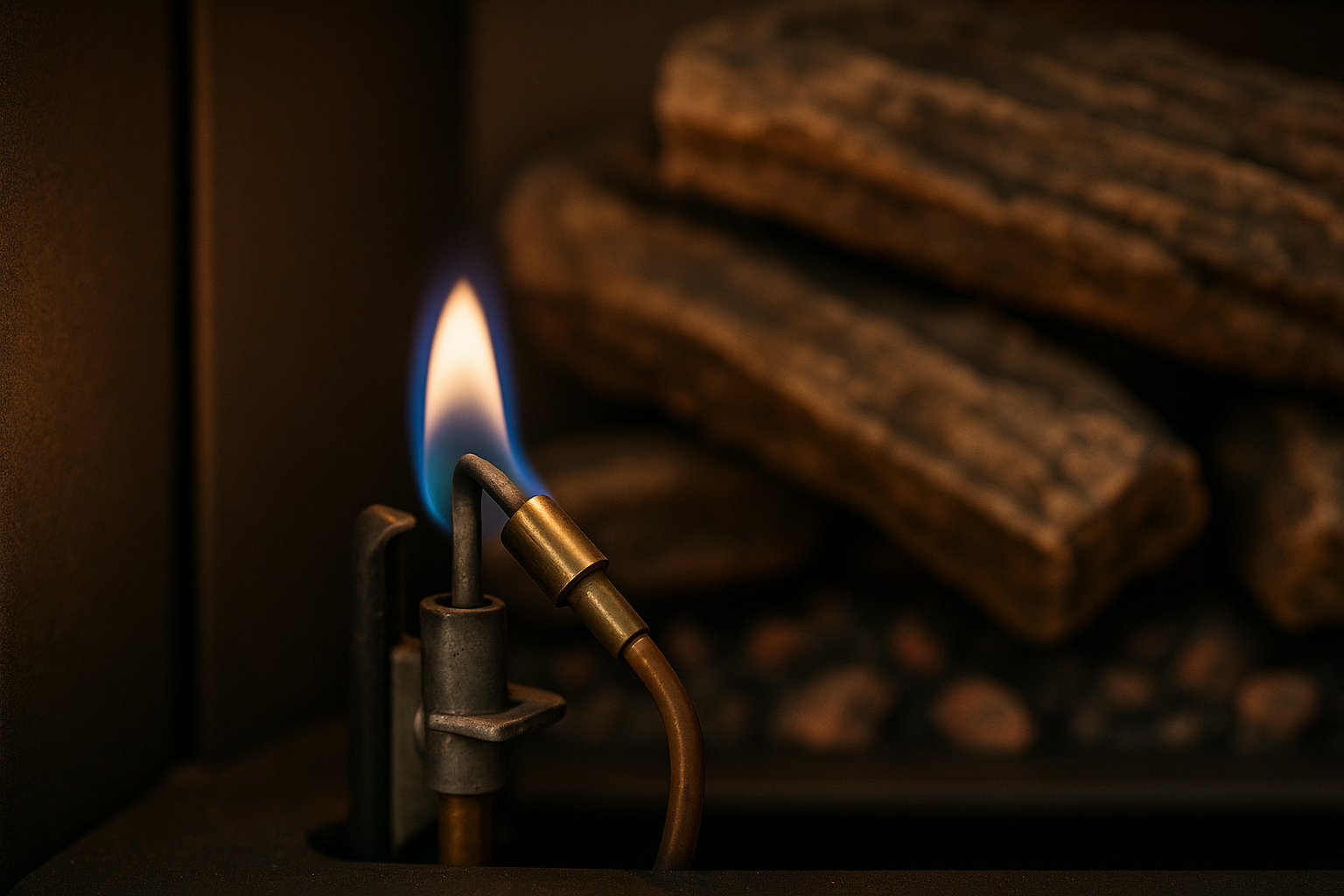
Most “my gas fireplace won’t light” calls we take in Phoenix fall into a small handful of failure modes. Here’s the diagnosis flow we use on a service call, written so you can do the safe checks yourself before the diagnostic visit — and know which symptom maps to which fix when the contractor quotes you.
The 60-second check before anything else
Before assuming a part has failed, rule out the boring explanations. This is the first thing we do on a service call too — about 1 in 8 “broken fireplace” tickets turn out to be one of these.
- Gas valve open? Follow the gas line from the fireplace back to where it tees off. Look for a quarter-turn lever valve. Handle parallel to the pipe = open. Perpendicular = shut. Houses sometimes get this shut during a service call and forgotten.
- Wall switch and remote. Many gas fireplaces are wired to a wall switch (looks like a light switch). Toggle it. If you have a remote with a receiver, replace the receiver batteries (typically AA in the receiver box behind a kick plate or louver, not just the remote handset).
- Breaker not tripped. Direct-vent units with a blower draw 120V power. Check the breaker panel for a tripped breaker labeled “fireplace” or “family room.”
- Propane tank not empty. Sounds obvious. Half of all “fireplace won’t light” calls in propane homes during winter peak are an empty tank.
- Pilot light visible? Look through the firebox glass. Some units have a continuous pilot (small flame always burning). Others use intermittent pilot ignition (no flame until you call for heat). If you don’t know which yours is, check the manual or the data plate inside the louver.
If those five checks come up clean, you’re into a component failure — and the symptom tells you which one.
Pilot lights but won’t stay lit — thermocouple

This is the single most common failure on a gas fireplace 5+ years old. You hold the pilot button down, the pilot lights, you release the button, and the pilot goes out within 5–30 seconds. Every time.
What’s happening: the thermocouple is a small brass probe sitting in the pilot flame. When the flame heats it, it generates a tiny voltage (~25–30 millivolts) that holds the gas safety valve open. When the thermocouple weakens (oxidation, soot buildup, or simple age), the voltage drops below the valve’s drop-out threshold, the valve closes, and the pilot shuts off.
Quick test: if the pilot relights easily and burns clean, but won’t hold after releasing the button — 95% chance it’s the thermocouple. Test with a multimeter set to millivolts DC: a healthy thermocouple reads 25mV+ with the pilot lit. Below 18mV is failing.
Fix: thermocouple swap. The part is $15–$30. In Phoenix, a specialist visit including diagnostic, part, and labor runs ~$189 — same-day on most service calls. DIY-capable if you’re comfortable working with gas connections and have a wrench, but the universal-fit thermocouples sold at hardware stores often don’t seat properly in the pilot bracket and create a slow leak. Worth the $189 to have a tech do it right.
Pilot stays lit but main burner won’t ignite — thermopile
Different failure, similar-looking part. You see a healthy pilot light. You hit the wall switch or remote. Nothing happens. Or the main burner lights for 30 seconds and then shuts off.
The thermopile looks like a fatter version of the thermocouple — same brass-probe-in-the-pilot-flame setup, but it generates much more voltage (350–750 millivolts) and powers the millivolt circuit that opens the main burner valve when you call for heat. When the thermopile weakens, the pilot still has enough voltage to hold the safety valve open (that’s the thermocouple’s job), but not enough to open the main valve.
Quick test: multimeter on the TH/TP terminals of the gas valve, pilot lit, switch off. A healthy thermopile reads 450mV+ open-circuit. Then turn the switch on (calling for heat) and read across TH/TPTH — should still read 350mV+ under load. If it drops below 250mV under load, replace it.
Fix: thermopile swap. Part is $25–$45. In Phoenix, specialist visit runs ~$249. Slightly trickier than the thermocouple because the millivolt wiring has to reconnect to the gas valve terminals correctly — mixed-up TH and TP wires won’t damage anything but the main burner won’t fire.
No pilot at all on an intermittent-ignition unit — igniter or module
Newer gas fireplaces (most units made 2010+) use intermittent pilot ignition — the pilot only lights when you call for heat. You hit the switch, you hear a click-click-click of the spark generator, and the pilot should light within a second or two.
Three failures cluster here:
- No clicking at all. Ignition module or wall switch is dead. Check the module’s power supply (typically a small transformer in the receiver box). Module replacement is $150–$300 in parts; labor brings the visit to $350–$450.
- Clicking but no spark. Igniter electrode is cracked, sooted, or the gap is wrong. Clean it with a wire brush, check the gap (typically 1/8″ to the pilot hood), and re-test. If still no spark, replace the electrode — $20–$50 in parts, ~$250–$350 with labor.
- Sparking but no gas. Pilot tube is clogged with dust, spider webs (this is genuinely common in Phoenix — black widows and crab spiders love pilot tubes), or insect bodies. Compressed air through the orifice with the gas off, then a re-test. $125–$185 service call.
The pattern: if you can hear the click but the pilot doesn’t light, the gas isn’t getting to the spark. If you can hear the click but don’t see a spark, the electrode is the issue. If there’s no click at all, the module or wall switch failed.
Yellow flame, sooting, or weird smell — combustion problem
Pilot lights, main burner lights, but the flame is yellow and lazy instead of mostly blue, and you’re seeing soot on the glass or smelling something off. Don’t keep running it.
Yellow flame means incomplete combustion — the burner isn’t getting enough air relative to gas. Causes, in order of frequency:
- Air shutter mis-adjusted. Small sliding plate on the burner that controls primary air. Backed off, the flame goes yellow. Re-tune is $125–$185.
- Dust buildup on the burner ports. Common in Phoenix because of the seasonal use cycle — sit unused April through October, gets dusty, runs yellow when you fire it up in November. Burner clean + refractory clean: $185–$285.
- Logs out of position. Ceramic log sets have to be placed exactly according to the manufacturer’s diagram. A log shifted into the flame path creates the yellow-flame problem and produces soot. Free fix — just check the placement against the unit’s manual.
- Cracked refractory panels. Less common, but a crack changes the burn chamber geometry. Replacement panels are $80–$200 each, plus labor.
What you should not DIY on a gas fireplace
The four diagnoses above include “homeowner-checkable” things (gas valve, batteries, log placement, dust on the burner ports). Below this line, it’s pro work:
- Gas valve replacement. The control valve at the heart of the unit. Disconnecting it, swapping it, and re-pressure-testing the gas connections requires a gas-line endorsement under Arizona ROC rules. $400–$650 by a specialist.
- Any work that requires breaking a gas connection. Even competent DIYers create slow leaks because the hardware-store sealant is the wrong type for high-pressure natural gas. A specialist soaps every joint and pressure-tests before signing off.
- Anything inside a sealed direct-vent unit. If the unit has a glass door that bolts shut and a coaxial vent (two pipes, one inside the other), the unit is a sealed combustion appliance. Removing the glass on a sealed unit and re-installing it without checking the gasket can cause backdraft and CO problems.
- Repeated relights after a failed start. If you smell gas after a failed light attempt, do not keep trying. Walk away for 10–15 minutes with windows open and the gas valve shut. Persistent relight attempts after gas has built up in the firebox can flash.
For everything below that line, see our companion piece on who’s actually qualified to fix a gas fireplace in Phoenix.
What gas fireplace repair costs in Phoenix
Rough pricing by symptom, for the Phoenix metro in 2026. Every visit includes the $99 diagnostic, credited toward the repair if you proceed:
- Thermocouple replacement — ~$189
- Thermopile replacement — ~$249
- Pilot orifice clean-out — $125–$185
- Igniter / electrode replacement — $250–$350
- Ignition module replacement — $350–$450
- Burner clean + refractory clean — $185–$285
- Gas valve replacement — $400–$650
- Refractory panel replacement (per panel) — $140–$280
For a full breakdown of chimney repair pricing too (crown sealing, cap replacement, flashing), see our chimney repair cost guide.
Where we work in the Valley
Direct line: (602) 536-8034. Mon–Fri 8am–6pm. $99 diagnostic, credited toward any repair. Same-week appointments most weeks — same-day for no-heat situations during the December–February peak.
Cities we cover: Phoenix · Scottsdale · Mesa · Tempe · Chandler · Gilbert · Glendale · Peoria · Paradise Valley.
Frequently Asked Questions
Why won’t my gas fireplace light?
Four common causes. (1) Gas valve closed, propane tank empty, breaker tripped, or pilot button not held long enough — the 60-second homeowner checks. (2) Thermocouple failed (pilot lights but won’t stay lit after you release the button). (3) Thermopile failed (pilot stays lit but main burner won’t ignite). (4) Igniter or ignition module failed (no spark, no pilot at all on intermittent-pilot units). Each has a different fix and price.
How do I fix a gas fireplace that won’t light?
Work through the diagnosis flow. Confirm gas is on, the breaker isn’t tripped, and you can see the pilot or hear the igniter clicking. If the pilot lights but won’t stay lit, suspect the thermocouple (~$189 to replace). If the pilot stays lit but the main burner won’t fire, suspect the thermopile (~$249). If there’s no spark at all on an intermittent-ignition unit, suspect the ignition module or electrode ($250–$450). Don’t keep trying to relight a fireplace that won’t stay lit — unburned gas can build up in the firebox.
How do I fix a pilot light on a gas fireplace?
If the pilot lights but won’t stay lit when you release the button, the thermocouple is failing. It’s a brass probe sitting in the pilot flame that generates ~25mV to hold the gas safety valve open. Once oxidized, voltage drops below the valve’s threshold and the pilot shuts off. The part is $15–$30; a specialist visit including diagnostic and install runs ~$189 in Phoenix. If the pilot won’t light at all on an intermittent-ignition unit, suspect the igniter or a clogged pilot orifice instead.
Why does my gas fireplace pilot light keep going out?
Almost always a failing thermocouple. The thermocouple generates a small voltage from the pilot flame heat that holds the safety valve open; when it weakens with age (typically 5–10 years), the voltage drops below the valve’s drop-out threshold and the pilot shuts off. Less common causes: pilot flame too small to fully heat the thermocouple tip (indicates a partially clogged pilot orifice), or a misadjusted thermocouple bracket that’s positioned the probe wrong relative to the flame.
How to fix a thermocouple on a gas fireplace?
Thermocouples are not repaired — they’re replaced. The part costs $15–$30. The job: shut the gas at the appliance valve, unscrew the thermocouple nut from the gas safety valve (typically 7/16″ wrench), unclip the probe from the pilot bracket, route the new thermocouple along the same path, clip the probe back into the bracket so the tip sits 3/8–1/2″ deep in the pilot flame, and reconnect to the valve. Then relight the pilot and confirm it holds. In Phoenix, a specialist does this for ~$189 including diagnostic and warranty on the work.
How to fix yellow flame on gas fireplace?
Yellow flame means incomplete combustion (too little air relative to gas). Four causes in order of frequency: air shutter mis-adjusted on the burner (re-tune $125–$185), dust buildup on the burner ports (clean $185–$285), ceramic logs out of position blocking the flame (free, just re-place per the manual diagram), or cracked refractory panels altering combustion geometry ($140–$280 per panel). Don’t keep running a yellow-flame fireplace — incomplete combustion produces carbon monoxide.
How long does gas fireplace repair take?
Most repairs are completed in a single visit, 30 minutes to 2 hours total. Thermocouple swap: 30–45 minutes. Thermopile swap: 45 minutes. Igniter/electrode replacement: 1 hour. Pilot orifice clean-out: 1 hour. Gas valve replacement: 1.5–2 hours (gas-line work adds time). Burner clean: 1.5 hours. Only multi-part jobs (e.g., valve + thermopile + refractory panel together) require a second visit, and we tell you that upfront after the diagnostic.
Can a plumber fix a gas fireplace?
Usually not. Plumbers are licensed for the gas line up to the appliance shut-off valve — the work on the fireplace itself (thermocouples, thermopiles, gas valves, igniters, refractory) requires combustion-controls training that’s outside plumbing licensing. A good plumber will tell you on the phone they can’t do the repair and refer you to a chimney-and-fireplace specialist. See who’s actually qualified to fix gas fireplaces in Phoenix for the full credential breakdown.
How much does it cost to fix a gas fireplace?
Most repairs run $189–$650 in the Phoenix metro. Thermocouple ~$189. Thermopile ~$249. Igniter/electrode swap $250–$350. Ignition module $350–$450. Pilot orifice clean $125–$185. Gas valve $400–$650. Burner + refractory clean $185–$285. Refractory panel $140–$280 per panel. Diagnostic visit is $99, credited toward any repair. We quote in writing before starting any work. Full breakdown: our chimney repair cost guide.