
How Much Does Chimney Repair Cost in Phoenix? A Tier-by-Tier Breakdown
Real prices on Valley roofs in 2026 — crown sealing, rebuilds, flashing, caps, and full repointing — plus the four things that bump cost up.

The honest answer to “how much does chimney repair cost?” is the same one any roofer will give you: it depends what’s broken. The useful answer — the one we wish more homeowners got on the first call — is a tier-by-tier breakdown of what each component costs in the Phoenix Valley, what the four cost-drivers are, and which combinations show up most often on homes built in the 1980s and 90s.
This is that breakdown. Pricing here reflects what we actually charge on Valley roofs in 2026, not national-average numbers that don’t account for tile roofs, monsoon climate, and slump-block masonry common to Phoenix-area builds.
The four things that move chimney repair cost up
Before the tiers, the big-picture: four things drive cost variance more than anything else, in order of impact.
- Roof type. Tile roofs add 15–25% to most jobs vs. asphalt shingle — tile is fragile, harder to walk safely, and broken tiles cost $8–$15 each to replace if we accidentally crack one.
- Chimney height. A single-story rambler chimney is one thing. A two-story Paradise Valley estate stack with 28 feet of brick is another. Scaffold or lift rental kicks in at certain heights.
- How many things failed. A crown crack alone is one quote. Crown crack + cap missing + flashing lifted is three jobs bundled. Bundling saves a trip charge but the underlying parts and labor stack.
- Access. If the chimney sits 20 feet from a steep-pitch tile-roof valley, the work is slower and the safety setup is bigger.
Crown sealing — $250 to $400

This is the most common chimney repair we do, and the lowest-cost real fix. Crown sealing is a polyurethane-elastomer coat applied over a structurally-sound concrete crown with hairline cracks. It bridges the cracks, waterproofs the surface, and adds 6–10 years to the crown’s life.
The job is a half-day on the roof. Sealer cures in 24 hours; full effectiveness within a week. Cost: $250–$400 depending on chimney size and roof access.
What it doesn’t cover: sealer cannot fix a crown that’s separating from the brick at its edge, a crown with cracks wider than a credit card, or any crown with daylight visible through it from the firebox below. Those are Tier 4 work.
Cap replacement — $250 to $450
The cap is the metal mesh fixture that sits in the flue opening blocking rain, animals, and embers from entering the chimney itself. Caps fail in three ways: the mesh tears (animals chew through), the welds rust through, or the entire cap blows off in a haboob.
A stainless steel single-flue cap is $189–$295 installed. Multi-flue covers and custom shrouds for larger chimneys run $350–$650. Don’t try to patch a rusted-out cap — the cost difference between a patch attempt and a clean replacement is minor, and the replacement lasts 15+ years.
If your cap is missing and your chimney has been open for any length of time, also budget for an interior cleaning — chimney sweeps run $189–$325 and you’ll want to clear out any nesting material before lighting the fireplace.
Flashing repair — $300 to $900
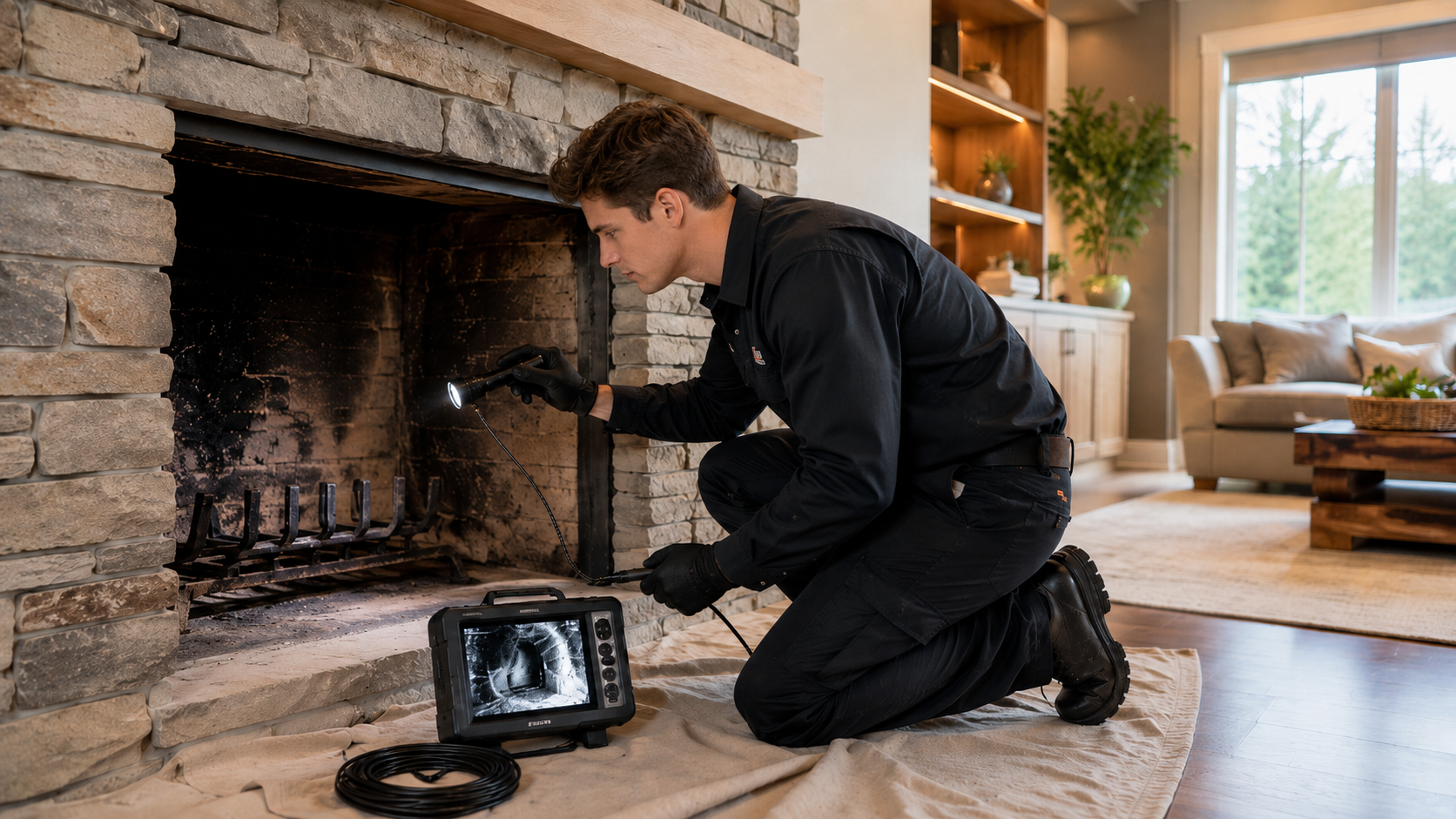
Flashing is the metal collar where the chimney meets the roof — the most common chimney leak source by volume. It fails when the sealant degrades, when the counter-flashing lifts, or when a poorly-done original install never sealed properly.
Sealant-only refresh: $300–$450. Re-flash with new counter-flashing and step-flashing: $550–$900. Sealant-only is fine if the metal flashing itself is intact — we test by lifting the edge with a putty knife. If it lifts more than 1/8 inch, you need a re-flash.
The diagnostic step matters here: many homeowners assume their leak is a crown issue when it’s actually flashing. We hose-test both before quoting.
Full crown rebuild — $850 to $1,400
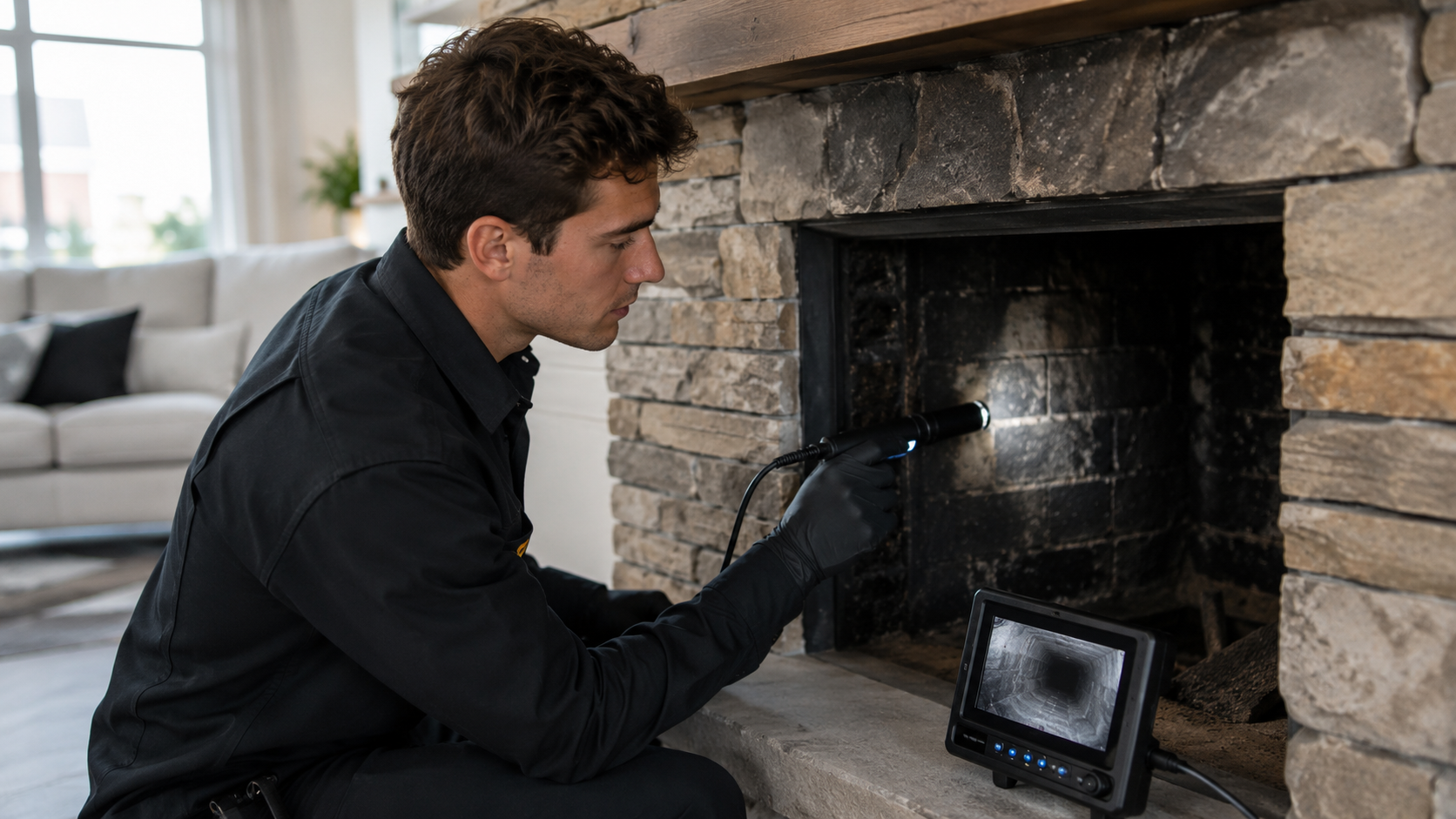
When the crown is structurally compromised — separated from the brick, cracks wider than a credit card, multiple intersecting cracks, or visible daylight from below — sealing is a band-aid. The right fix is a full demolition and rebuild.
The process: chip out the failed crown, re-form with proper overhang and slope, pour fresh concrete with fiber reinforcement, install an expansion joint at the brick-to-concrete junction, and cure for 7–10 days. Cost: $850–$1,400.
The +$300 to $1,400 depends on chimney size and whether we also need to replace the cap (which we usually do on Tier 4 jobs because the old cap rarely fits the new crown geometry).
Tuckpointing and brick repair — $450 to $2,200
The brick itself fails over time. Mortar joints crumble; individual bricks crack and lift. Tuckpointing is the process of grinding out failed mortar and re-packing the joints with fresh mortar matched to the original color.
Partial tuckpointing (one face): $450–$900. Full chimney repointing (all four sides): $900–$2,200 depending on chimney height and brick condition.
Brick replacement on top of tuckpointing adds $25–$45 per brick depending on availability of matching brick. Older slump-block bricks from 1970s–80s Phoenix builds can be hard to source — we have a small reserve we use for these jobs, but if we’re matching a rare brick we may need to mortar-tint a new one to match the patina.
Does homeowners insurance cover any of this?
Almost never for gradual wear — which is what 90% of chimney damage in Phoenix is. Heat-cycling cracks from August sun + monsoon storms cause the cracks; insurance treats that as deferred maintenance, not a covered event.
Insurance does cover damage from named events: lightning strikes, microbursts, haboob impact, falling trees, and chimney fires. If your damage is from a documented storm or named event, we provide a Level 2 inspection report with dated photos to support the claim. Most insurers in Arizona accept our report format.
The decision tree we walk homeowners through: If a storm date is verifiable (NOAA records, news coverage, a neighbor confirming damage), file the claim. If the damage is gradual (a hairline you noticed last spring), it’s out of pocket. Don’t file claims you’ll lose — failed claims raise premiums.
Bundling — how to save when multiple things are wrong
Most homes that haven’t had chimney service in 10+ years need more than one thing. Crown crack + cap missing + flashing lifted is a common combo. Here’s how to think about bundling:
- Same-day bundling saves ~25%. One trip charge ($89), one scaffold setup, one inspection, three jobs done in one visit. Two separate trips would have us out twice and you’d pay two diagnostic charges.
- Don’t postpone the structural part. If you have a Tier 4 crown rebuild AND a cap replacement on the same chimney, do them together. Doing the cap first and rebuilding the crown six months later means we install the cap, then chip it off (it can’t survive a crown demo) and reinstall. We’ve seen this; the homeowner saved nothing.
- Schedule before monsoon. Late May through early June is the right window in Phoenix — before the storms force the issue and before October when our calendar fills with chimney sweep + inspection bookings.
For wider cost context, see annual chimney maintenance cost in Arizona and storm-damage chimney repair.
When repair urgency moves up the calendar
A cracked crown moves from “schedule it” to “schedule it now” in four situations.
- Active water in the firebox or on drywall. Place a bucket, shut off electricity to that area if it’s reaching a junction box, and call us. See emergency chimney repair in Arizona.
- Visible daylight from inside the firebox through any crown crack.
- Cap blown off in a recent storm. Open chimney = animal nesting risk + interior water damage. Cap install is fast ($189–$295) and prevents a $1,500 cascade.
- Real-estate transaction. In Phoenix, Scottsdale, and Paradise Valley closings, title companies often require a current Level 2 chimney inspection. Any crown crack flagged in the report needs to be addressed before close.
For non-urgent issues, the calendar that works best: inspection in late May, repair before mid-June, sweep + recheck after monsoon ends in mid-September.
Direct line: (602) 536-8034. Diagnostic is $99 and credited toward the repair.
Jump to your city: Phoenix · Scottsdale · Mesa · Chandler · Gilbert · Paradise Valley.
Frequently Asked Questions
How much does chimney repair cost in Arizona?
Most chimney repairs in the Valley fall between $250 and $1,400. Crown sealing is $250–$400. Cap replacement is $250–$450. Flashing repair runs $300–$900. Full crown rebuild is $850–$1,400. Full chimney repointing on a large stack can reach $2,200. We diagnose first ($99 credited to the repair) and quote in writing.
Why is chimney repair so expensive in Phoenix?
Three reasons. First, Phoenix homes mostly have tile roofs, which add 15–25% to labor cost compared to asphalt shingle (tile is fragile and broken pieces cost $8–$15 each). Second, Phoenix has a thermal-cycling problem — 110° summer days plus monsoon rain on hot masonry damages crowns faster than national averages. Third, slump-block masonry from 1970s–80s Phoenix builds uses bricks that are sometimes hard to source. All three push cost up vs. a similar repair in a mild-climate market.
Does homeowners insurance cover chimney repair?
Almost never for gradual wear, which is 90% of Phoenix chimney damage. Insurance does cover sudden damage from named events: lightning strikes, microbursts, haboob impact, falling trees, and chimney fires. If your damage is from a documented storm, we provide a Level 2 inspection report with dated photos to support the claim. If it’s a hairline you noticed last spring, that’s out-of-pocket.
How long does chimney repair take?
It depends on the tier. Crown sealing is a half-day job. Cap replacement is 1–2 hours. Flashing repair is half a day to a full day. Full crown rebuild is a 2-day pour with a 7–10 day full-cure window during which you shouldn’t light the fireplace. Tuckpointing varies by linear footage — partial 1 day, full repoint 2–3 days.
Can I do chimney repair myself?
Crown sealing on a Tier 1 hairline — technically yes if you’re comfortable on a tile roof and you can correctly identify Tier 1 vs Tier 4. Most homeowners who DIY a sealer on a structurally-compromised crown end up paying for the rebuild within 12 months. Caps, flashing, tuckpointing, and structural masonry — no. The cost of failed DIY (tearing it off later) plus the safety risk on Phoenix tile roofs makes professional work the right call. If you’ve never done the May hose test to confirm Tier 1, don’t DIY.
What chimney repairs are urgent vs. can wait?
Urgent: active water in firebox or on drywall, visible daylight through crown cracks, cap blown off in recent storm, any damage during a real-estate transaction. Can wait until late May: hairline cracks visible from the ground, mortar joint discoloration, mild efflorescence (white staining) on exterior brick. Anything you notice should be inspected within 60 days — the Phoenix climate makes small problems into big problems faster than other markets.