Chimney Repair in Phoenix, AZ
Last August after a monsoon cell dumped three inches on the Arcadia area, we pulled a chimney crown apart that had hairline cracks nobody could see from the ground — the seal had been compromised for probably two years before any water showed inside.
Or maybe the mortar between your chimney bricks is visibly crumbling, and you've been putting off calling someone because you're not sure how bad it actually is — or what it's going to cost. That uncertainty is exactly where most homeowners get stuck.
Here's the thing: chimney problems in this climate don't pause while you think it over. The same storm system that soaked the Valley in August is already working its way into every hairline crack it can find. What looks like a cosmetic issue from the ground is often active water intrusion that accelerates the moment temperatures swing.
Arizona Chimney Pros has been diagnosing and repairing chimneys across the Phoenix metro for years — not just cleaning them, but actually figuring out why they're failing and fixing the root cause. Whether you're dealing with a cracked crown, deteriorating flashing, spalling brick, or a leak that only shows up during hard rain, we'll tell you exactly what's going on before we quote you a single dollar. Chimney repair in Phoenix isn't a one-size-fits-all job, and we don't treat it that way.
Chimney Repair in Phoenix
Phoenix chimneys fail in a very specific pattern — and once you've seen enough of them, you can almost predict what's wrong before you get on the roof. The combination of intense UV exposure, freeze-thaw cycles in winter (yes, even here), and the violent moisture intrusion that comes with monsoon season creates a set of conditions that accelerates chimney deterioration faster than most homeowners expect.
Flat-roof homes are particularly vulnerable. A large percentage of Phoenix-area builds use low-slope or flat roofing, and where a chimney punches through that kind of roof, the flashing detail is almost always the first thing to fail. We see it constantly — the counter-flashing separates, water follows the chimney chase down into the attic or wall cavity, and by the time the homeowner notices a stain, the damage is already compounding.
UV exposure is the other underappreciated culprit. The Arizona sun doesn't just bleach exterior paint — it breaks down mortar joints at a cellular level. We regularly find chimneys on homes built in the 1990s and early 2000s where the mortar is essentially powder held together by habit. A garden hose can wash it out.
And then there's the wildlife factor. Last November we pulled a pack rat nest the size of a basketball out of a chimney in North Phoenix. The homeowner had been noticing an odd smell for weeks and assumed it was a dead lizard somewhere in the walls. It wasn't. Blocked flues, animal intrusion, and nesting debris are a consistent part of Phoenix chimney work in a way that technicians in other states genuinely don't encounter at the same rate.
Signs Your Chimney Repair Needs Attention
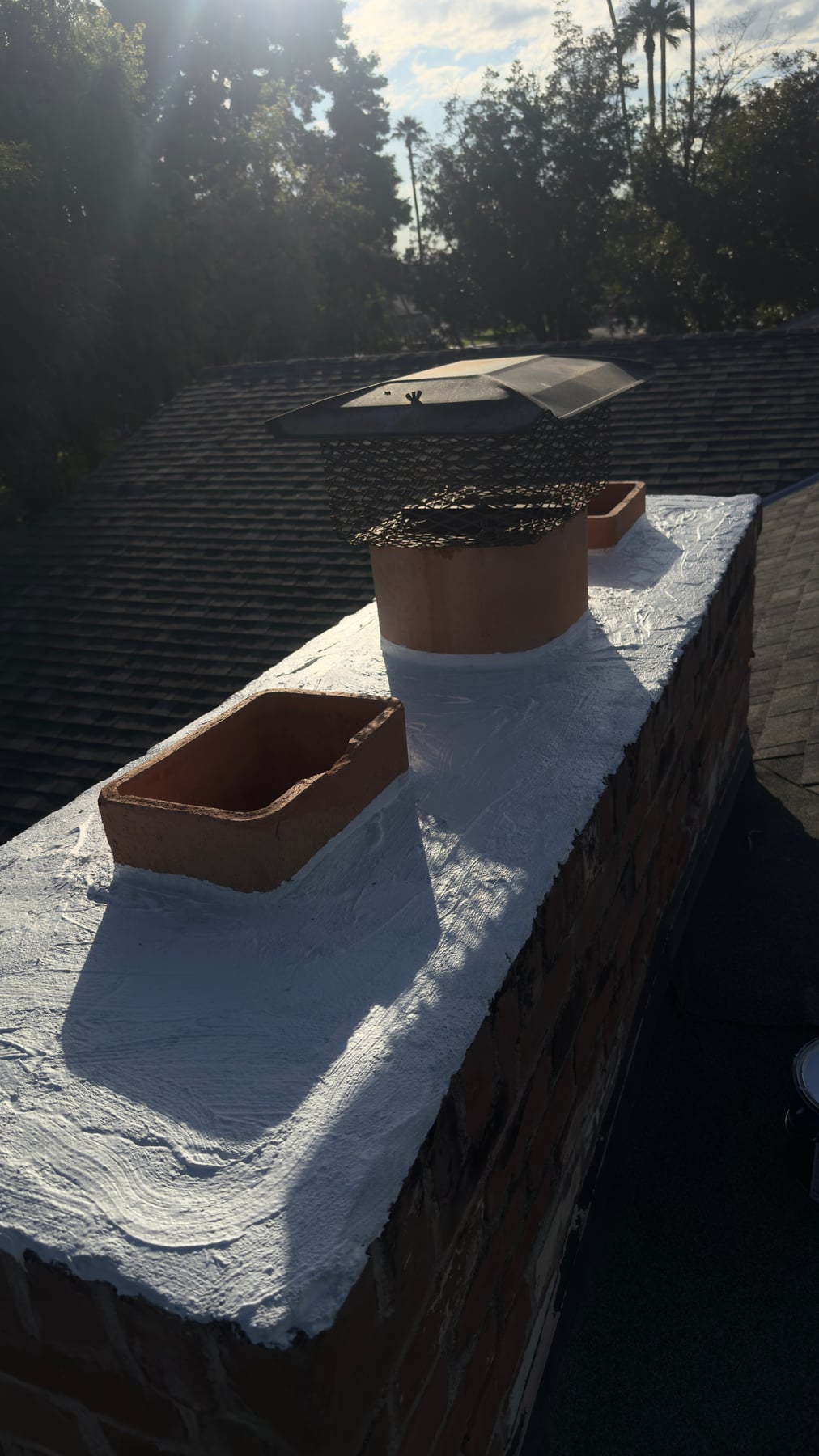
Most chimney problems give you warning before they become expensive emergencies. The catch is knowing which signals are worth calling about versus which ones can wait until next season. Here's what we'd tell you to watch for:
- White staining (efflorescence) on the brick exterior — salt deposits left behind by water moving through the masonry. The water has already been inside the chimney wall.
- Chunks of mortar or small pieces of brick on the roof or at the chimney base — active spalling. The freeze-thaw cycle or moisture intrusion is breaking the masonry apart from the inside.
- Visible cracks running across the top of the chimney — crown damage. The crown is the first line of defense against rain and when it cracks, water enters directly into the flue system.
- Water stains on the ceiling or wall adjacent to the fireplace — almost always a flashing failure or a cracked crown letting water travel down the chase.
- Rust on the damper plate or firebox interior — moisture is getting into the firebox, either through the top of the system or because the cap is missing or compromised.
- A musty or earthy smell coming from the fireplace — moisture inside the flue mixing with creosote residue or organic debris. Sometimes it's animal-related.
- Gaps or separation visible where the chimney meets the roofline — flashing has lifted or pulled away from the chimney, creating a direct water entry point.
- Visible daylight through the firebox when the damper is closed — the damper seal is failing or the crown above is open enough to let light (and weather) through.
If you're seeing two or more of these, don't wait for the next storm season to make the call. The repairs are almost always more manageable when we catch them before a second or third monsoon has worked through the opening.
Common Chimney Repair Problems We Repair
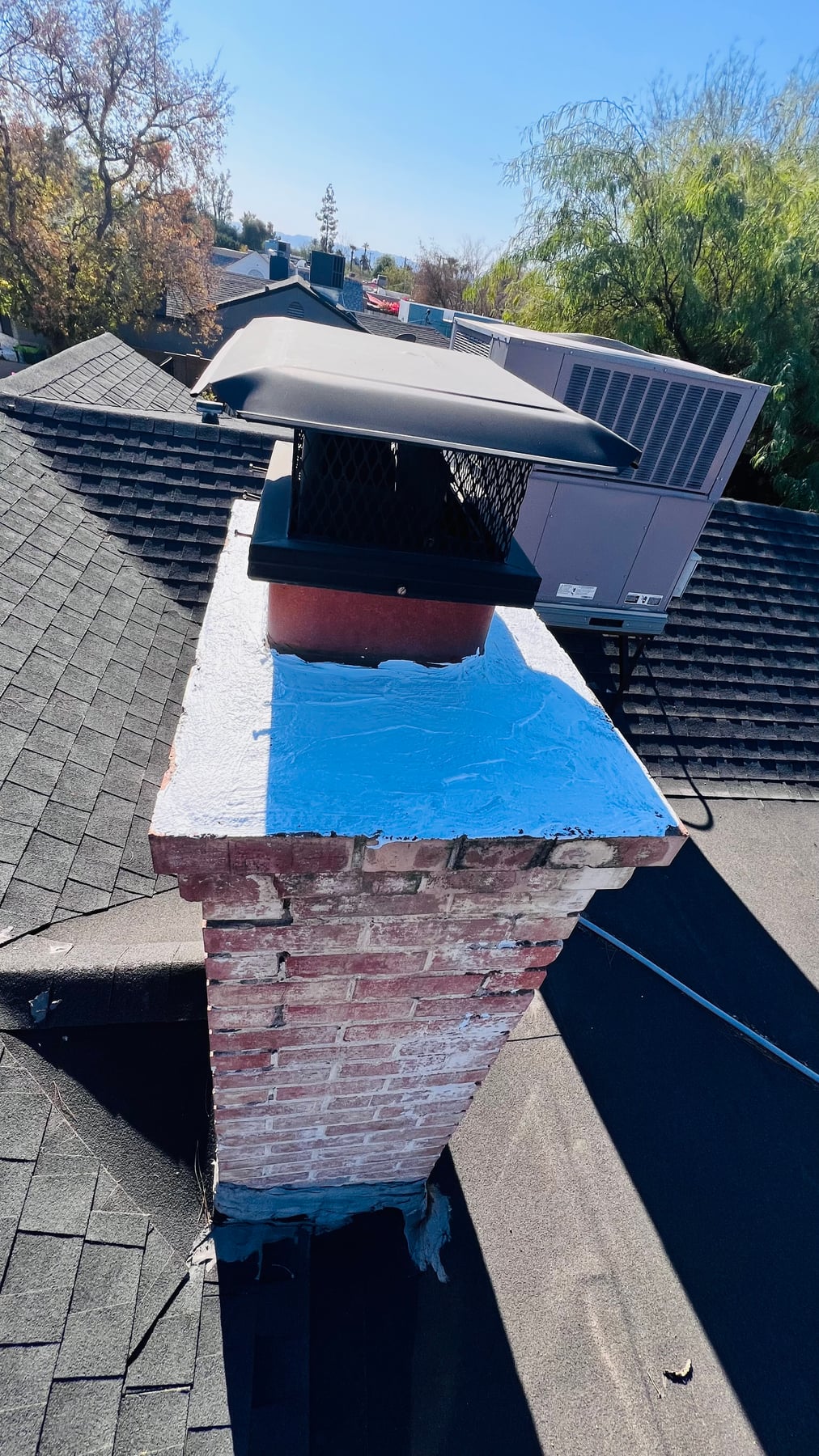
Below is a straightforward list of the specific chimney repair issues we handle on a regular basis in the Phoenix area. If your situation isn't on this list, call us anyway — these are just the most common patterns we see week to week.
- Cracked or crumbling chimney crown — most common entry point for monsoon water intrusion
- Failed step flashing or counter-flashing — especially prevalent on flat and low-slope roofs throughout the Valley
- Spalling brick on the chimney exterior — UV and moisture cycling breaks the face off brick over time
- Deteriorated mortar joints (tuckpointing needed) — mortar becomes friable in Arizona's UV environment, typically after 15-20 years
- Leaking chimney during rain — usually crown, flashing, or cap — we trace the actual source before repairing
- Missing or damaged chimney cap — open flue allows water, animals, and debris direct access to the liner
- Damaged or deteriorated flue liner — clay tile liners crack; we inspect and repair or reline as needed
- Firebox brick and mortar damage — heat cycling over years breaks down the refractory materials inside the firebox
- Blocked or restricted flue — nesting materials, collapsed liner sections, or debris accumulation reducing draft
- Leaning or separating chimney structure — foundation settling or long-term water damage causing structural movement
Chimney Repair Costs in Phoenix
Chimney repair in Phoenix typically runs between $300 and $2,500 depending on what needs to be fixed, how accessible the chimney is, and whether structural work is involved. That's a wide range, so here's what it actually looks like broken down by job type:
| Repair / Service | Typical Cost |
|---|---|
| Chimney cap replacement | $175 – $350 |
| Chimney crown repair or resurfacing | $300 – $700 |
| Flashing repair (step and counter) | $350 – $900 |
| Tuckpointing (mortar joint repair) | $500 – $1,400 |
| Spalling brick repair / partial rebuild | $800 – $2,500 |
What pushes a job toward the higher end: chimneys on second or third stories (more ladder setup and safety rigging), severe structural deterioration that requires masonry rebuilding rather than patching, or situations where water damage has already spread into the chase or surrounding framing. Older homes — particularly those built before 1990 in central Phoenix — often have chimneys that were under-built to begin with, and a repair can reveal that a broader rebuild is the right long-term call.
What brings cost down: catching problems early before they compound, straightforward single-story access, and jobs where the crown or flashing is the sole failure point rather than a symptom of deeper structural issues.
We charge a $99 diagnostic fee to get on the roof, inspect the full system, and give you a written estimate. If you move forward with the repair, that $99 applies directly to the job cost.
How We Work
We don't show up and start swinging a trowel. Every chimney repair we do starts with a real diagnostic — because fixing the wrong thing is just an expensive way to delay fixing the right thing. Here's how we work through every job:
- Arrival and homeowner walkthrough — We start by asking you what you've observed: when the water appears, where the staining is, whether you've had any previous repairs done. That context matters. A homeowner's observations often point us directly to the failure source.
- Full exterior and interior inspection — We inspect the crown, cap, flashing, mortar joints, brick face, and firebox interior. On the roof, we're looking at the flashing detail closely — how it was installed, whether it's lifted, whether caulk was used where metal work should have been done. We document everything with photos.
- Moisture and structural assessment — We probe mortar joints for integrity, check for active moisture in the chase or surrounding structure, and assess whether any damage has migrated beyond the chimney itself into adjacent roofing or framing.
- Written diagnosis and estimate — Before any work starts, we walk you through exactly what we found, show you the photos, and explain the repair options. You get a written estimate. No pressure, no vague ballpark numbers.
- Repair execution — We use industry-appropriate materials for this climate: elastomeric crown coatings rated for extreme UV exposure, proper metal flashing (not caulk-only repairs), and matching masonry materials where tuckpointing or brick work is needed.
- Final inspection and walkthrough — After the repair is complete, we inspect the finished work, photograph it, and walk you through what was done. If there's anything you should monitor going into the next monsoon season, we'll tell you specifically what to watch for.
Arizona Chimney Pros
We've been working chimneys specifically in the Phoenix market long enough to know the difference between a crown that just needs a resurfacing coat and one that needs to be rebuilt from scratch — and we're not going to sell you the latter when the former will hold. That distinction matters when you're getting quotes and one number is twice the other.
Our work spans the full range of Phoenix-area homes: older block construction in central and south Phoenix where chimneys were often built without proper caps or flashing from the start, mid-century homes near Tempe with aging mortar that hasn't been touched since original construction, and larger estate properties in north Phoenix and Scottsdale where the chimney is architecturally prominent and the repair needs to be invisible, not just functional.
All of our technicians are CSIA-trained and we operate under NFI certification standards for chimney system evaluation. When we write up a diagnostic report, it meets the documentation standard required for real estate transactions and insurance claims — which matters more than most homeowners realize until they're in the middle of a home sale.
For Phoenix-area calls, our typical response window is one to two business days for standard repairs, with same-day availability reserved for situations involving active leaks, structural concerns, or blocked flues. Call early in the day and we'll do our best to get someone out to you.
Brands We Service
We service most major fireplace and chimney brands across Phoenix — OEM parts stocked for the most common issues, and we can source almost anything we don't have on the truck. Below are the brands we see most often:
- Napoleon
- Regency
- Valor
- Majestic
- Heat & Glo
- Heatilator
- Mendota
- Lopi
- Pacific Energy
- Dimplex
- Jotul
- Vermont Castings
Our Guarantee
We stand behind every repair we complete. All labor carries a one-year warranty — if a repair we performed fails or shows problems within twelve months, we come back and make it right at no charge. New parts and materials installed on your chimney carry their manufacturer warranties, which we document and pass through to you at the time of service.
Beyond the formal warranty, if something feels off within the first 30 days — a smell that wasn't there before, a new stain, anything that makes you question the repair — call us. We don't make you argue for a callback. Every technician working under the Arizona Chimney Pros name is certified, insured, and background-checked. We're ROC-licensed and carry full general liability coverage, documentation available on request. We won't over-promise you a lifetime fix on a 30-year-old chimney, but we will promise honest work and accountability for every job we sign off on.
Frequently Asked Questions
Monsoon rain in Phoenix is different from typical rain — it's high-volume, wind-driven, and comes at angles that expose failure points that a soft vertical rain wouldn't reach. A hairline crack in the chimney crown or a slightly lifted section of flashing may stay dry under mild conditions but gets overwhelmed when water is being driven laterally across the roof at 40 mph. What you're describing is actually a useful diagnostic signal: it tells us the failure point is present but marginal — which means it's typically still in the repairable range rather than requiring a full rebuild. We trace these leaks by examining where the water is appearing inside and working backward to the source on the roof. It's almost always the crown, the flashing, or both.
Most chimney repairs in Phoenix fall between $300 and $2,500. On the lower end, you're looking at a cap replacement, a minor crown resurfacing, or a simple flashing resealing. On the higher end, jobs involve tuckpointing significant sections of deteriorated mortar, repairing spalling brick, or rebuilding a crown that has cracked through. The main factors that push cost up are chimney height and access difficulty, how long the damage has been active (water that's been working through for two or three monsoon seasons does compounding damage), and whether the original construction was done to standard. We charge a $99 diagnostic fee to inspect and provide a written estimate — that amount applies to the repair if you move forward.
Yes. Arizona Chimney Pros is ROC-licensed and carries full general liability insurance. Our technicians are CSIA-trained and operate under NFI certification standards for chimney system evaluation and repair. If you need proof of licensing or insurance for an HOA, a real estate transaction, or your own records, we provide that documentation on request — no runaround. We work regularly in neighborhoods across Phoenix, Scottsdale, and Tempe, including HOA-governed communities that require contractor verification before work begins on exterior structures.
A Level 1 inspection covers everything that's accessible without demolition or specialized equipment: the chimney crown, cap, flashing condition, exterior brick and mortar, the flue liner from the firebox opening, the damper, and the firebox interior. We photograph findings and provide a written report. That report format meets the documentation requirements for real estate transactions — which is relevant if you're buying or selling a Phoenix home and need a transferable inspection record. If findings suggest internal liner damage that requires a camera, we'll tell you directly and quote the Level 2 scan as a separate step.
In many cases, yes. We keep capacity in our schedule for same-day calls, particularly for situations involving active water intrusion, a blocked flue, or anything that's creating an immediate concern. For Phoenix-area calls, if you reach us early in the morning, we can usually get a technician out within the same day or by the following morning at the latest. Standard non-urgent repairs and inspections typically book one to two business days out. The best move is to call directly rather than wait on a form submission if your situation feels time-sensitive — we'll give you a straight answer on availability.
There are a few indicators that separate surface-level wear from structural concern. Cosmetic issues include minor efflorescence (white salt staining), surface crazing on the crown, or hairline mortar cracks that haven't opened enough to allow water penetration. Structural concerns include mortar joints that are visibly recessed, hollow, or crumbling to the touch; spalling brick where the face of the brick itself is flaking or falling away; crown cracks that run through the full thickness rather than just the surface; and any visible leaning, separation, or movement in the chimney stack itself. The honest answer is that a visual assessment from the ground is only part of the picture — UV damage and moisture intrusion in Arizona can undermine masonry that looks passable from the yard. The only way to know for certain is a close inspection from the roof level.
Most repairs fall in $250 to $1,800. Minor crown sealing or tuckpointing runs $250-$450. Full crown rebuild $850-$1,400. Chase top replacement $700-$1,200. Liner replacement $1,800-$3,500 depending on length and material. We diagnose first ($99 credited to the repair) and quote in writing.
It covers sudden damage (chimney fire, lightning, storm, vehicle impact) — not gradual wear, settling cracks, or normal weathering. If you're filing a claim, the adjuster will want a Level 2 inspection report with photos. We provide that documentation as part of the inspection.
A licensed chimney specialist with an Arizona ROC license and CSIA certification. Not a general handyman — chimney work involves combustion, masonry, flashing, and code compliance simultaneously. We're licensed (ROC #XXXXXX), insured, and cover the entire Phoenix metro.
Look for: cracked crown or chase top, missing mortar between bricks, white efflorescence stains on exterior, rust on the damper or firebox, water in the firebox after rain, or daylight visible through the flue. Any one of these justifies an inspection.
Crown sealing or tuckpointing — same day. Full crown rebuild — 1 to 2 days (24 hours to cure). Liner replacement — 1 day. Major masonry rebuilds — 2 to 5 days depending on scope. We schedule around your fireplace use season.
Most repairs fall between $250 and $1,400. Crown sealing for hairline cracks runs $250 to $400. Crown rebuild (skim or partial) runs $300 to $800 — usually paired with flashing repair. Full crown rebuild with cap replacement runs $850 to $1,400. Tuckpointing and brick repair varies by linear footage. We diagnose first ($99 credited to the repair) and quote in writing before any work starts.
Almost never for gradual wear (which is what 90% of chimney cracks are). Insurance does cover sudden damage from named events: lightning strikes, microbursts, haboob impact, falling trees, and chimney fires. If the damage is from a documented storm or claimable event, we provide a Level 2 inspection report with dated photos to support the claim. If it's a gradual hairline you noticed last spring, that's out-of-pocket.
Most chimney caps don't need 'repair' — they need replacement. The metal mesh tears, the welds rust through, or the entire cap blows off in a haboob. A stainless steel single-flue cap installs for $189 to $295 and lasts 15+ years. Multi-flue covers and custom shrouds run $350 to $650. Don't try to patch a rusted-out cap — the cost difference between repair-attempt and clean replacement is small, and the replacement lasts decades.
Diagnose the entry point first — that's 80% of the fix. The five common causes: failed crown ($250-$1,400 to fix), failed flashing seal ($350-$650), missing or damaged cap ($189-$295 to install), cracked mortar joints ($450-$900 to tuckpoint), or a damaged chase top ($700-$1,200). We hose-test in late May to find the entry point before monsoon rain forces the issue.
Surface cracks in the crown get a polyurethane sealer coat — $250-$400 and lasts 6-10 years. Cracks in the brick mortar get tuckpointed — $450-$900 depending on linear footage. Cracks wider than a credit card edge in the crown structure need a full rebuild — $850-$1,400. If you can see daylight through any chimney crack from inside the firebox, it's structural and needs to be addressed before monsoon.
What Our Customers Say
Our gas fireplace pilot kept going out. I'd tried replacing the battery myself. Their tech diagnosed a failed thermopile, replaced it, and walked me through how to spot the problem if it happens again. Professional and patient.
Had a chimney cap fly off in a monsoon. Called Monday morning, they had it replaced by Tuesday afternoon with a stainless-steel cap that won't rust out. Solid work at a fair price.
Great experience from start to finish. Easy to schedule, tech showed up in the booking window, quote was the quote. The chimney cleaning was more thorough than anyone we've had before.
Serving Phoenix & Surrounding Areas
Arizona Chimney Pros serves Phoenix and surrounding Phoenix metro communities. Our technicians are on the road daily with same-day and next-day availability across:
- Scottsdale
- Tempe
- Mesa
- Gilbert
- Chandler
- Glendale
- Peoria
Don't see your neighborhood? Call us — our service radius covers about 40 miles of the Valley.
More Services in Phoenix
- Chimney Inspection Phoenix
- Chimney Repair Scottsdale
- Chimney Repair Tempe
- Gas Log Replacement Phoenix
- Gas Fireplace Repair Phoenix
- Chimney Cleaning Phoenix
- Creosote Smell In House Phoenix
- Chimney Leak Repair Phoenix
- Gas Fireplace Turns Off After Minutes Phoenix
- Fireplace Damper Stuck Phoenix
- Linear Vs Traditional Gas Fireplace Arizona
- Chimney Repair Gilbert
Get a Straight Answer on Your Chimney's Condition
We'll come out, get on the roof, inspect the full system, and tell you exactly what's wrong — and what it'll cost to fix it. No vague estimates, no upselling work you don't need. Arizona Chimney Pros is ROC-licensed, fully insured, and serving Phoenix homeowners with same-day availability for urgent situations. Call us today and let's figure out what your chimney actually needs.
Sun–Fri 8am–7pm · Emergency service available
Explore More Topics
Helpful guides and related services for Phoenix-area homeowners.
Chimney Repair & Related Problems
Helpful Reading
Before You Call, Browse Our Field Guides
How Much Does Chimney Repair Cost in Phoenix?
Tier-by-tier breakdown — crown sealing $250–$400, cap replacement $250–$450, full rebuild $850–$1,400.
Read the guide → Repair GuideHow to Repair a Chimney Crown — Before Monsoon
Sealer vs. rebuild decision walkthrough, the May hose test, and the three-week window that decides which.
Read the guide → DiagnosisIs a Cracked Chimney Crown Serious?
Three tiers of crown damage, the August field test, and how to read the cracks from the ground.
Read the guide →