Chimney Cap Installation in Phoenix, AZ
Fountain Hills homes sit at higher elevation and catch more wind than the Valley floor — we’ve replaced more spark-arrestor caps on Fountain Hills chimneys in the last two years than anywhere else we service.
Maybe you spotted birds flying in and out. Maybe you heard something scratching around up there during the night. Or you're simply looking at that bare flue and knowing, without needing a diagnosis, that this isn't something you want to leave until October when you're ready to light a fire.
Chimney cap installation in Phoenix isn't complicated, but it matters more here than most places. The combination of violent summer storms and the long stretch of warm months when chimneys sit unused creates a specific window where an uncapped flue becomes a genuine problem — not just a maintenance checkbox. We've pulled nests, bird remains, debris piles, and standing water out of Phoenix chimneys that were only left open for a single season.
At Arizona Chimney Pros, we handle cap installations start to finish — the right cap for your flue size and configuration, properly secured so it survives the next storm. No guesswork, no one-size-fits-all hardware store fixes. Just a properly capped chimney and the peace of mind that comes with it.
Chimney Services in Phoenix
Phoenix chimneys face a combination of conditions that most chimney technicians elsewhere never deal with. From June through September, monsoon storm systems push sustained winds that regularly exceed 50 mph across the valley. That's not unusual wind — that's the kind of wind that turns a poorly fitted or aging cap into a rooftop projectile. We field calls every summer from homeowners in Tempe, Mesa, and across central Phoenix who walked outside after a haboob and found their cap sitting in the yard, or gone entirely.
Then there's the bird problem. Once a monsoon blows a cap off — or if a cap was never installed to begin with — the flue becomes prime real estate for European starlings, house sparrows, and chimney swifts starting as early as May. These birds don't just leave a mess. They pack dry nesting material into the flue, which is a fire hazard, and their droppings are acidic enough to accelerate deterioration of the flue liner over time. A chimney that goes uncapped through a full Phoenix summer can arrive at October in significantly worse shape than it left March.
Older homes add another layer to this. We've worked on masonry chimneys in established Phoenix neighborhoods — some dating back to the 1960s — where deferred maintenance compounded quietly across multiple owners until what started as a missing cap became a structural conversation. The most involved rebuild we've handled recently was exactly that scenario: a 1960s masonry stack that had been passed from owner to owner without anyone addressing the slow degradation. By the time we got the call, the safety implications were real. A cap is a small investment against that kind of trajectory.
Signs Your Chimney Services Needs Attention
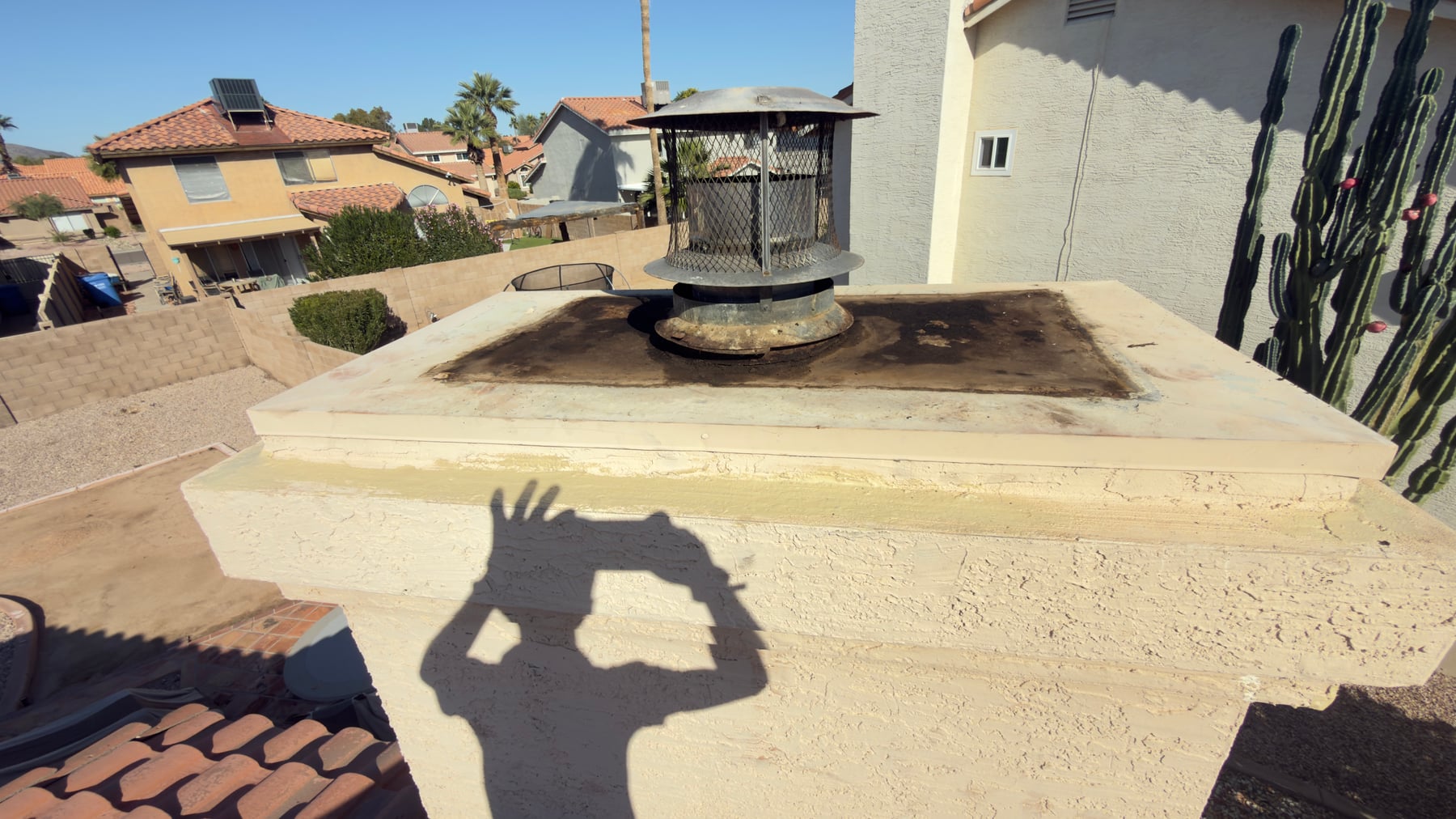
A missing or failed chimney cap doesn't always announce itself dramatically. Sometimes it's obvious — you can see bare masonry from the yard. Other times the signs are subtler, showing up inside the home or during a routine inspection. Here's what to watch for:
- Cap visibly missing, tilted, or sitting loose on top of the flue — often spotted after high winds
- Bird sounds coming from inside the chimney, particularly chirping or scratching during May through September
- Nesting debris visible inside the firebox when you open the damper
- Water pooling in the firebox or a damp smell after monsoon rain
- Rust staining on the firebox floor or damper components — a sign moisture has been entering repeatedly
- Twigs, leaves, or insulation-like material falling into the fireplace from above
- Increased presence of birds or insects around the chimney opening on the roofline
- A draft that feels wrong — either too strong or reversed — which can indicate a debris obstruction in the flue
If you're seeing two or more of these, the flue is likely compromised in some way. The sooner a cap goes on, the less cleanup and remediation you're dealing with afterward. Give us a call and we'll assess what's needed before the problem compounds.
Common Chimney Services Problems We Repair
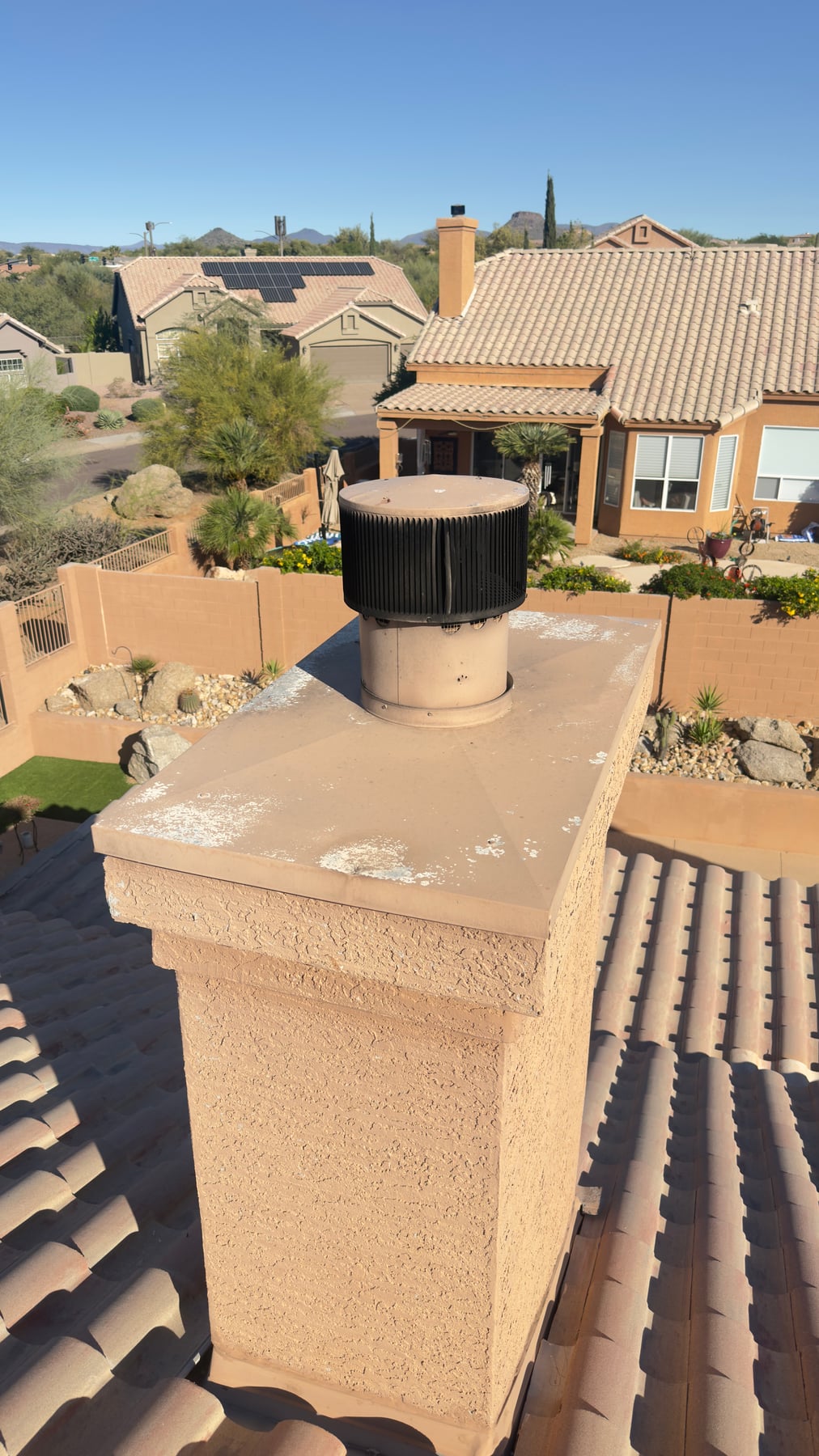
Chimney cap jobs in Phoenix rarely look identical. Some are straightforward replacements after a storm. Others involve clearing out weeks of nesting activity before a cap can even go on. Here's the range of specific issues we handle on these calls:
- Cap blown completely off the flue — common after monsoon winds, requires proper sizing and secure mounting
- Cap present but not secured — original hardware corroded or never properly anchored to the flue crown
- Bird nesting blocking the flue — nest removal required before capping to prevent fire hazard and restore draft
- Damaged or cracked flue crown allowing water intrusion around the cap base
- Incorrect cap size installed previously — oversized or undersized caps don't seal properly and fail faster
- Galvanized cap rusted through — common on older installations, replacement with stainless or copper recommended
- Multi-flue chimney missing cap coverage on one or more openings
- Fireplace insert venting with exposed termination needing a proper rain cap
- Spark arrestor mesh damaged or absent on the existing cap — a fire code and safety issue
- Cap damaged by falling tree debris or roofing work — bent, cracked, or screen torn out
Chimney Services Costs in Phoenix
Chimney cap installation in Phoenix typically runs between $150 and $450, and where you land in that range comes down to your flue configuration, the cap material you choose, and whether any prep work — like nest removal or minor crown repair — is needed before the cap goes on.
| Service | Typical Cost |
|---|---|
| Standard single-flue cap (galvanized steel) | $150 – $195 |
| Stainless steel single-flue cap (longer lifespan) | $195 – $260 |
| Multi-flue or oversized cap | $260 – $380 |
| Bird nest removal + cap installation | $280 – $420 |
| Cap installation + minor crown repair/sealing | $320 – $450 |
A few things push the price toward the higher end: difficult roofline access, multi-story homes where additional safety rigging is needed, the extent of nesting debris inside the flue, and whether the flue crown needs any patching before the cap seats properly. Copper caps are also available for homeowners who want a premium finish — pricing on those runs higher and we'll quote those individually.
Material choice matters more here than in most climates. Galvanized caps hold up fine in moderate conditions but can deteriorate faster when they're taking direct monsoon hits season after season. For Phoenix homes, we generally recommend stainless as the better long-term value — it costs a bit more upfront and typically outlasts galvanized by years.
How We Work
We don't show up, throw a cap on, and leave. Here's how we actually approach every cap installation call — the same way whether it's a straightforward replacement or a chimney that's been open through two summers.
- Arrival and roofline assessment — We look at the chimney from the ground first, then get on the roof to evaluate the flue opening, existing crown condition, and cap situation. If a previous cap failed, we want to understand why before we put a new one on.
- Flue interior check — Before anything goes on top, we check the flue from below with a light. If there's nesting material, debris, or water pooling, we address that first. A cap installed over a blocked flue is a fire and carbon monoxide hazard.
- Nest and debris clearing (if needed) — Any nesting material is fully removed and disposed of off-site. We don't compress it down or leave it near the smoke shelf where it can ignite.
- Crown inspection and prep — If the flue crown shows cracking or erosion that would compromise the cap seal, we'll note it and quote any repair needed. Minor sealing can typically be handled same visit.
- Cap sizing, fitting, and securing — We measure the flue opening precisely, select the right cap, and fasten it correctly — mechanically secured and sealed at the crown so it doesn't shift under wind load. This is where a lot of DIY and cut-rate installs fall short.
- Final inspection and homeowner walkthrough — We verify the cap is level, the screen is intact, the spark arrestor mesh is undamaged, and draft is unobstructed. We walk you through what was done and answer any questions before we leave the property.
Arizona Chimney Pros
Arizona Chimney Pros has been working on chimneys across the Phoenix metro for years — not as a side service, but as the core of what we do. We know the difference between a chimney on a 1970s ranch in Tempe and a dual-flue masonry stack on a newer estate in north Scottsdale, and we bring that context to every call.
Cap work specifically is something we take seriously because it's the first line of defense against the two things that quietly wreck Phoenix chimneys: water intrusion during monsoon season and wildlife access during the long warm months when fireplaces sit unused. We're CSIA-affiliated and our technicians hold NFI certifications — credentials that reflect actual training in chimney system safety, not just general contracting experience.
We're ROC-licensed and fully insured in Arizona. Every job is documented with photos before and after, which matters for your records and, if you're ever selling the home, for buyers' due diligence. We've handled pre-listing chimney work across Phoenix's historic districts and gated communities alike — we understand how to communicate findings clearly and professionally.
For cap installations and most chimney service calls across the Phoenix metro, we can typically schedule within one to two business days, with same-day availability on urgent situations like post-storm damage.
Brands We Service
We service most major fireplace and chimney brands across Phoenix — OEM parts stocked for the most common issues, and we can source almost anything we don't have on the truck. Below are the brands we see most often:
- Napoleon
- Regency
- Valor
- Majestic
- Heat & Glo
- Heatilator
- Mendota
- Lopi
- Pacific Energy
- Dimplex
- Jotul
- Vermont Castings
Our Guarantee
Every cap we install is backed by a one-year labor warranty. If a cap we installed shifts, fails to seal, or comes loose within that period — not due to an extreme weather event that exceeds design limits — we come back and make it right at no charge.
The caps themselves carry the manufacturer's warranty, which typically runs one to five years depending on the product and material. Stainless and copper caps generally carry longer coverage than galvanized. We document what was installed and provide that information in writing so you have it if you ever need to reference it.
If anything feels off within 30 days of installation — unusual draft, sounds from the flue, visible movement on the cap — call us. We'd rather do a quick follow-up visit than have a small concern turn into something larger. Our technicians are certified, fully insured, and background-checked. We stand behind what we put our name on.
Frequently Asked Questions
The easiest way is to look straight up into the firebox from inside with a flashlight — if you can see daylight or open sky at the top, there's no cap on the flue. If you can see a damper plate and darkness above it, there may be a cap but the damper is blocking your view. On the roofline, a bare clay or metal flue tile with nothing sitting on top of it is the clearest sign. Older Phoenix homes — particularly those built before the 1980s — were sometimes built without caps at all. It's more common than you'd think. A quick look or a call to us can confirm it.
Yes, and the timeline surprises most homeowners. In Phoenix, nesting season runs roughly May through September. A pair of house sparrows or starlings can pack a substantial nest into a flue in a matter of days — dry grass, twigs, debris — all of it sitting directly in the path of a fire if the chimney is used before it's cleared. Beyond the fire risk, bird droppings are mildly acidic and, over multiple seasons, contribute to flue liner deterioration. A single summer isn't catastrophic. Two or three uncapped summers adds up to real repair costs. Getting a cap on before May is the cleanest solution.
For this climate, stainless steel is our standard recommendation. It handles the UV exposure, the temperature swings, and the wind load better than galvanized over time. Galvanized caps are fine and less expensive, but in Phoenix they tend to show rust and degradation sooner — particularly on the screen mesh where wind-driven debris hits repeatedly. Copper is the premium option and essentially maintenance-free for decades, but it costs significantly more and is typically chosen for aesthetic reasons on higher-end homes. Whatever material you choose, correct sizing and secure mechanical attachment to the crown matters more than the material itself — a premium cap that's not properly seated will still blow off in a haboob.
Most straightforward cap installations run between $150 and $260 for a standard single-flue chimney. The price increases if the cap is an oversized or multi-flue configuration, if nesting material needs to be cleared from the flue first, or if the crown needs any patching before the cap seats properly. Difficult roofline access — steep pitch, multi-story home — also adds to the time and rigging involved. We don't charge a separate diagnostic fee for cap calls; we assess the situation when we arrive and quote against what we actually find before any work begins.
It depends on what's in the flue. If the cap was just recently blown off and you haven't had any nesting activity, a single use isn't necessarily dangerous — but you should inspect the flue from inside before lighting anything. If the chimney has been open for weeks or months, especially during nesting season, don't use it until it's been inspected and cleared. Dry nesting material in a flue is a real fire risk, and a partial blockage can cause carbon monoxide to back-draft into the living space. When in doubt, have it checked before you light a fire. That's always the right call.
We cover the full Phoenix metro, including Scottsdale, Mesa, Tempe, Chandler, Gilbert, Glendale, Peoria, Surprise, Cave Creek, Fountain Hills, and Anthem. For larger chimney projects — rebuilds, liner replacements, or installs on custom homes — we travel statewide. Cap installations and most standard chimney service calls are typically scheduled within one to two business days. If you're dealing with an open flue heading into storm season or an active nesting situation, let us know when you call and we'll work to get out sooner.
What Our Customers Say
Monsoon dumped water down our flue and we had a mess. They came out, identified the crown was cracked, sealed it properly, and installed a new cap. Three years later, zero leaks. Solid work.
Had a chimney cap fly off in a monsoon. Called Monday morning, they had it replaced by Tuesday afternoon with a stainless-steel cap that won't rust out. Solid work at a fair price.
We had them do an annual inspection plus cleaning on our wood fireplace. The tech showed me photos of the flue before and after — I could see exactly what was going on up there. Honest, thorough, and punctual.
Serving Phoenix & Surrounding Areas
Arizona Chimney Pros serves Phoenix and surrounding Phoenix metro communities. Our technicians are on the road daily with same-day and next-day availability across:
- Scottsdale
- Mesa
- Tempe
- Gilbert
- Chandler
- Glendale
- Peoria
Don't see your neighborhood? Call us — our service radius covers about 40 miles of the Valley.
More Services in Phoenix
- Chimney Inspection Phoenix
- Chimney Cleaning Phoenix
- Gas Fireplace Repair Phoenix
- Firebox Repair Phoenix
- Water In Fireplace Monsoon Phoenix
- Fireplace Glass Fogged Phoenix
- Fireplace Smoke Smell Phoenix
- Pilot Light Keeps Going Out Phoenix
- Emergency Chimney Repair Arizona
- Fireplace Remodeling Phoenix
- Wood To Gas Conversion Phoenix
- Gas Log Replacement Phoenix
Get Your Chimney Capped Before the Next Storm Hits
Whether your cap blew off last monsoon, you've got birds moving in, or you're not sure what's going on up there — we'll come out, assess it, and give you a straight answer on what it takes to fix it. Arizona Chimney Pros is licensed, insured, and working in Phoenix every week. Call us to schedule or get a same-day estimate on cap installation.
Sun–Fri 8am–7pm · Emergency service available
Explore More Topics
Helpful guides and related services for Phoenix-area homeowners.