
Chimney Cap Installation Cost in Arizona — What You Actually Pay and Why
$150–$450 for a standard stainless cap installed in the Valley, $450–$900 for custom — here’s what drives the spread, and the four signs you’re past patching and into replacing.
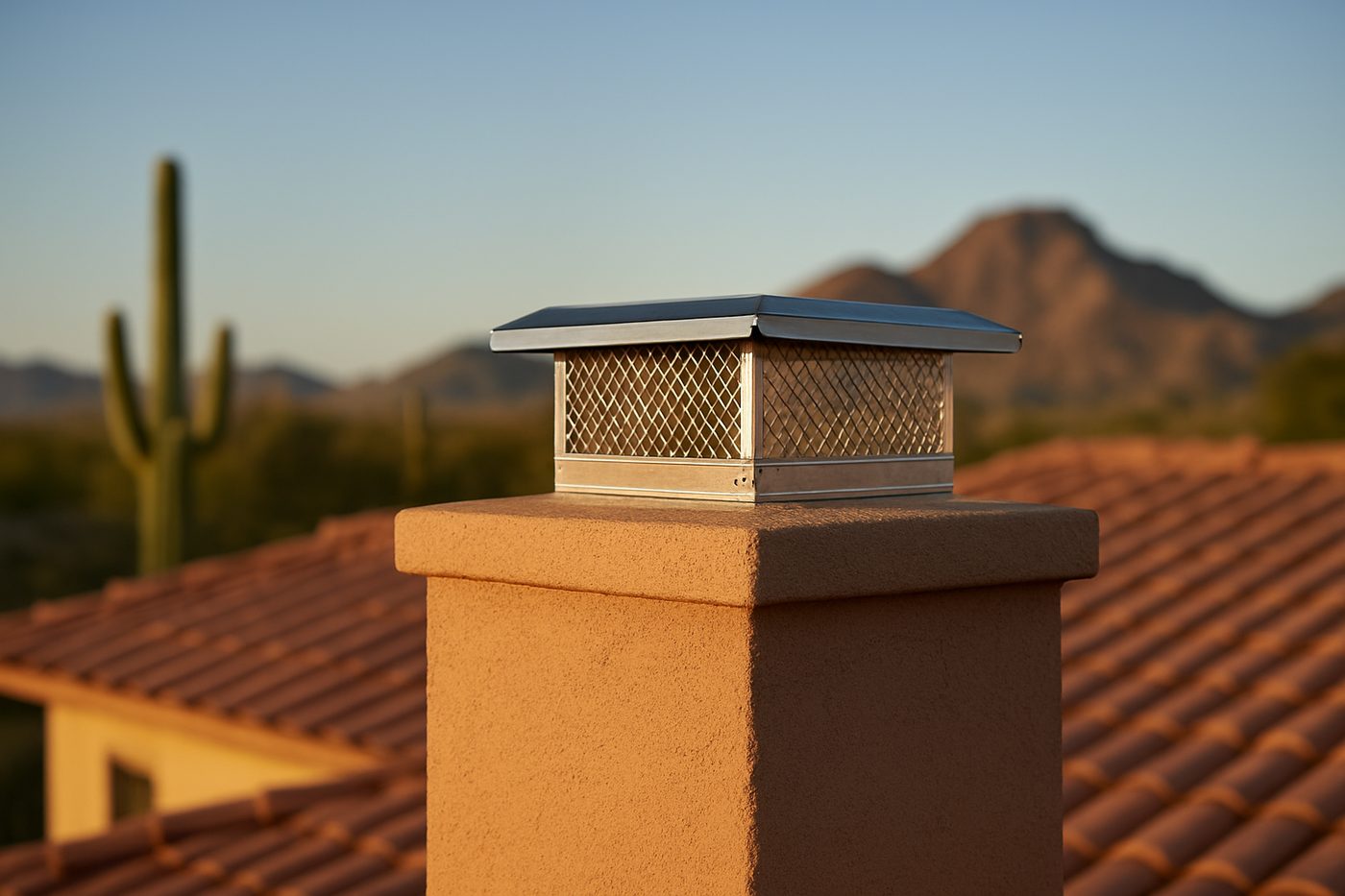
The week after a March microburst rolled through Cave Creek last year we got eleven calls in three days — every one was a cap blown off, dented, or missing entirely. Two were the original 1990s caps that had simply weathered out. Six were standard stainless that the wind had peeled. The other three were already gone — nobody knew when. That’s the Valley pattern: caps don’t fail gradually here, they fail in one bad storm.
What chimney cap installation actually costs
The numbers below come from our own service-page anchors and FAQ bank. We do not quote averages from out-of-state directories.
- Standard stainless steel cap, installed — $150 to $450. Covers the cap, mounting, sealant, and the typical one-hour rooftop install on an accessible chimney.
- Custom-sized or copper cap, installed — $450 to $900. Required when the flue is non-standard, multi-flue, or when the homeowner wants a decorative match.
- Cap + crown work in the same visit — add $250 to $800 for crown sealing or rebuild depending on tier. We bundle when the crown shows hairline cracks under the failed cap.
- Emergency / storm replacement — same bands, no premium, but expect a 24–48 hour wait during monsoon weeks when the schedule is full.
Three things that move your number inside those bands
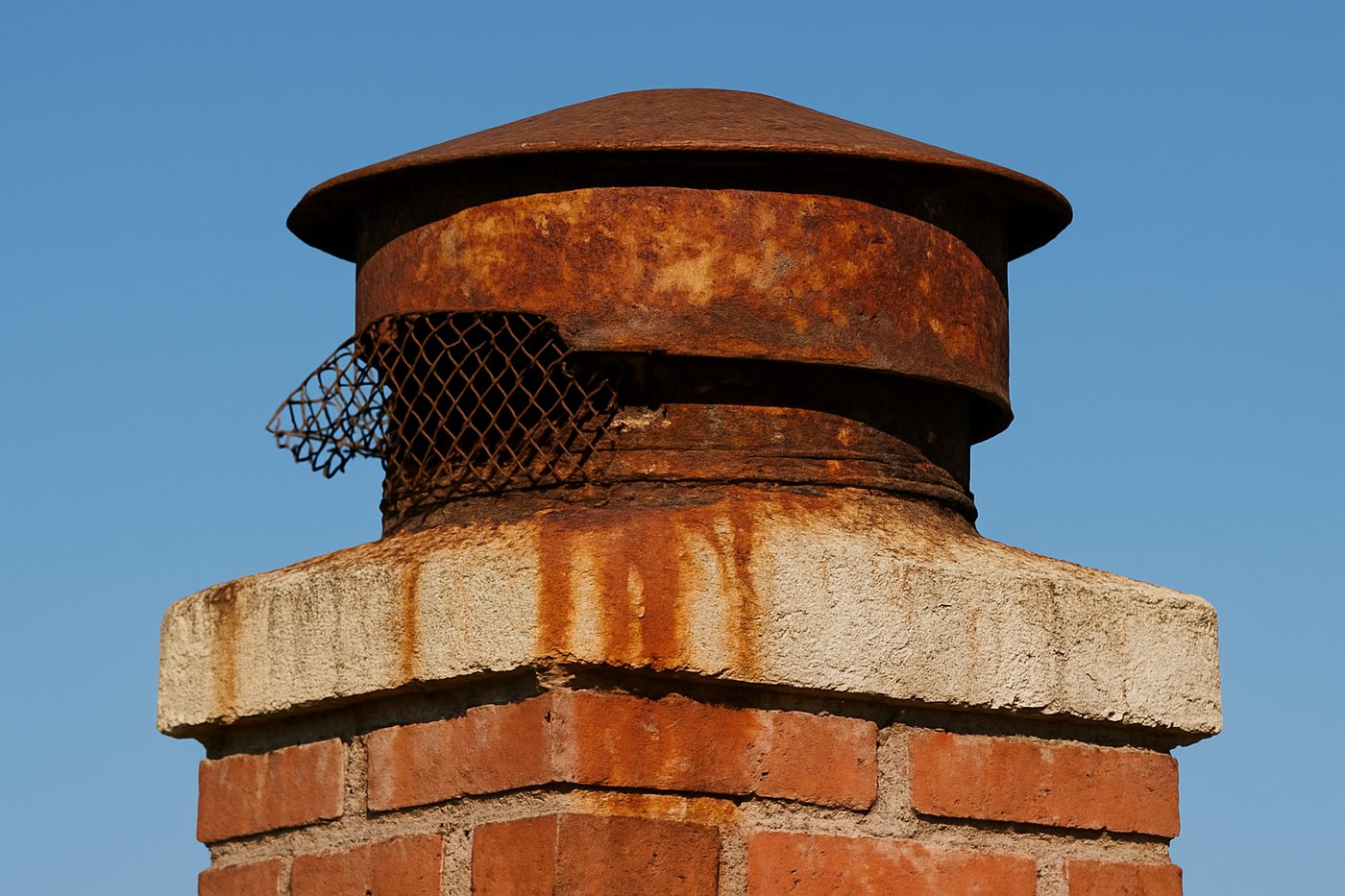
Flue dimensions and count. A standard 8×8 or 8×13 single-flue stack takes an off-the-shelf cap. Multi-flue stacks — common in older Phoenix and Scottsdale builds with separate fireplace and furnace flues — need either a multi-flue cap or two singles measured to the flue lips.
Material. Galvanized steel caps exist for under $100 but rust out in about five Arizona summers and we don’t install them. Stainless steel is the standard — 15 to 25 year service life. Copper looks the part on luxury builds and lasts 30+, but adds $300–$600 to the install.
Accessibility. A single-story tile roof with normal pitch is a one-hour job. A two-story stucco home with a 9/12 pitch and a chimney set against a parapet wall is a two-hour job with fall-protection setup. We don’t add a surcharge but the higher end of the band reflects this.
For the related cost context, see annual chimney maintenance cost in Arizona and chimney cleaning cost in Arizona.
When you’re past patching and into replacing
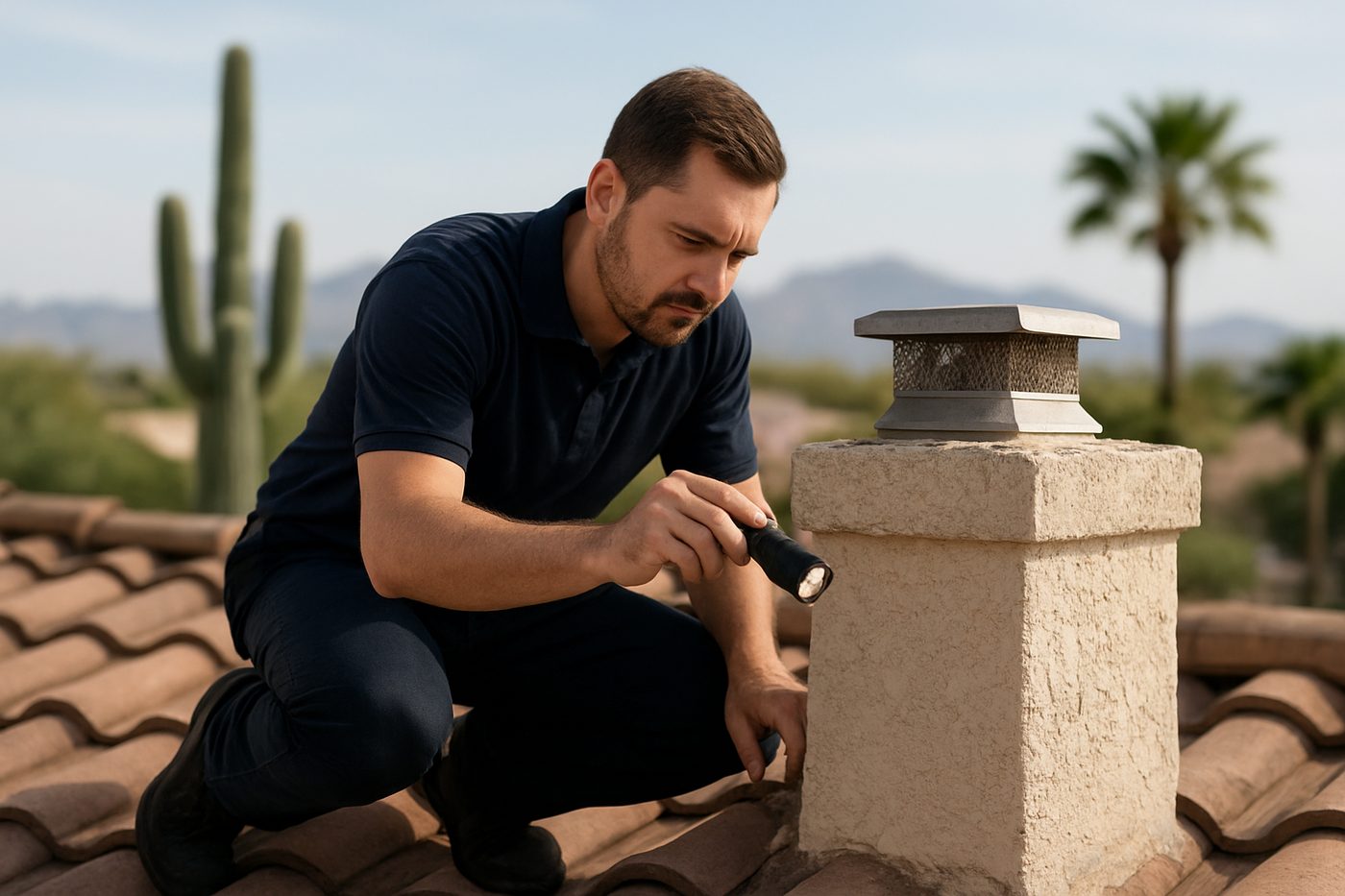
From a homeowner’s vantage on the ground, four signs that mean replace, not repair.
- Visible rust streaks down the stucco or brick below the cap. The mesh has corroded and the bath time it’s had with monsoon water is now on your masonry.
- The cap is sitting crooked, dented, or you can see daylight where it should meet the flue lip. Wind got under it.
- Animals in the flue. Birds, bees, or in north Valley pockets, the occasional pack rat. A failed cap or torn mesh is the open door.
- You don’t remember when it was installed. If it pre-dates your ownership and the previous owner couldn’t tell you, assume it’s past life expectancy and budget for replacement at the next inspection.
We did a chimney cap install in Fountain Hills where the previous cap had been blown off during a microburst and the homeowner didn’t realize for eight months — by then a family of pigeons had moved in. That’s a $300 cap install plus a $250–$400 flue scrub to clean what they left behind. Catching it early matters.
Can you install a chimney cap yourself?
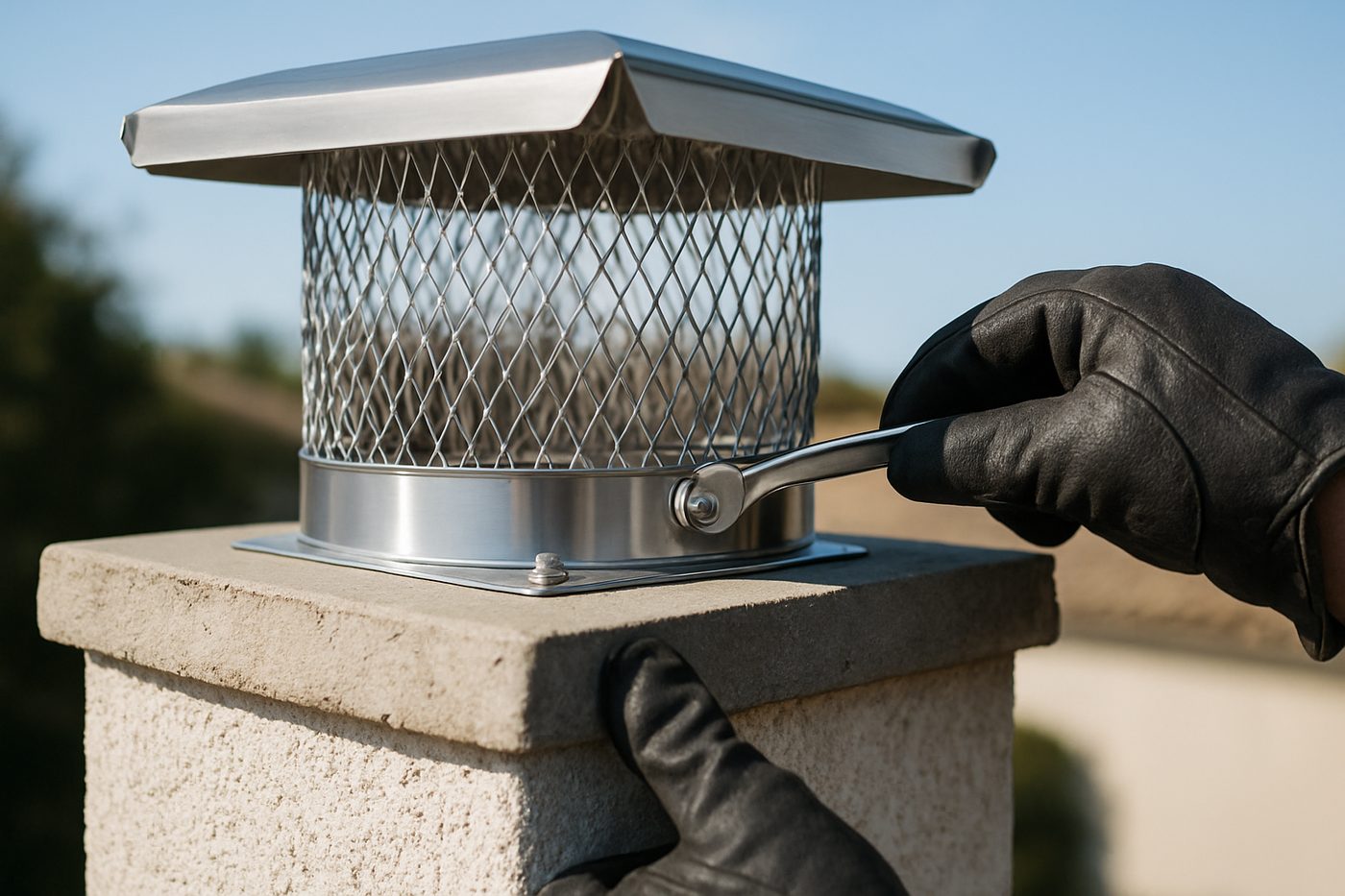
Mechanically, yes — a single-flue stainless cap slips over the flue tile and tightens with four screws. The $80 cap from the home center is the same hardware we install.
The reasons most Phoenix homeowners hire it out anyway:
- The roof. Tile is slippery, hot in summer, and unforgiving when you slide. Fall-protection isn’t optional above 6 feet and most homes are above 8.
- The measurement. Cap sized wrong by a quarter-inch — the most common DIY error — either won’t seat or won’t seal. A blown-off cap two months in costs more than the labor you saved.
- The crown underneath. If we’re on the roof for a cap install we’ll catch crown cracks, flashing failures, and termination issues a homeowner won’t. About one cap install in four turns up something else.
Decision rule we give straight: if the chimney is single-story, the roof pitch is gentle, the flue is a standard size, and you’re comfortable on a ladder — the DIY is reasonable. Anything else, hire it.
What our install includes (and what it doesn’t)
Standard install covers:
- Measuring the flue lip, ordering or sizing the cap, mounting with stainless hardware, sealing the base with a flexible silicone rated for chimney heat.
- Visual inspection of the crown, flashing, and stack from the rooftop — photo documentation included in the report.
- Removal and proper disposal of the old cap.
Not included — quoted separately if found:
- Crown sealing or rebuild (separate band, $250–$2,200 depending on tier).
- Flashing repair where the chimney meets the roof ($300–$900).
- Flue scrub if the previous cap failure let animals or significant debris in ($189–$450).
For the context on crown repair specifically, see our deep dive on how to repair a chimney crown.
How to book and what to expect
Direct line: (602) 557-5071. Most weeks we can be on a Valley roof within the same week outside monsoon and the October–December peak. A cap-only install is a one-hour visit; bundled work runs longer. We diagnose first, quote in writing, and never upsell a rebuild when a cap will do.
Jump to your city: Phoenix · Scottsdale · Mesa · Chandler · Gilbert · Paradise Valley. If your cap blew off in a storm and water is coming in, see cap blown off in Phoenix for emergency dispatch.
Frequently Asked Questions
How much does a chimney cap cost installed?
Standard stainless-steel chimney caps installed run $150 to $450 in the Phoenix area, depending on flue size and whether custom sizing is needed. Copper or decorative caps cost more. Installation is typically one hour.
When should I replace my chimney cap?
Chimney caps typically last 15 to 25 years depending on material. Signs it’s time: rust through the mesh, bent or missing sections after a storm, missing cap entirely, or evidence of animal intrusion. Arizona summer heat and monsoon winds accelerate wear.
Can I install a chimney cap myself?
Mechanically yes for a standard single-flue stainless cap on an accessible single-story roof. The risks are roof safety, sizing accuracy (a quarter-inch off either won’t seat or won’t seal), and missing crown or flashing issues that a rooftop inspection would catch.
Why is water leaking down my chimney during monsoon season?
The three usual suspects are a cracked crown, a missing or damaged cap, and failed flashing where the chimney meets the roof. Monsoon storms expose existing defects — leaks don’t start in July; they just become visible then. Most leaks are fixable for $300–$900.
Do I need a chimney sweep if I only use a gas fireplace?
You don’t need a creosote sweep, but you still need an annual inspection. Gas fireplaces exhaust combustion byproducts through the chimney, and venting issues, bird nests, and cap damage affect gas units just like wood-burning ones.
How much does chimney repair cost in Arizona?
Typical chimney repairs in the Valley run $189 to $1,500 depending on scope. A cap replacement is usually $250-$450, crown sealing $250-$400, and full repointing or crown rebuild $900-$2,200. Structural work on the stack itself can push higher.