Wood to Gas Fireplace Conversion in Phoenix, AZ
Real-estate inspections in Scottsdale and Phoenix have gotten stricter since 2022 — Level 2 inspections with camera scans are increasingly required at closing, especially on wood-burning homes. A $200-$400 pre-list inspection catches problems before they kill a deal.
You've done the wood-burning thing for years — the splitting, the hauling, the ash cleanup, the smoke that never quite draws right. And now you're done with it. Maybe you're renovating, maybe the kids are older and the romance of building a fire has given way to just wanting warmth without the project. Whatever brought you here, a wood to gas fireplace conversion in Phoenix is one of the most practical upgrades a homeowner can make to an older masonry fireplace — and it doesn't mean sacrificing the look of a real hearth.
At Arizona Chimney Pros, we do this specific conversion regularly, and we've gotten it down. We know the older masonry boxes common across Phoenix neighborhoods, we know which gas log sets and direct-vent inserts actually fit them, and we know how to route gas lines cleanly without turning your living room into a construction site. We'll walk you through your options in plain language, give you a real price before we touch anything, and handle the full install from gas connection to final flame test.
If you've been sitting on this decision because you weren't sure who to trust or what it was going to cost, that's exactly what this page is for. Read through, then give us a call. We're local, we're licensed, and we've done this enough times to get it right the first time.
Gas Fireplace Installation in Phoenix
Phoenix has a fireplace usage pattern that doesn't match most of the country. Homeowners here go six or seven months without touching the fireplace at all — then October hits, temperatures drop into the 50s overnight, and suddenly everyone wants the fire on that same weekend. For a wood-burning setup, that long off-season creates its own problems: ash left sitting in the firebox, creosote that never fully dried out, and a flue that's collected dust and debris all summer. Gas systems sidestep most of that entirely.
What we see most often in Phoenix are older masonry fireplaces — the kind built into homes from the 1970s through the early 2000s — with large, deep fireboxes that were designed for full wood logs. These boxes are actually well-suited for gas log set conversions because there's room to work with. The challenge is always the gas line: many of these homes don't have a stub-out anywhere near the hearth, so part of the job is running a new line from a logical supply point, routing it through the wall or floor cleanly, and keeping everything up to current Arizona code.
One thing worth mentioning for homeowners near Scottsdale or in the older central Phoenix neighborhoods: if your home has ever had water show up near the firebox during monsoon season but stays bone dry all winter, that's almost never a flue liner issue. In our experience, that pattern points to the chimney crown or the flashing where the chimney meets the roof. We always trace water from the top down before assuming anything structural. It's the kind of thing that gets misdiagnosed — and misquoted — by people who don't work in this specific climate every week.
Signs Your Gas Fireplace Installation Needs Attention

Most homeowners don't know they're ready for a gas conversion until they hit one of these moments. If more than one or two of the following describes your situation, you're well past the tipping point — and a conversion will solve all of them at once.
- You've skipped lighting the fireplace multiple times this season because dealing with wood felt like too much effort
- Ash and soot buildup has become a regular cleaning chore you didn't sign up for
- Smoke occasionally enters the room when the damper doesn't draw correctly, leaving odor on furniture and drapes
- You're buying bagged firewood from a hardware store because storing and seasoning your own isn't realistic in your yard
- The fireplace sits completely unused — it's essentially a cold air draft in the wall that you keep meaning to address
- You want to be able to turn heat on with a remote or wall switch, especially for guests or when the temperature drops unexpectedly
- The masonry inside the firebox is cracked or deteriorating, and you're not sure it's safe to burn wood in it anymore
- Your home is on the market or heading that direction, and a gas fireplace is a meaningful upgrade for buyers
If you're nodding at two or more of these, a conversion is almost certainly the right move. Call us and we'll walk through the options — there's no pressure and the estimate is free.
Common Gas Fireplace Installation Problems We Repair
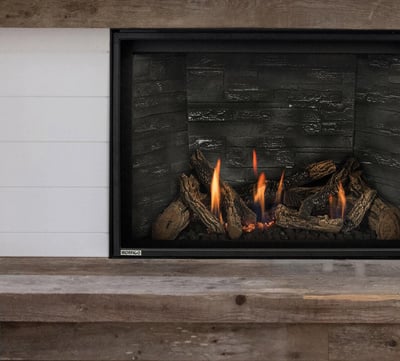
A wood to gas fireplace conversion isn't a single job — it's a series of decisions and tasks that have to happen in the right order. Here's what we handle on a typical conversion project in the Phoenix area, start to finish.
- Gas line doesn't reach the fireplace — we run a new dedicated line from an existing supply point
- Existing firebox is too shallow or irregular for a standard log set — we assess fit and recommend the right product dimensions
- Old damper is stuck open or won't seal — we either repair, replace with a top-mount, or install a damper clamp depending on the conversion type
- Masonry firebox has cracks that need addressing before gas install — we repoint or reline as needed before the appliance goes in
- No existing gas stub-out near the hearth — we coordinate permitting and route the line cleanly through floor or wall
- Homeowner wants remote operation but the gas log set doesn't include it — we source and integrate compatible remote or wall switch systems
- Direct-vent insert requires a new flue liner — we install a properly sized stainless liner through the existing masonry chase
- Permits required by city — we pull all necessary Phoenix permits and schedule inspections so you don't have to
- Existing flue has obstructions or bird nesting — we clear and inspect the flue before any gas work begins
- Surround or hearth needs cosmetic updates after insert installation — we can coordinate trim work and finishing so the install looks intentional, not patched
Gas Fireplace Installation Costs in Phoenix
Most wood to gas fireplace conversions in Phoenix fall somewhere between $1,100 and $3,800 — a range that reflects how different these projects can be from one home to the next. A straightforward gas log set in a firebox with an existing nearby gas supply looks nothing like a full direct-vent insert conversion that requires a new liner and a gas line run from across the room.
| Conversion Scope | Typical Cost Range |
|---|---|
| Vented gas log set installation (gas stub-out nearby) | $1,100 – $1,600 |
| Vented gas log set with new gas line run | $1,500 – $2,200 |
| Ventless gas log set installation | $900 – $1,500 |
| Direct-vent insert with liner (no gas line work) | $2,200 – $3,200 |
| Full direct-vent insert with liner and new gas line | $2,800 – $3,800 |
The biggest factors that push a project toward the higher end are gas line distance and routing difficulty, whether the firebox needs masonry repair before the appliance can be installed, the product tier you select (basic vs. premium flame appearance and remote systems), and permit fees, which vary slightly by Phoenix jurisdiction and project scope. We'll give you a written estimate before any work begins — broken down by labor, materials, and any permit costs — so there are no surprises when the invoice arrives.
How We Work
We run every conversion the same way: methodically, with no shortcuts on the safety or code compliance side. Here's exactly what happens from the time you schedule with us to the moment you press that remote for the first time.
- In-home estimate and assessment — A technician visits the fireplace in person, measures the firebox, locates the nearest gas supply point, checks the flue condition, and reviews your goals. We bring product samples and photos so you can see what different options actually look like installed.
- Product selection and permitting — Once you've chosen an approach, we order the appliance and pull any required Phoenix city permits before scheduling the install. We don't skip permits — and we don't let homeowners absorb that risk either.
- Gas line work — If a new line is needed, our licensed gas tech runs it first, pressure-tests the line, and confirms there are no leaks before any appliance gets connected. This step is non-negotiable.
- Firebox and flue preparation — We address any masonry issues, install or modify the damper as needed, and — on direct-vent insert jobs — run and secure the new stainless liner through the flue.
- Appliance installation and connection — The log set or insert goes in, connections are made, and we do a full operational test: pilot ignition, main burner flame, remote or wall switch function, and a visual check of flame character and color.
- Final walkthrough and handoff — We walk you through operating the system, explain the annual service recommendation, and leave you with all warranty documentation. The space gets cleaned up before we leave.
Arizona Chimney Pros
Arizona Chimney Pros has been working in Phoenix and the surrounding valley for years, and gas fireplace conversions have become one of our most requested jobs — particularly in the older neighborhoods of central Phoenix, the established communities of Tempe, and the custom home developments pushing toward Scottsdale's outer edges. We've converted fireplaces in everything from 1970s ranch homes with original masonry to newer luxury builds where the homeowner simply wants better flame aesthetics and remote control without gutting the hearth.
On every gas job, we take the safety side seriously without being theatrical about it. That means pressure-testing every new gas line before connection, checking for CO baseline levels before we light anything, and making sure every installation meets Arizona Administrative Code requirements for gas appliances. We're ROC-licensed and carry full general liability insurance — documentation available on request, not just on our word.
We hold CSIA and NFI certifications, which matter specifically because they mean our technicians understand both the chimney system and the gas appliance side — not just one or the other. In Phoenix, where response time matters when homeowners are trying to get a fireplace ready before a cold front moves in, we aim to have an estimate appointment available within two to three business days and most installs scheduled within two to four weeks of product availability. For questions or concerns after an install, you reach a real person — not a call center.
Brands We Service
We service most major fireplace and chimney brands across Phoenix — OEM parts stocked for the most common issues, and we can source almost anything we don't have on the truck. Below are the brands we see most often:
- Napoleon
- Regency
- Valor
- Majestic
- Heat & Glo
- Heatilator
- Mendota
- Lopi
- Pacific Energy
- Dimplex
- Jotul
- Vermont Castings
Our Guarantee
Arizona Chimney Pros backs every conversion with a one-year labor warranty. If something we installed or connected develops an issue within that first year, we come back and fix it — no diagnostic fee, no argument about it.
All new appliances and components carry the manufacturer's warranty, which we register for you at the time of installation and pass through in full. Depending on the brand, that typically covers the burner and valve assembly for two to five years and the log set or firebox components for longer.
Beyond the formal warranty: if something feels off within the first 30 days — the flame doesn't look right, the remote is inconsistent, anything — call us. We'd rather come back and verify everything is dialed in than have you quietly unsatisfied with a job we did. Our technicians are NFI-certified, carry full Arizona contractor licensing, and are background-checked. The work is done right or we make it right.
Frequently Asked Questions
Most conversions in the Phoenix area run between $1,100 and $3,800 depending on the scope. A vented gas log set going into a firebox with a nearby gas supply is at the lower end. A full direct-vent insert with a new stainless liner and a gas line run from across the room is at the upper end. The biggest cost variables are how far the gas line needs to travel, whether the firebox needs masonry repair before the appliance can be installed, and which product you choose. We provide written, itemized estimates before any work begins so you know exactly what you're approving.
A gas log set sits inside your existing firebox and vents up through the existing masonry flue — same path the wood smoke used to take. It's simpler, less expensive, and preserves the open-hearth look. A direct-vent insert is a sealed unit that slides into the firebox and vents through a dedicated liner inside the flue. It's more efficient because combustion air comes from outside rather than drawing from the room, and the heat output is better. For most older Phoenix masonry fireplaces, both options work — it comes down to how much you heat the space versus how much you want it for ambiance, and what your budget looks like.
Yes, and we don't give homeowners the option to skip that step. Gas appliance installations in Phoenix require a permit, and any gas line work needs to be inspected by the city. We handle the permit application and schedule the inspection — it's included in how we quote the job, so you're not chasing that down yourself after the fact. Working without permits on gas work creates real problems: it can void your homeowner's insurance coverage on a related claim and complicate a home sale if the work shows up as unpermitted during escrow. We've seen both scenarios. It's not worth the shortcut.
From the time you approve an estimate to the day we light it for the first time, expect roughly two to four weeks. The estimate visit itself usually takes 45 to 60 minutes. After that, product lead time is typically one to two weeks depending on what you've selected and current availability. The installation itself — gas line, appliance, liner if needed — is usually completed in one day for most homes. If we're pulling permits, add a few days for the city inspection scheduling. We'll give you a realistic timeline at the estimate so you're not guessing.
It depends on what's in the flue, and that's exactly what we check before any gas work starts. An unused chimney can accumulate animal nesting, debris from monsoon seasons, and deteriorated mortar joints — any of which can create a venting problem with a new gas appliance. We inspect the flue as part of every conversion assessment. For vented gas log sets, you need a functioning flue; for direct-vent inserts, the sealed liner largely bypasses whatever condition the old flue is in. If we find something that needs attention before it's safe to proceed, we'll tell you clearly — with photos — before we quote the fix.
We can add remote operation to most existing gas fireplace systems, not just new installs. Many older gas log sets were installed with a manual valve or a basic on/off switch, and upgrading to a wireless remote or a programmable wall switch is usually straightforward. The main variable is the valve type — some older valves aren't compatible with aftermarket remote systems and need to be swapped out, which adds a small cost. During any estimate, we'll identify the valve type and tell you exactly what a remote upgrade would involve. For homeowners in Phoenix who want the one-button experience without replacing the entire fireplace, this is often a practical middle option.
What Our Customers Say
Gas fireplace wouldn't light on the first cold night in November. They had a tech out the same afternoon, diagnosed a bad thermocouple in fifteen minutes, had the part on the truck, done in under an hour. Fair price, no upsell.
Linear gas fireplace in our new build stopped working under warranty. They coordinated with the manufacturer, got the replacement part covered, installed it at no cost to us. Handled the warranty paperwork themselves.
Our gas fireplace pilot kept going out. I'd tried replacing the battery myself. Their tech diagnosed a failed thermopile, replaced it, and walked me through how to spot the problem if it happens again. Professional and patient.
Serving Phoenix & Surrounding Areas
Arizona Chimney Pros serves Phoenix and surrounding Phoenix metro communities. Our technicians are on the road daily with same-day and next-day availability across:
- Scottsdale
- Tempe
- Mesa
- Gilbert
- Chandler
- Glendale
- Peoria
Don't see your neighborhood? Call us — our service radius covers about 40 miles of the Valley.
More Services in Phoenix
- Chimney Inspection Phoenix
- Gas Fireplace Installation Tempe
- Fireplace Remodeling Phoenix
- Chimney Cap Installation Phoenix
- Gas Fireplace Repair Phoenix
- Chimney Repair Phoenix
- Creosote Smell In House Phoenix
- Chimney Leak Repair Phoenix
- Chimney Animal Removal Phoenix
- Water In Fireplace Monsoon Phoenix
- Wood To Gas Conversion Mesa
- Linear Vs Traditional Gas Fireplace Arizona
Ready to Stop Hauling Wood for Good?
In-home estimates for gas fireplace conversions are free — no trip charge, no pressure. Arizona Chimney Pros is licensed, insured, and working in Phoenix every week. We'll show you the options, give you a real number, and let you decide. Call us or request an appointment online and we'll get you scheduled.
Sun–Fri 8am–7pm · Emergency service available
Explore More Topics
Helpful guides and related services for Phoenix-area homeowners.