
Water Leaking Down Your Chimney During Monsoon — Causes and Same-Day Fixes
The four places monsoon rain actually enters a Valley chimney, how to tell which one is failing from the firebox, and what you can put on the roof in the next ninety minutes before the next cell arrives.
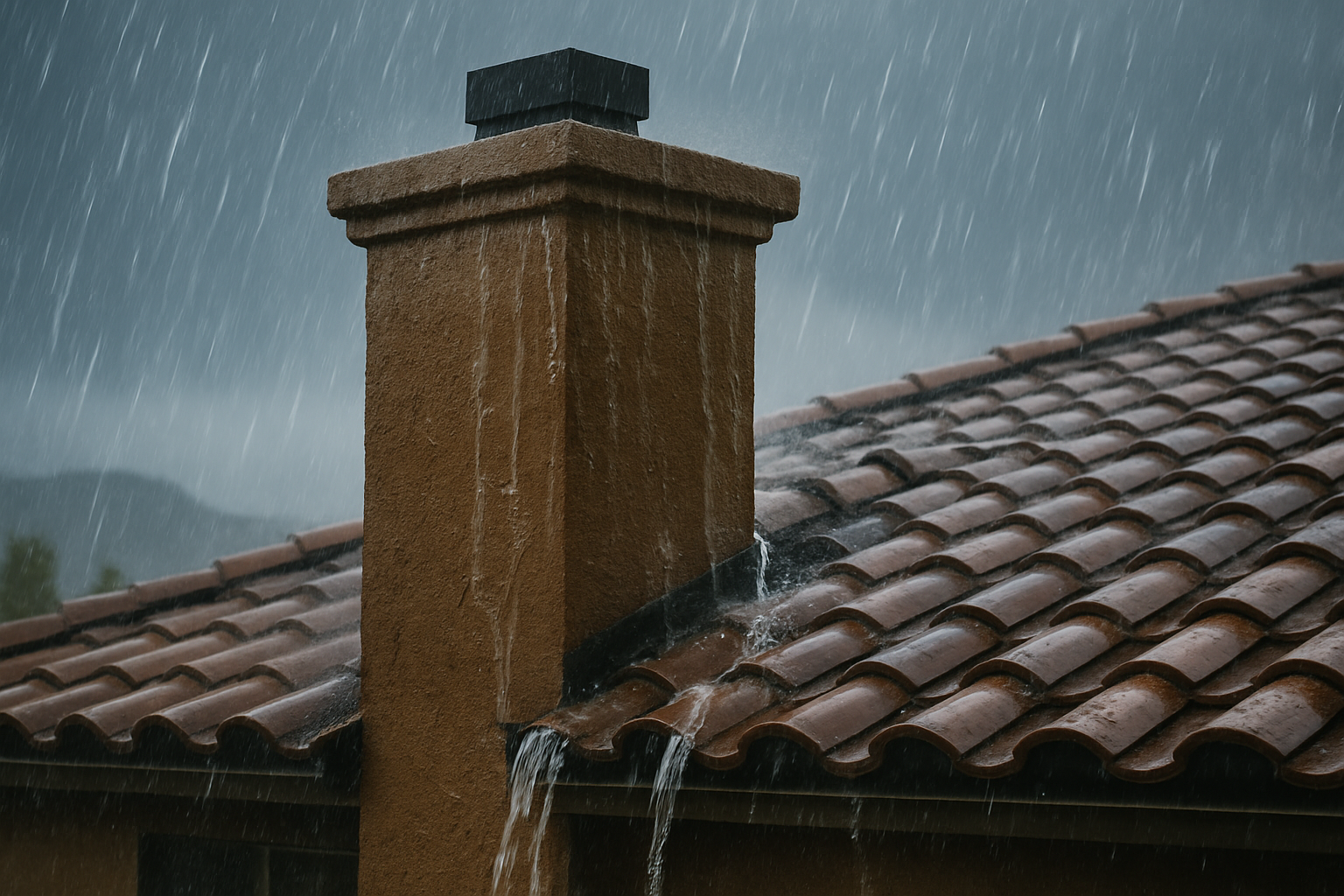

If you’re reading this with a towel in the firebox, the calendar is the most useful diagnostic in the post. Arizona’s monsoon season officially runs June 15 to September 30, but the first storm cells often arrive the second week of June and the diagnostic window closes the minute they do. From late May through early June, a controlled hose test on a dry afternoon will tell you exactly which of the four leak paths is failing — ninety seconds of water on a dry roof, three places to check inside. From July onward, every roof is wet and every test is noisy.
The four places monsoon water enters a chimney
Almost every “my chimney is leaking” call in Phoenix between June and September traces back to one of four sources. Order of frequency in our service history, not a third-party study:
- Crown. The concrete slab on top of the brickwork. Hairline cracks (Tier 1) hold for years until a haboob packs grit in and a storm flushes it back open. Wider structural cracks (Tier 2–3) leak from the first drop.
- Cap. The metal screen-and-hood that sits inside the flue opening. Rusted-through or blown off entirely — we see at least one missing cap per month after a microburst.
- Flashing. The metal-and-sealant joint where the chimney meets the roof deck. Failed sealant lets rain track sideways under the tile or shingle, into the framing, and only shows up at the ceiling drywall.
- Flue tile or liner crack. Rare but serious. Usually only on chimneys not inspected in 10+ years. Needs a camera scan to confirm.
Knowing which one of the four is failing changes the fix from a $250 cap swap to a $1,400 crown rebuild. Don’t guess by what you can see from the ground — the symptom you observe and the source rarely line up the way you’d expect.
How to tell which one is failing without going on the roof
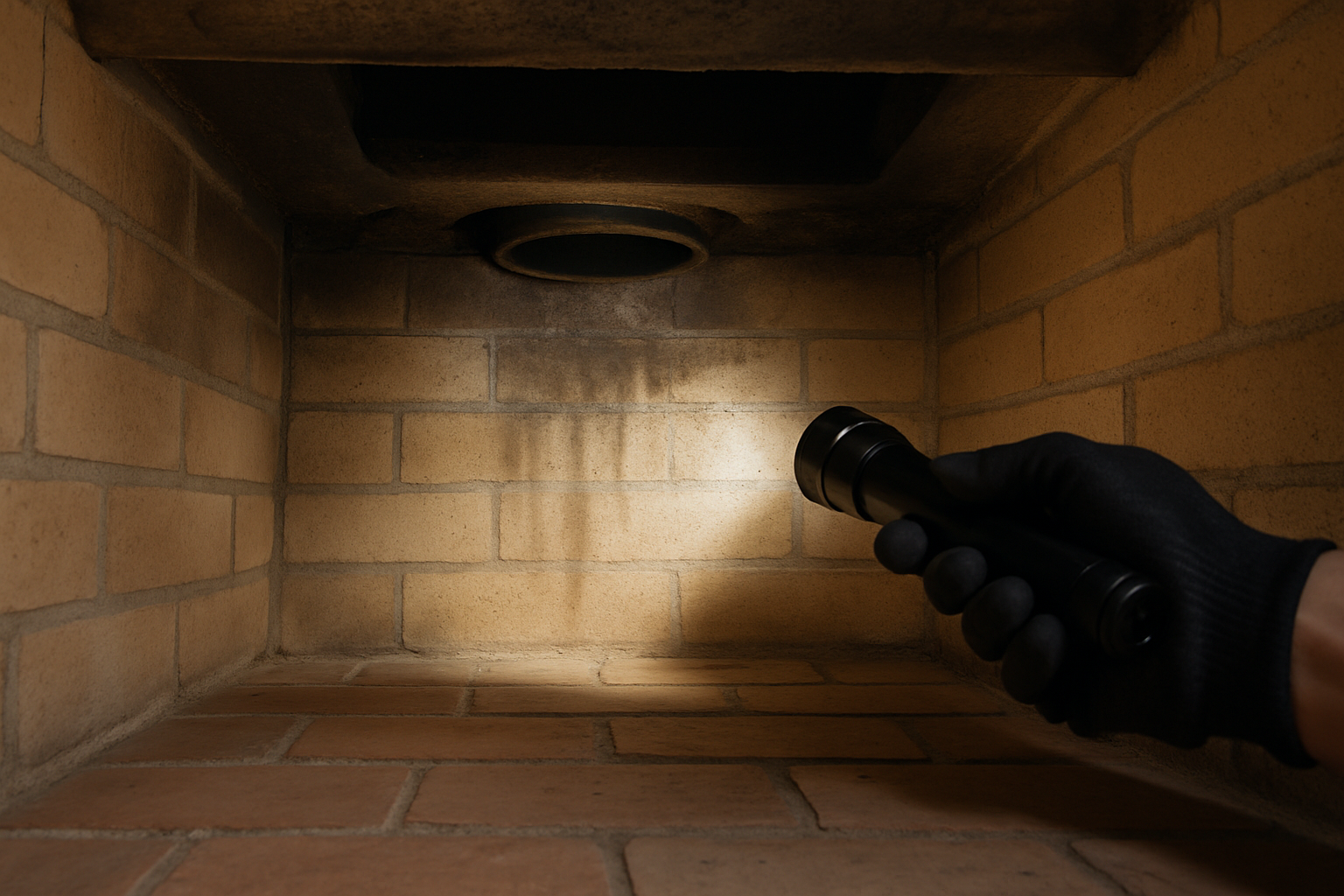
Open the damper. Shine a strong flashlight up the smoke chamber. The pattern of water tells you the source.
- Water on the smoke shelf only. Crown or cap. The smoke shelf is the first thing rain hits when it enters from the top of the flue. If the cap is intact, suspect the crown.
- Water on the flue tile joints (first three feet). Crown cracks letting water track down the outside of the flue tiles. This is the case for a rebuild, not a sealer touch-up.
- Water on the firebox masonry, sides only (not bottom). Flashing. The water is coming in at the roof line and tracking down the brickwork on the outside of the firebox.
- Water in the attic but not in the firebox. Flashing again — the rain is finding the gap between the chimney and the roof deck before it ever gets near the flue.
- White staining on the brick exterior. Efflorescence — mineral salts being pushed out of the brick by chronic moisture migration. The leak has been there a while.
If you see water in more than one of these places at once, you almost certainly have two issues, not one. The Friday after a big storm is when we get the most calls because two latent problems both surfaced in the same eight-hour window.
What you can do in the next ninety minutes — before the next storm cell
None of these are repairs. They’re stop-gaps so the next cell doesn’t make a $300 problem into a $1,800 one.
- Kill the firebox breaker. If water has reached any electrical — the gas igniter, the blower motor, a wall switch — flip the breaker for that circuit before doing anything else.
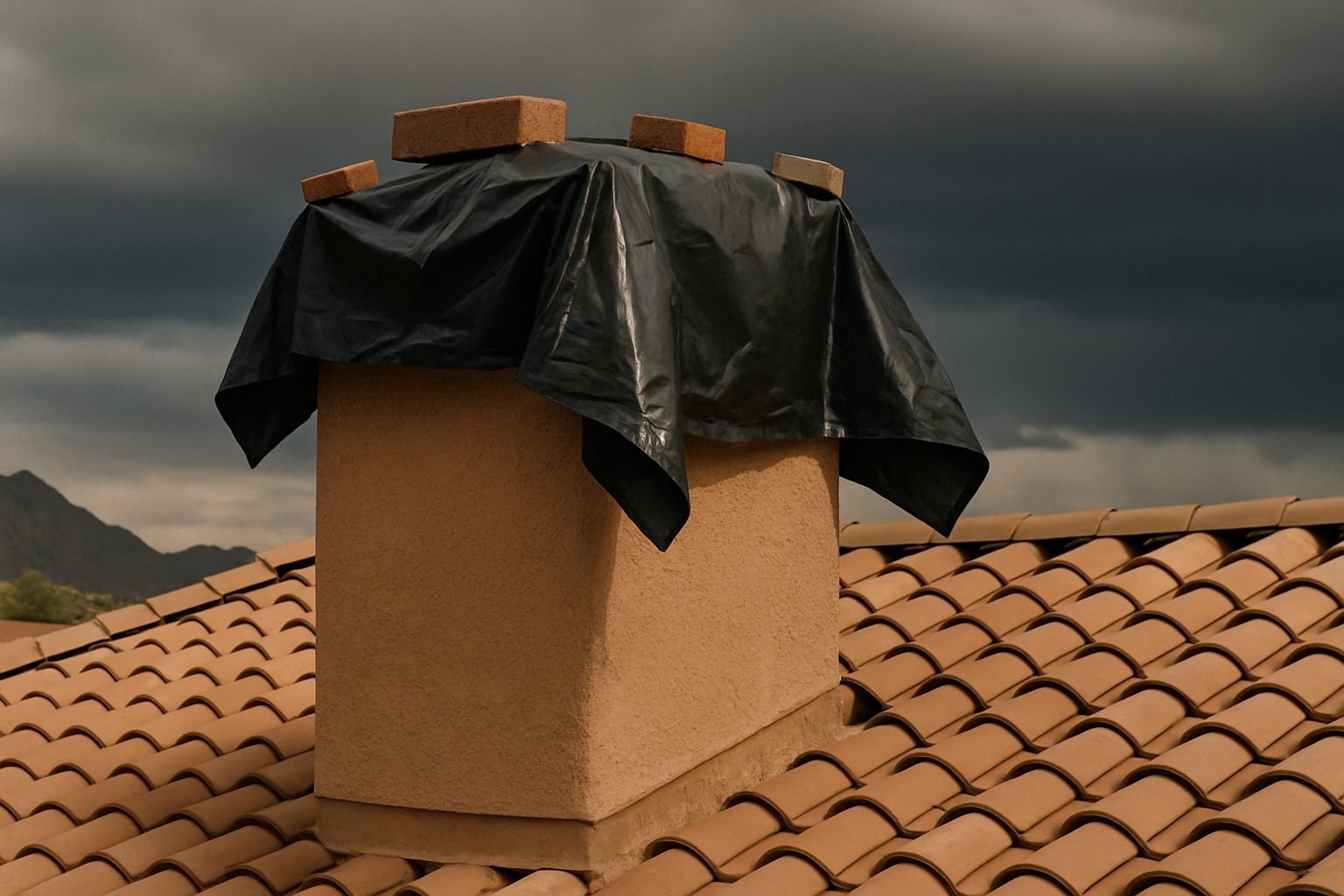
- Tarp the top of the stack. Heavy-mil black plastic, big enough to drape past all four sides of the crown, weighted at the four corners with bricks or paver stones. Not taped down — you want it to come off easily when the storm passes. This is the photo above.
- Towels in the firebox, bucket below. If you can’t reach the roof safely, this is your line of defense. Replace the towels every few hours during active rain.
- Don’t light a fire to “dry it out.” Wet masonry plus a hot fire equals spalling and cracked flue tile. Wait until we can run a camera before you burn anything.
If you don’t feel safe on a tile roof in the morning before a storm, wait for us — we run same-day visits across the metro and the diagnostic is free. The number is at the bottom of this page.
What an actual repair looks like, by source

Crown leaks — $250–$400 to seal, $850–$1,400 to rebuild
Hairline crazing seals with two coats of a concrete crown sealer (ChimneySaver CrownCoat or SaverSystems equivalent), perpendicular brush strokes, 24-hour cure. A structural crack or a separated slab needs a tear-off and re-pour with fiber-reinforced concrete, a foam bond break between crown and flue tile, and a 48–72 hour cure. The full walk-through is in our how to repair a chimney crown guide.
Cap leaks — $250–$450 to replace
A missing or rusted-through cap is the cheapest of the four to fix and one of the most preventive. A correctly sized stainless or galvanized cap with a screen sheds rain, blocks animals, and roughly halves the wear rate on the crown beneath it. See chimney cap installation for the cap options we stock.
Flashing leaks — $300–$900 to repair
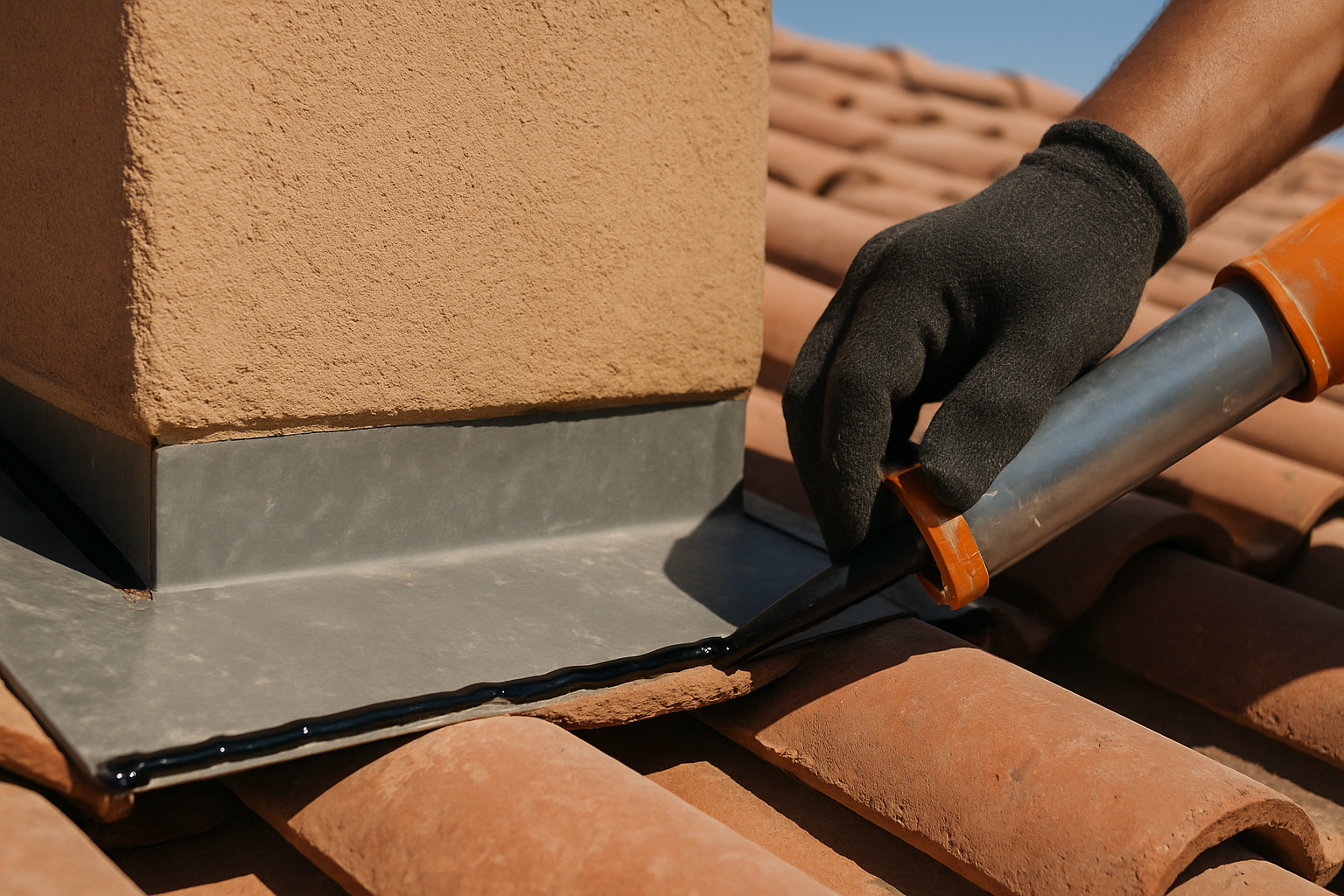
Flashing failures in Phoenix are almost always sealant failure, not flashing failure. The metal lasts decades; the polyurethane caulk it relies on cooks in the sun and shrinks to a hairline in five to seven years. We strip the old bead back to bare metal, prime, re-bed, and counter-flash. On tile roofs the work is two to three hours; on shingle, an hour. See chimney leak repair for what’s included.
Flue or liner cracks — needs a camera scan
The rarest of the four and the only one that needs an inspection scope before we can quote. A Level 1 inspection is $99–$189, with written pricing for any repair work. If the scan finds a flue tile crack, we’ll lay out the relining options before recommending one. See chimney inspection.
The four things we end up tearing off the following spring
- Roof tar or driveway sealant on the crown. Both crack in one Phoenix summer. The tar bonds so aggressively to the concrete that the only way to remove it is to take the crown off with it — turning a $300 fix into a rebuild.
- Spray-on rubber roof sealants over a missing cap. Doesn’t bond. Washes off the first heavy rain. Meanwhile the cap is still missing and birds have started nesting.
- “Quick-fix” flashing tape over a sealant failure. The tape lasts about a season and pulls the underlying tile or shingle when you try to remove it.
- Sealing in the rain. Humidity above about 70% keeps the sealer from curing properly. The whole job has to be redone before fall.
If a contractor offers you any of the four during a monsoon emergency call, decline politely and book a real inspection for the following week.
What this typically costs in the Valley

The numbers below come from our own service-page anchors. We don’t invent them.
- Level 1 inspection — $99 to $189, with written pricing for any repair work.
- Crown sealing (Tier 1 hairline) — $250 to $400.
- Crown rebuild (skim or partial, Tier 2) — $300 to $800.
- Full crown rebuild (Tier 3) — $850 to $1,400.
- Cap replacement — $250 to $450.
- Flashing repair — $300 to $900.
- Standard chimney sweep (when monsoon mess is in the flue) — $189 to $325.
Bundling matters. If you have a cracked crown and a rusted cap, doing both in the same visit saves the second mobilization fee. For wider context, see annual chimney maintenance cost in Arizona and what chimney cleaning costs in Arizona.
When to call — and what we’ll do when we get there
Call now if water is actively reaching the firebox, if you can see daylight in any crown crack from the ground, if your cap is visibly missing or sitting at an angle, or if you’ve noticed new staining on the brick or stucco below the chimney that wasn’t there last fall.
What we’ll do on the visit: a ground-level visual, a roof-side inspection of all four sources, a controlled hose test if conditions allow, and a written diagnosis with photos. Diagnostic is $0 for the roof-side portion. If we find an interior issue and need to run a camera scan on the flue, the Level 1 inspection is $99–$189, quoted separately from any repair work. We diagnose first, quote in writing, and never upsell a rebuild when a seal will do.
Direct line: (602) 557-5071.
Jump to your city: Phoenix · Scottsdale · Mesa · Chandler · Gilbert · Paradise Valley.
Frequently Asked Questions
Why is water leaking down my chimney during monsoon and not in winter?
Monsoon rain in Arizona is heavier, wind-driven, and follows months of dust and soot packing every hairline crack closed. The first storm cell flushes those cracks back open. Winter rain in the Valley is lighter and almost never wind-driven, so the same crack that leaks in July is invisible in February.
Can I keep using my fireplace if my chimney is leaking?
Not until we’ve run the diagnostic. Wet masonry plus an active fire equals spalling brick and a real risk of a flue tile crack — turning a leak into a fire-safety issue. Tarp the top, towel the firebox, kill the breaker if water is near electrical, and wait for the inspection.
Is it cheaper to wait until after monsoon to fix the leak?
Almost never. A compromised chimney taking a full monsoon season’s worth of rain typically pushes the repair scope from “crown only” to “crown plus flashing plus interior masonry repointing,” which is a different budget conversation. The same-day fix is also faster — emergency calls in late July are routinely booked out a week.
Does homeowners insurance cover monsoon chimney leaks?
Insurance covers sudden storm-event damage (a microburst, lightning strike, haboob with measurable impact) and almost never gradual wear. The phrase to listen for on an adjuster call is “ensuing damage” — if the storm damaged the chimney and the water then damaged drywall or framing, the ensuing damage is usually covered even when the chimney itself isn’t. If your leak followed a documented storm, we can write the inspection report to support the claim.
How fast can you get here for a monsoon-emergency leak?
Same-day across the Phoenix metro is common Monday through Friday. We don’t guarantee a specific arrival window during active storm cells — the work isn’t safe on a wet tile roof — but we’ll get on the calendar the day you call and dispatch as soon as conditions clear.
What’s the difference between a chimney leak, a flashing leak, and a roof leak?
A chimney leak enters through the chimney structure itself (crown, cap, or flue). A flashing leak enters at the joint where the chimney meets the roof. A roof leak is unrelated to the chimney and follows the roof’s drainage path. Most homeowners can’t tell them apart from the ceiling stain alone — we test all three before quoting.