
Gas Fireplace Pilot Light Won’t Stay Lit — The Five Causes We Find in Phoenix Homes
Nine times out of ten it’s a $40 thermocouple or thermopile, and a homeowner can rule the rest out in fifteen minutes. Here’s the diagnostic order we run on every Valley service call, what the parts actually cost, and the two failure modes nobody warns you about.
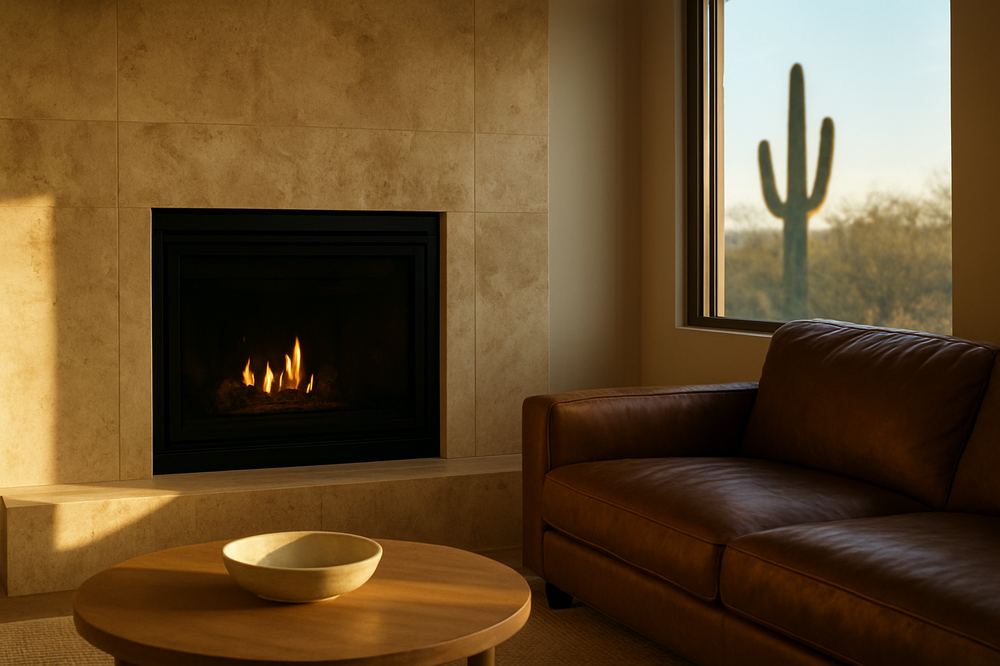
Pilot lights that won’t stay on are ninety percent of the time a thermocouple or thermopile issue — a $40 part and thirty minutes of labor. We keep a dozen on every truck because it’s the most common gas repair we do in the Valley.
Your pilot isn’t dying — the gas valve is killing it on purpose
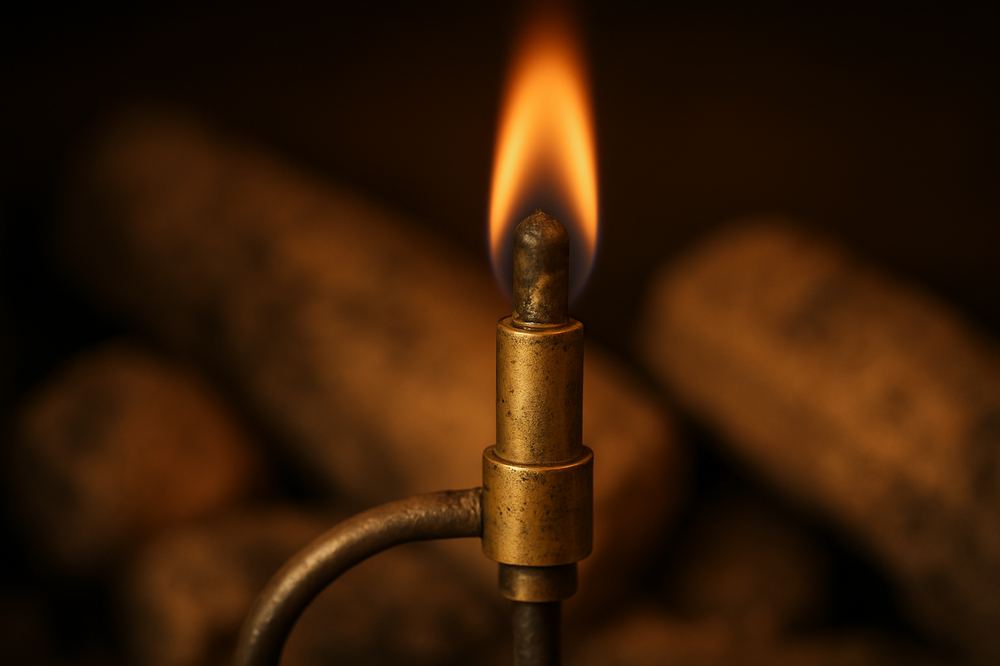
Every standing-pilot gas fireplace has a small metal probe in the flame called a thermocouple (single sensor, controls the pilot side) or a thermopile (a stack of thermocouples, controls the main burner side). Both work the same way: the pilot flame heats the probe, the probe generates a tiny millivolt current, and the gas valve uses that current to confirm a real flame exists before it allows gas to keep flowing.
- A healthy thermocouple puts out roughly 25-30 millivolts. Below ~18 mV, the valve shuts the gas to the pilot — and the pilot goes out.
- A healthy thermopile puts out 600-750 mV with no load, 350-500 mV when the main valve is firing. Below 250 mV under load and the main burner drops.
- The valve isn’t broken when it shuts the gas off. It’s doing the one job it has — not pumping unburned gas into your living room.
This matters because the homeowner instinct is to replace the gas valve. The diagnostic instinct is to first prove the sensor is or isn’t generating enough current. Replacing the valve when the thermocouple is bad is a $300 mistake.
How a tech tells thermocouple from thermopile from valve in five minutes
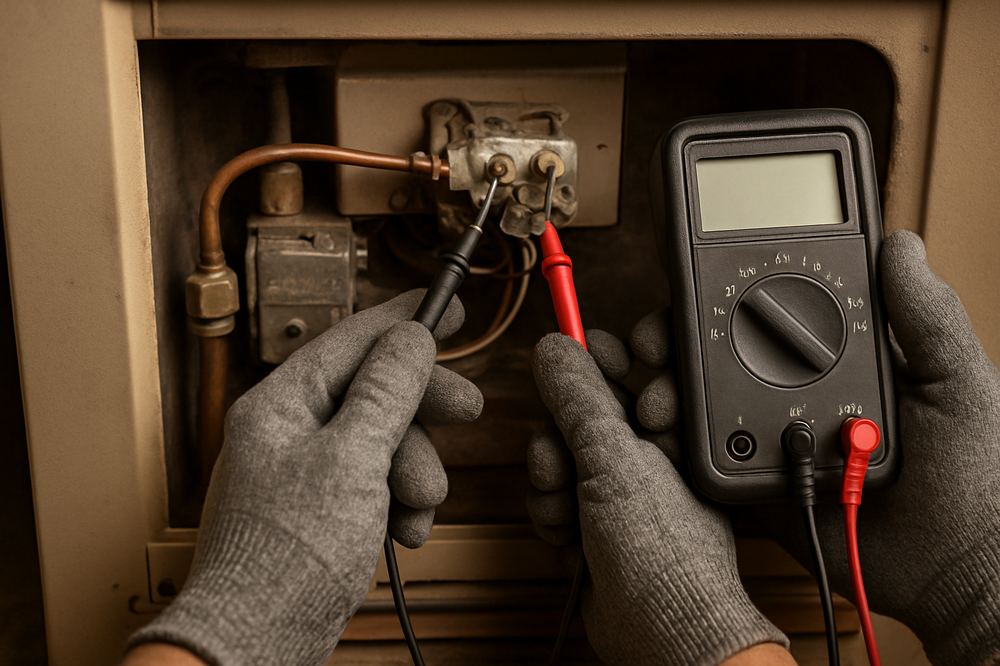
This is the test we run on every “pilot won’t stay lit” call. A homeowner with a $20 multimeter can run the same checks — the trick is knowing which terminals to read.
- Thermocouple test: hold the pilot button down for 45 seconds, then read across the thermocouple-to-valve connection. Healthy = 25-30 mV. Under 18 mV with a clean pilot flame fully wrapping the tip means the thermocouple is failing.
- Thermopile test (TP / TP-TH on the valve): with the pilot lit and the main switch off, expect 600-750 mV. Throw the wall switch on and watch the reading drop — should hold above 350 mV. If it crashes below 250 mV when the main burner tries to fire, the thermopile is the problem.
- Valve test: if both sensors read healthy and the main burner still won’t fire, jumper the wall-switch terminals (TH-TP) on the valve directly. If the burner fires, the wall switch or remote receiver is the issue, not the valve. If it doesn’t, the valve solenoid is bad.
One reading isolates the failing part. Without it, you’re guessing — and our experience is that homeowners who replace before they test usually replace the wrong thing.
What we actually find when we open the lower panel
In rough order of how often we see them on Phoenix-metro service calls:
- 1. Failing thermocouple (~50% of calls). The cheapest part in the system and the first to wear out. Average life in a Phoenix home is 7-10 years; harder use cuts that in half. $15-$25 part, 30-45 minutes of labor.
- 2. Drifted thermopile (~25%). Common on direct-vent units built in the late 90s and early 2000s. Pilot stays lit fine, but the main burner clicks on and dies within seconds — a textbook drifted-thermopile signature. $25-$45 part, 30-45 minutes of labor.
- 3. Dirty pilot orifice or fouled pilot tube (~15%). Desert dust, spider webs, and Sonoran pollen build up on the pilot assembly over the summer dormant months. The flame goes from a strong blue cone to a weak yellow lick that doesn’t reach the thermocouple. A tune-up with compressed air and a brush usually solves this without parts.
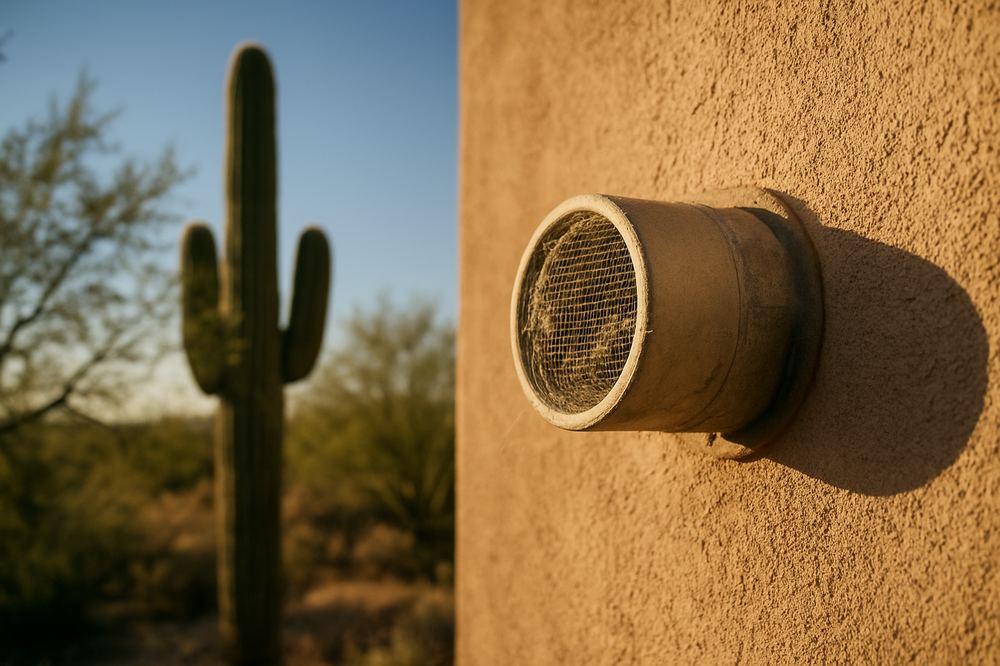
- 4. Vent blockage on direct-vent units (~7%). The coaxial cap on the exterior wall collects dust and webs across the screen. Insufficient combustion air starves the pilot. We clear it with a brush and a vacuum, often without removing the cap.
- 5. Failed gas valve (~3%). The expensive failure — and the one homeowners are most often quoted incorrectly. A valve solenoid can fail, but it’s rare on units under 15 years old and rarer still when the sensors haven’t been tested first. $180-$320 part, an hour to swap.
Cause 3 is the Phoenix-specific one. Desert dust is fine enough to slip past basic filters and coat a pilot assembly like a film — we clean it off five-year-old inserts that look like they’ve been sitting outdoors. If the unit hasn’t had an annual service in two-plus years, this is the first place we look.
Real Phoenix-area pricing — thermocouple swap to full valve rebuild
Honest numbers from recent Valley jobs. A standard service call applies the $99 diagnostic toward the repair if you proceed.
- Thermocouple replacement: $99 diagnostic + $50-$95 part & labor. Total $150-$200 in the truck same day.
- Thermopile replacement: $99 diagnostic + $75-$140 part & labor. Total $175-$240. Usually one visit.
- Pilot assembly clean (no parts): $99-$150 in a single visit, included in a $189 annual tune-up if it’s been over a year.
- Vent termination clear and inspection: $99-$175 depending on roof access — usually bundled with a chimney check.
- Gas valve replacement: $280-$450 installed, depending on the make. We diagnose the sensors first and only quote a valve when the millivolt test confirms it.
- Diagnostic visit (no repair): $99 flat. If the unit is over twenty years old and parts have been discontinued, we’ll tell you on the first visit and won’t quote a no-win repair.
If your remote also stopped working, that’s usually a separate problem — we cover the diagnostic in our fireplace remote control replacement guide. And if the unit won’t fire at all from the wall switch either, start with the gas fireplace not turning on diagnostic.
Why the Valley breaks gas fireplaces differently than the rest of the country
National service techs run a different probability tree than we do. Here’s what’s actually different about an Arizona pilot-light problem:
- First-burn-of-season call surge. The first cool evening of October triggers a burst of pilot-won’t-stay-lit calls every year. Eight months of dormant summer let dust coat the pilot assembly and webs build inside the burner box. Most of these are clean-and-tune jobs — no parts needed.
- Dormant pilots in summer. Phoenix homeowners often shut the pilot off in May to save the few dollars of gas. Spiders and dust take over the pilot tube over the dormant months. When the pilot lights again in fall, the flame is starved.
- Direct-vent thermopiles drift faster. The temperature swings inside a Phoenix attic and exterior wall (140°F summer cap heat, 45°F winter mornings) shorten thermopile life. We see seven-year drifts on units that’d last twelve in San Diego.
- Multi-fireplace estates have a sleeping unit. In Paradise Valley, DC Ranch, and parts of Scottsdale, owners often have three or four gas units and use one. The other three drift dormant, valves stick, pilots clog. By year fifteen the unused units need full rebuilds.
- Outdoor patio units take pollen and wind. Fountain Hills and Carefree see more outdoor-fireplace pilot issues than indoor — wind-driven dust and Palo Verde pollen clog the pilot assembly. Three-minute clean, fireplace back in service.
The pattern matters because it tells you what to test first. A first-burn October call almost certainly isn’t a dead valve. A pilot that worked fine all winter and died in March is much more likely to be a worn sensor. We start with the most likely cause for the season we’re in.
Three things a homeowner can do safely in fifteen minutes
None of these involve touching the gas valve or the supply line. If you smell gas, stop and step outside — that’s a different call.
- Look at the pilot flame. A strong pilot is a steady blue cone with a tiny yellow tip that fully wraps the thermocouple. If the flame is small, lazy, mostly yellow, or doesn’t touch the sensor, the pilot orifice is fouled. A can of compressed air and a soft brush often restores the flame without parts.
- Check the pilot flame position. On older units the pilot assembly can shift over the years — sometimes from a homeowner cleaning the burner. The thermocouple tip should be inside the inner cone of the flame, about a quarter-inch from the orifice. Way off and the sensor never gets hot enough.
- Clean the vent termination on direct-vent units. The coaxial cap on the exterior wall — the round metal piece with a screen — collects dust and spider webs. Brush it gently from outside, vacuum the screen. Don’t remove the cap or anything inside.
If none of those restore a steady pilot, the sensor is almost certainly failing — that’s the call to make.
When “pilot won’t stay lit” isn’t actually the pilot
Two situations where the diagnostic flips:
- Vent blockage on a B-vent or coaxial unit. On a windy day, a partially blocked vent creates a downdraft that physically blows the pilot out. The pilot won’t stay lit not because the sensor is bad but because the flame keeps getting extinguished. A vent inspection rules this in or out — and once it’s clear, the pilot holds.
- Failed gas pressure regulator. Rare, but on older homes where the meter regulator has drifted or a manifold has cracked, the pilot starves for gas pressure. Visible as a pilot flame that’s too short to reach the thermocouple even when the orifice is clean. This is a utility-side or main-line repair — not a fireplace fix.
Both look like a thermocouple problem to a homeowner. The millivolt test rules them in or out before we touch the valve. If the unit is over twenty years old and the parts are discontinued, the conversation moves toward replacement rather than repair — we’ll always tell you which side of that line the unit is on before we quote.
Frequently Asked Questions
Why does my pilot light keep going out?
A pilot that lights but won’t stay lit is almost always a failing thermocouple or thermopile — the sensor that tells the gas valve the pilot is present. It’s a common wear item, typically an inexpensive part and under an hour of labor to replace.
Why is my pilot light blue and weak?
A small or lazy pilot flame usually means a partially clogged pilot orifice or a drop in gas pressure. It can also indicate the pilot tube itself is fouled. A tune-up almost always resolves this without any parts.
How much does gas fireplace repair cost?
Most repairs fall in the $150 to $450 range. Simple fixes like thermocouples or igniters are on the lower end; control board replacements or valve work are higher. A diagnostic visit typically runs $99 and applies toward the repair if you proceed.
How often should a gas fireplace be serviced in Arizona?
Annual service is the standard recommendation — one tune-up per year keeps the pilot assembly clean, the igniter components tested, and the gas valve verified. In Arizona the dust accumulation from dry summers and monsoon-driven fine particulates makes annual cleaning more important than in milder climates.
Should I repair or replace my gas fireplace?
Repair is usually the right call if the unit is under 15 years old, parts are available, and the fix is under a third of replacement cost. Replacement makes sense when the unit is obsolete, parts are discontinued, or efficiency and safety have become issues.
Why won’t my gas fireplace light?
The most common causes are a dirty or drifted pilot assembly, a failed thermocouple or thermopile, a weak igniter, or a gas supply issue. In Arizona, dust infiltration through the off-season is the number one cause we see when fireplaces fail to light on the first cool evening of October.
Start With a Professional $99 Inspection
A fireplace specialist evaluates the fireplace, explains what they find, and gives you written pricing before any work begins.
Book Your $99 Fireplace Inspection
We’ll evaluate the fireplace, explain what we find, and provide clear written options — before any work begins.
Phoenix · Scottsdale · Mesa · Tempe · Chandler · Greater Valley