Wood to Gas Fireplace Conversion in Scottsdale, AZ
Cave Creek and Carefree chimneys are magnets for wildlife — pack rats, bees, even the occasional owl. We pull more debris nests out of north-valley chimneys in fall than anywhere else in the metro.
What you don't love is hauling wood, dealing with smoke that drifts into the room, or spending twenty minutes coaxing a fire to life on a cold December evening. If your wood-burning fireplace has started to feel more like a project than a pleasure, you're not alone — and you're not stuck with it.
A wood to gas fireplace conversion in Scottsdale is one of the most satisfying home upgrades we do. The result isn't just a cleaner-burning fire — it's a fireplace that actually fits how you live. Flip a switch, get a flame. Adjust it from the couch. Turn it off completely when you're ready for bed. No ash, no creosote, no cleanup.
At Arizona Chimney Pros, we've done this conversion in everything from sprawling estate homes in North Scottsdale to updated mid-century properties near Old Town. We know the local HOA requirements, the gas line logistics, and the aesthetic expectations that come with homes in this market. If you're ready to stop tolerating your fireplace and start actually enjoying it, this is the page for you.
Gas Fireplace Installation in Scottsdale
Scottsdale homeowners have a specific relationship with their fireplaces that's different from most of the country. The desert climate means you're not using the fireplace eight months of the year — but when October arrives and the evenings finally cool down, you want it to work instantly and look great doing it. That's exactly why gas conversions have taken off in this market the way they have.
The luxury segment here has driven demand harder than almost anywhere else in the Valley. Homeowners doing full kitchen and bath remodels are looking at the fireplace and realizing it's the last thing in the room that still looks dated or requires effort. A gas log insert with a clean surround and a remote ignition system changes that completely — it becomes a design feature, not an afterthought.
We also see a real pattern with estate and gated-community homes where the fireplace gets used heavily during snowbird season and then sits completely dormant until the following fall. That stop-start cycle is actually easier on a gas system than a wood-burning one, and homeowners who switch rarely look back.
There's also a growing documentation trend worth knowing about. HOA requirements around fireplace systems and chimney inspections have tightened across several Scottsdale neighborhoods — we've seen single developments generate thirty or more inspection and conversion calls in a matter of weeks when documentation requirements hit during home sales. If you're thinking about listing, or just want to stay ahead of it, getting the conversion and inspection documented now is a smart move.
Phoenix and Paradise Valley homeowners are making the same switch for the same reasons, but the concentration of high-finish homes in Scottsdale makes the aesthetic stakes a little higher here.
Signs Your Gas Fireplace Installation Needs Attention
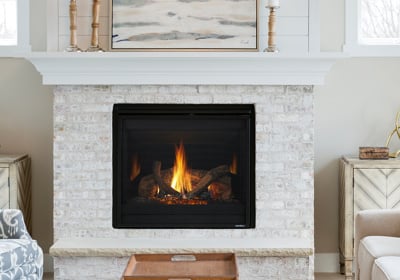
Most homeowners who call us about a conversion have already been living with one or more of these frustrations for a season or two. If several of these sound familiar, the wood-burning era of your fireplace is probably over.
- You're buying and stacking firewood that sits unused most of the year because lighting a fire feels like too much effort
- Smoke occasionally spills into the room even with the damper fully open — a sign of draft issues that gas eliminates entirely
- The firebox interior is stained dark with creosote and soot that never fully cleans off
- Your ash drawer or firebox floor fills up after every use and requires cleanup before the next fire
- The fireplace opening looks dingy, dated, or out of place with the rest of the room's design
- You've had the chimney inspected and the technician flagged deteriorating mortar, a cracked flue liner, or other issues that make continued wood burning a liability
- Guests or family members with respiratory sensitivities find wood smoke irritating, even with good ventilation
- You've been avoiding the fireplace entirely for a full season because it's just not worth the hassle
If two or more of these describe your situation, a gas conversion isn't just a convenience upgrade — it's a practical fix for a fireplace that's stopped working for your household. Call us and we'll assess your existing firebox, your gas line situation, and your design goals in a single visit.
Common Gas Fireplace Installation Problems We Repair
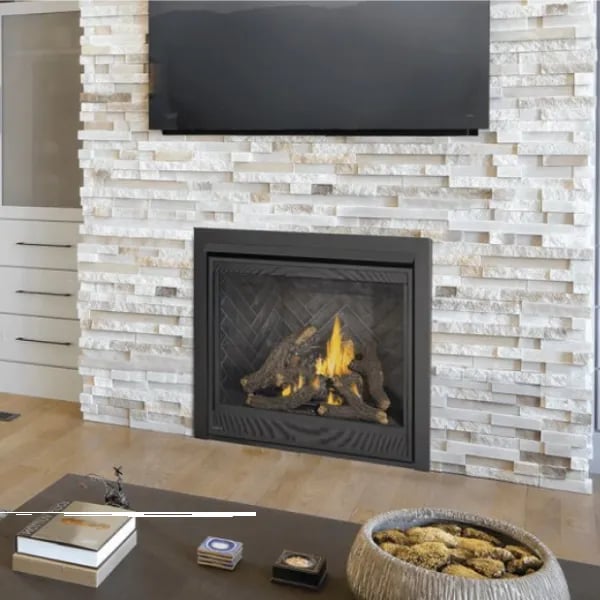
A wood to gas conversion involves more than dropping a gas log set into an existing firebox. Here's a specific breakdown of the issues and scope items we handle on every Scottsdale conversion project.
- No existing gas line to the fireplace — we coordinate gas line extension from the nearest source, typically the main line or a nearby appliance connection
- Undersized or poorly routed gas supply — older homes sometimes have supply lines that won't support the BTU load of a gas insert; we assess and upsize as needed
- Damper that won't seal properly — wood fireplaces need a working damper; gas inserts require it to be locked open or replaced with a top-sealing cap
- Firebox dimensions outside standard insert sizing — oversized or unusually shaped fireboxes require custom fitting or masonry modification
- Cracked or deteriorated firebox interior — we inspect and repair the firebox before installing any gas appliance
- Outdated or missing surround and hearth finish — many conversions include a surround refresh to match the new insert aesthetics
- Ventilation configuration mismatch — some gas inserts require a liner sleeve through the existing flue; we assess venting type (B-vent, direct-vent, or ventless) and configure accordingly
- HOA documentation requirements — we prepare the product specs, installation diagrams, and architectural submission materials many Scottsdale communities require
- Remote or wall switch wiring — we wire and test ignition controls, thermostatic remotes, and smart home integrations where applicable
- Post-conversion carbon monoxide baseline testing — we test combustion output at the conclusion of every gas installation
Gas Fireplace Installation Costs in Scottsdale
Gas fireplace conversions in Scottsdale typically run between $1,200 and $4,000, with most straightforward gas log insert projects landing in the $1,500–$2,500 range once you account for the insert unit itself, installation labor, and any minor gas line work. The wide range exists because no two fireplaces — and no two homes — are identical.
| Service / Scope | Typical Cost Range |
|---|---|
| Gas log insert installation (existing gas line present) | $1,200 – $1,800 |
| Gas log insert + new gas line extension | $1,800 – $2,800 |
| Gas fireplace insert with custom surround finish | $2,500 – $3,500 |
| Full conversion with venting liner, surround, and controls | $3,000 – $4,000 |
| Firebox repair + conversion (cracked liner or damaged interior) | Add $400 – $900 |
What moves the number up: needing a new gas line run from a distant source, a firebox that requires masonry repair before installation, a high-end insert unit with thermostatic controls and realistic ceramic log sets, or a surround replacement using natural stone or custom tile. What keeps it lower: an existing nearby gas stub-out, a firebox in good structural condition, and a standard-sized opening that accepts a catalog insert without modification.
We give written estimates before any work begins. You'll know exactly what you're approving — there are no surprise line items after the fact.
How We Work
A conversion done right takes a full day for most homes. Here's exactly how we approach it — from the first look at your existing fireplace to handing you the remote on a finished installation.
- Initial assessment and homeowner walkthrough — We look at your firebox dimensions, existing gas supply situation, venting configuration, and the aesthetic direction you want. We ask questions about how you use the space and what the finish needs to look like. This shapes everything that follows.
- Gas supply evaluation and planning — We trace the nearest gas line, measure the run distance, confirm pressure and pipe sizing, and determine whether your existing supply can support the insert you're choosing. If a new line is needed, we plan the route and include it in your written estimate.
- Firebox inspection before any installation — We inspect the firebox interior for cracks, spalling, or deteriorated refractory panels. Gas appliances sit in close proximity to these surfaces — they need to be structurally sound before we proceed.
- Insert fitting and venting configuration — We size the insert to your opening, install any required flue liner sleeve, and configure the venting type. The insert is set, leveled, and secured according to the manufacturer's specifications and local code.
- Gas connection, ignition wiring, and controls — We make the gas connection, install and test the ignition system, and wire any remote or wall switch controls. Every connection is leak-tested with a manometer before the gas is turned on.
- Combustion test, cleanup, and homeowner handoff — We run the unit, verify flame pattern and combustion output, and do a final CO baseline reading. Then we walk you through operating the insert, the remote, and any maintenance intervals — and leave the space cleaner than we found it.
Arizona Chimney Pros
Arizona Chimney Pros has been working in Scottsdale specifically for over a decade — not just passing through from a Phoenix dispatch. We know the neighborhoods, the HOA approval processes, the home styles, and the expectations that come with the luxury market here. The work we do in gated North Scottsdale communities and along the canal-adjacent estates near Old Town holds to a different finish standard than a standard repair call, and we staff accordingly.
On every gas installation and conversion, we work to Arizona Administrative Code gas piping requirements and pull permits where the scope requires it. We test every connection with a calibrated manometer before the gas is ever turned on, and we run a carbon monoxide baseline at the completion of every job. This isn't optional for us — it's procedure.
We're ROC-licensed and fully insured. Our technicians hold NFI (National Fireplace Institute) gas appliance certification, which means they've been tested on the specific systems we install, not just general HVAC work. We've also prepared HOA architectural submission packets for most of the major managed communities in the area — if your association requires documentation before approving exterior chimney work or interior appliance changes, we've likely done it for a neighbor already.
When you call about a Scottsdale job, you're talking to someone who can be on-site the same day in most cases — typically within a few hours for urgent gas-related concerns.
Brands We Service
We service most major fireplace and chimney brands across Scottsdale — OEM parts stocked for the most common issues, and we can source almost anything we don't have on the truck. Below are the brands we see most often:
- Napoleon
- Regency
- Valor
- Majestic
- Heat & Glo
- Heatilator
- Mendota
- Lopi
- Pacific Energy
- Dimplex
- Jotul
- Vermont Castings
Our Guarantee
Every gas fireplace conversion we complete in Scottsdale carries a two-year workmanship warranty on the installation itself. If something we touched isn't performing the way it should within that window, we come back and make it right — no diagnostic fee, no argument.
The insert unit and components carry the manufacturer's warranty, which typically runs one to five years on parts depending on the brand and component. We register your unit at the time of installation and provide you with the documentation so you're covered if a manufacturer claim ever comes up down the road.
Beyond the formal warranty language: if something feels off in the first thirty days — a smell you're not sure about, a flame pattern that seems different from what we showed you, a remote that's behaving inconsistently — call us. We'd rather come out and confirm everything is fine than have you wonder about it. Our technicians are NFI-certified, carry full Arizona general liability insurance, and are background-checked. That's the baseline we hold ourselves to on every job.
Frequently Asked Questions
Most standard conversions — where a gas line is already nearby and the firebox is in good shape — take a full day, typically six to eight hours from setup to final walkthrough. If the job requires a new gas line run from a more distant source, or if we find firebox repairs needed once we open things up, budget for a day and a half. We don't rush the gas connection or the testing phase regardless of how clean the rest of the install went. You'll know what to expect in your written estimate before we start.
Not necessarily — we handle gas line extension as part of the conversion scope on many jobs. During the initial assessment, we locate your nearest gas supply line, measure the run, confirm pipe sizing, and include the line work in your estimate if it's needed. Most Scottsdale homes built in the last thirty years have a gas stub-out within a reasonable distance of the living area. Older homes or those with all-electric setups occasionally require a longer run, which adds to the cost but is absolutely doable. We'll tell you exactly what's involved before you commit to anything.
A gas log set sits in your existing firebox and vents through your existing chimney — it looks like a traditional fire and uses the open-combustion design your wood fireplace already has. A gas insert is a sealed unit that slides into the firebox opening and connects to a liner sleeve run through the flue. Inserts are significantly more efficient because they're enclosed, and they're better suited for homeowners who want real heat output rather than just ambiance. In Scottsdale, most of the conversions we do in higher-finish homes use inserts — the sealed face and clean surround look more intentional than a log set in an open firebox.
It depends on your specific association's CC&Rs, but increasingly the answer is yes — especially if the project involves any exterior chimney work, visible cap changes, or modifications to the home's footprint. We routinely prepare architectural review submissions for Scottsdale and Paradise Valley HOA communities, including product specifications, installation diagrams, and photos of the proposed finish. If your HOA requires it, we've almost certainly worked with them before or know the submission format they expect. Flag it when you call and we'll factor the documentation into the project timeline.
Yes — and in several ways, a properly installed gas insert is safer than a wood-burning fireplace for households with children or pets. There's no flying spark risk, no smoldering ash to accidentally contact, and the combustion is sealed inside the unit rather than open to the room. That said, the glass face of a gas insert gets extremely hot during operation and stays hot for a while after shutoff — barrier screens are available and we recommend them for homes with young kids. We also do a full carbon monoxide baseline test at the end of every installation, and we can advise on CO detector placement if you don't already have them positioned correctly.
Yes on both counts. We're ROC-licensed in Arizona and carry full general liability insurance — documentation is available on request. On gas fireplace conversions, we assess the permit requirement based on the specific scope: gas line work that crosses certain thresholds typically requires a permit from the City of Scottsdale, and we pull it when it does. Some insert-only installations with an existing stub-out fall below the permit threshold, but we'll tell you clearly which category your job falls into. Working unpermitted on gas systems isn't something we do — the liability isn't worth it to you or to us.
What Our Customers Say
Linear gas fireplace in our new build stopped working under warranty. They coordinated with the manufacturer, got the replacement part covered, installed it at no cost to us. Handled the warranty paperwork themselves.
New build in north Scottsdale — the builder's subcontractor installed the fireplace wrong. Arizona Chimney Pros diagnosed it, documented it for us, and did the corrective work after the builder agreed to pay. Responsive and detailed.
Called about a gas smell near the fireplace on a Saturday afternoon. They had someone out within two hours, found a loose fitting, tightened and leak-tested it, didn't charge for the emergency. Real professionals.
Serving Scottsdale & Surrounding Areas
Arizona Chimney Pros serves Scottsdale and surrounding Phoenix metro communities. Our technicians are on the road daily with same-day and next-day availability across:
- Phoenix
- Paradise Valley
- Mesa
- Gilbert
- Chandler
- Tempe
- Glendale
- Peoria
Don't see your neighborhood? Call us — our service radius covers about 40 miles of the Valley.
More Services in Scottsdale
- Chimney Inspection Scottsdale
- Gas Fireplace Installation Phoenix
- Chimney Repair Scottsdale
- Chimney Cleaning Scottsdale
- Gas Fireplace Repair Scottsdale
- Fireplace Remodeling Scottsdale
- Pilot Light Wont Stay On Scottsdale
- Fireplace Smoke Smell Scottsdale
- Thermopile Replacement Scottsdale
- Blower Fan Not Working Scottsdale
- Wood To Gas Conversion Phoenix
- Gas Log Vs Real Log Fireplace Comparison
Ready to Stop Thinking About It and Start Enjoying It?
A wood to gas fireplace conversion is one of the cleanest, most satisfying upgrades a Scottsdale home can get — and the estimate is free. We're licensed, insured, and typically available same-day or next-day for initial consultations throughout the area. Call Arizona Chimney Pros and let's take a look at what your fireplace can become.
Sun–Fri 8am–7pm · Emergency service available
Explore More Topics
Helpful guides and related services for Phoenix-area homeowners.