
Gas Fireplace Maintenance in Arizona: What Actually Needs Doing, and When
A gas fireplace looks like it runs itself. It doesn’t. Desert dust, dormant valves, and drifting components quietly age it whether you burn it or not. Here’s the maintenance that actually matters, what you can safely handle yourself, and what to leave to a licensed tech.
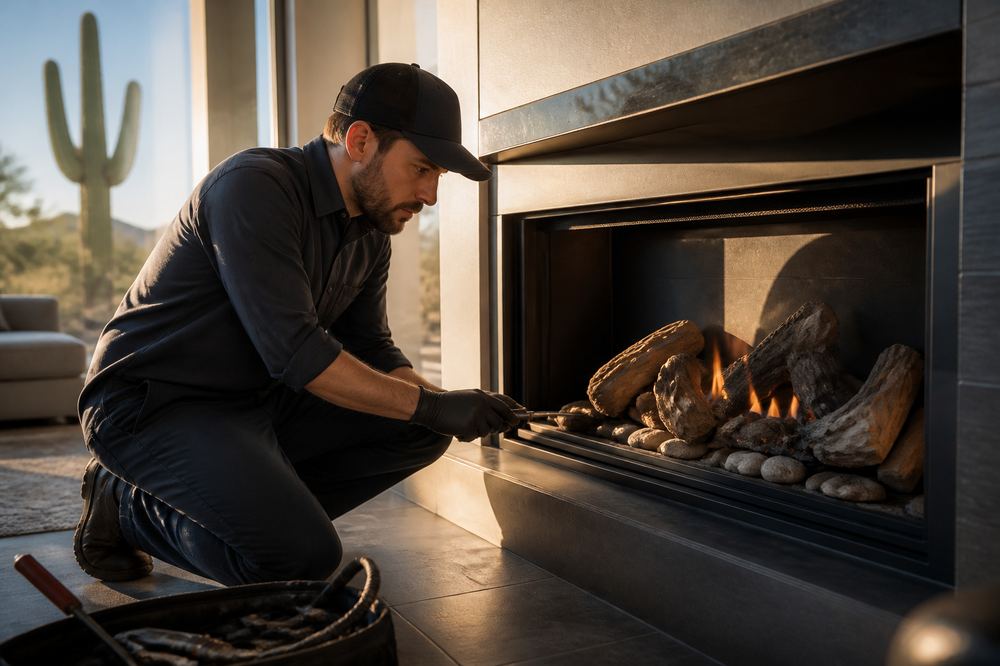
The single most common reason a Valley gas fireplace won’t light on the first cold night in October is dust that built up all summer — not a failed part. Annual service is how you stay ahead of it.
Yes, a gas fireplace still needs maintenance
Homeowners are often surprised when we say a gas fireplace needs annual service even if it’s barely been used. There’s no wood, no ash, no creosote — so what is there to maintain? The answer is everything you can’t see. Dust works its way into the burner ports and the pilot assembly, spiders nest in the pilot tube over a quiet summer, and the gas valve and sensors drift slowly out of spec whether the unit runs or sits.
That’s the part that catches people off guard. A gas fireplace ages on a schedule of its own, set by the desert and the calendar rather than by how many fires you light. The maintenance below is the work that keeps it lighting on the first try and burning the way it was built to.
What an annual tune-up actually includes
A complete tune-up is more than a quick once-over. It starts with a visual inspection of the firebox and venting, then a cleaning of the pilot assembly and burner tray where dust collects. From there a tech tests the thermopile and thermocouple, verifies gas pressure, runs a combustion check, confirms the remote or wall switch operates, and checks every fitting for leaks.
It’s the cheapest thing we do that saves the most money over time. A one-hour visit routinely catches five or six small issues that would otherwise turn into emergency calls a couple of winters later. If your unit hasn’t been looked at in a few seasons, that first visit is the one that matters most — book it through gas fireplace repair in Phoenix before the cold sets in.
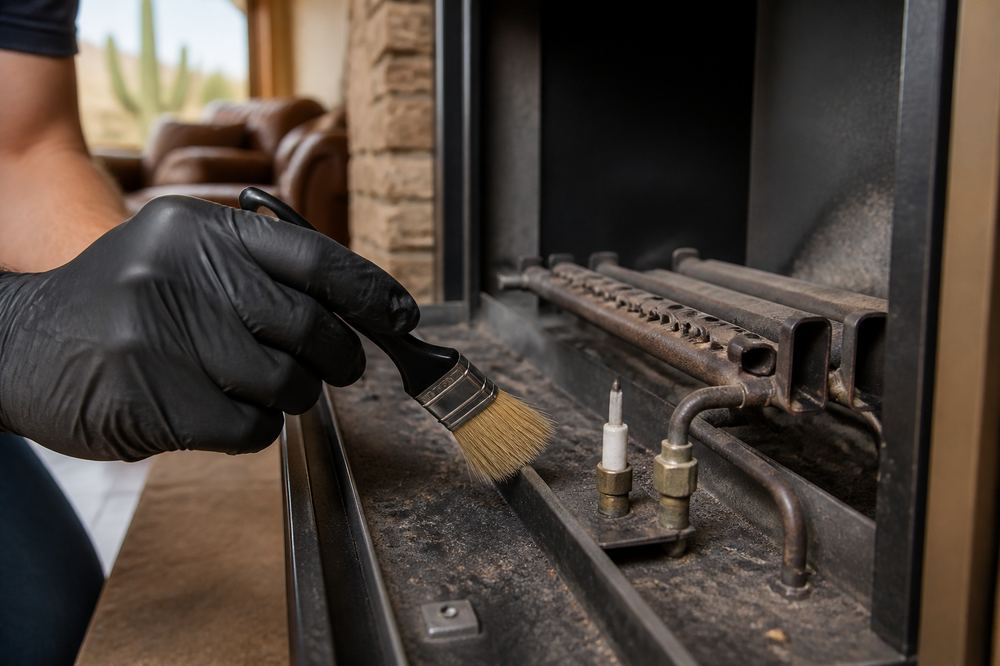
Dust is the real enemy out here
Desert dust is fine enough to slip past basic filters, and it settles on a pilot assembly like a film. Over a single summer that film is enough to choke ignition. We see it most in older homes that sit unused — in Tempe condos near ASU we regularly open up units that haven’t been serviced in a decade, find the burner tray packed with dust, and watch the flame burn yellow instead of blue. Owners assume it’s a major failure. It’s almost always just a cleaning.
Monsoon and haboob season make it worse. After a big dust event we get a wave of calls — not from people using their fireplaces, but from dust infiltrating burner assemblies and clogging the venturis that mix gas and air. A clean unit shrugs it off. A neglected one stops working. If yours is shutting off a few minutes after it lights, a dust-clogged sensor is a common cause.
What you can safely do yourself
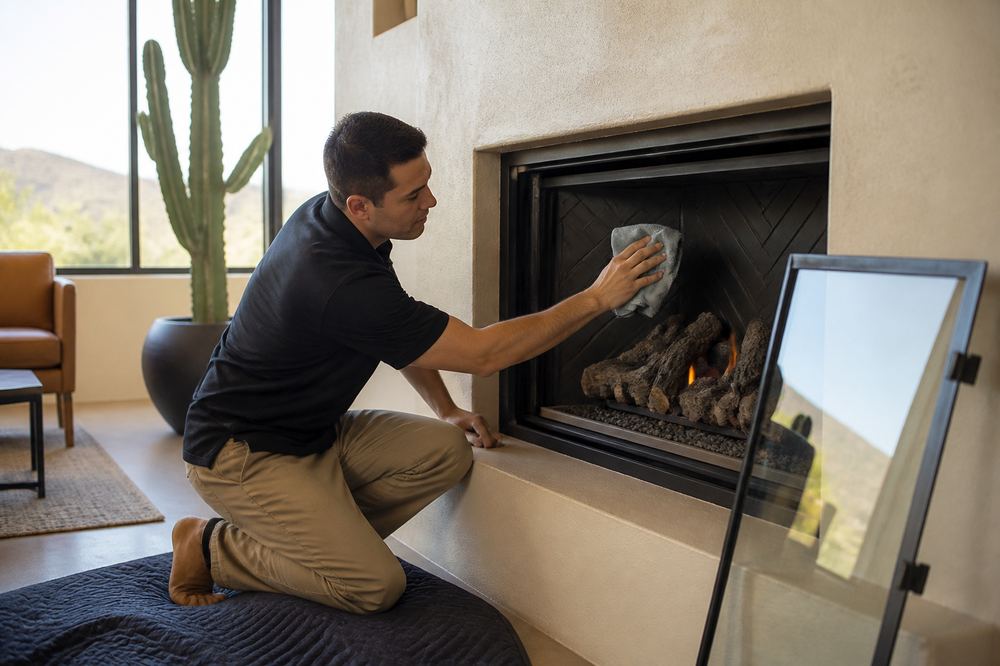
Plenty of upkeep is fair game for a homeowner. Swapping the remote and receiver batteries, dusting the exterior, and cleaning the glass are all safe to do yourself. For the glass, wait until it’s fully cool, then use a fireplace-specific ammonia-free cleaner or a soft cloth — never household glass cleaner or anything abrasive, which leaves a residue that bakes on the next time you light it.
Where the line sits: anything involving the gas valve, the pilot assembly, or the venting belongs to a licensed pro. Arizona code and your insurance both require it, and the cost of a mistake with gas is not worth the savings. Foggy glass that won’t wipe clean is its own issue — that’s usually a dried-out gasket, which we cover under fogged fireplace glass repair.
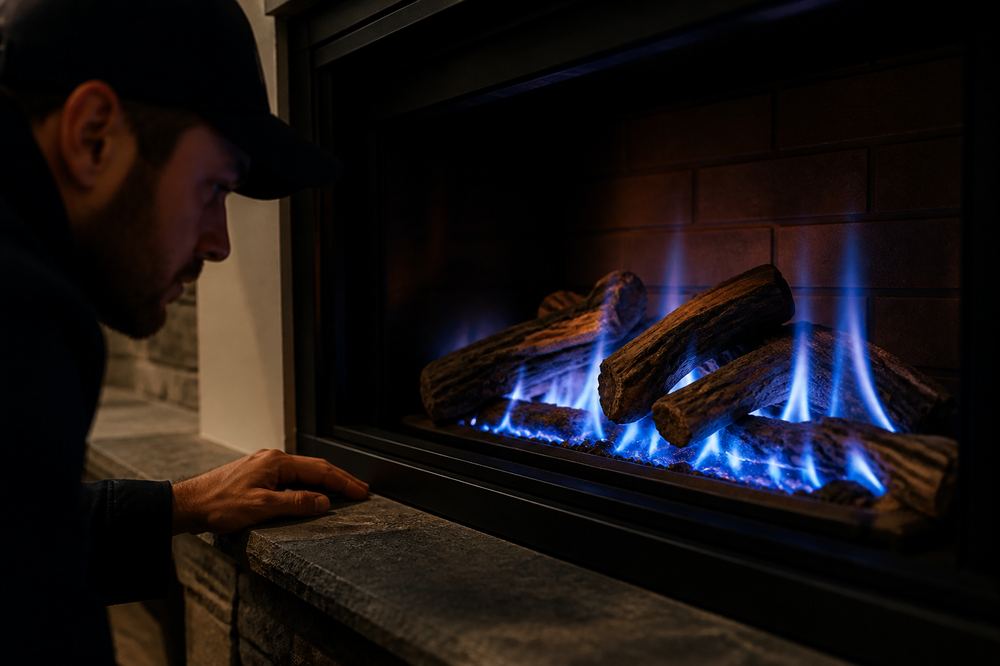
The yellow-flame check: when a cleaning becomes a repair
Look at the flame. On a blue-flame burner, a steady blue flame means clean, complete combustion. A flame that’s gone yellow and lazy usually means incomplete combustion — a dirty burner, a clogged orifice, or an off gas-air mix. (On gas log sets, some yellow at the tips is designed in for realism; it’s the blue-flame burners where yellow signals a problem.)
Most of the time, yellow is a cleaning, not a new part. But if the flame is fine and the trouble is a pilot that won’t stay lit, the culprit is usually a thermocouple or thermopile — a roughly $40 part and half an hour of labor. It’s the most common gas repair we do, which is why we keep a thermopile replacement stocked on every truck. North-Valley homeowners can book the same diagnosis through gas fireplace repair in Scottsdale.
Pilot light: leave it on through summer, or shut it off?
This one comes down to preference, and we see both. Leaving the pilot lit through the off-season burns a tiny amount of gas — a few dollars a month — but keeps the system primed and helps hold moisture out. Shutting it off saves that gas, but it opens the door for spiders and dust to settle in the pilot tube over the summer.
If you do shut it off, just know the trade-off: the first relight in the fall is exactly when dust-and-spider clogs show up. A pilot that sparks but won’t catch in October is a classic case — the same failure pattern behind most calls for a pilot light that won’t stay on.
That first-burn smell in the fall
Most fall “my fireplace smells” calls are nothing to worry about. The first burn of the season heats up dust and summer residue that settled on the burner and logs, and it burns off in 15 to 30 minutes. That smell is normal and it clears on its own.
What isn’t normal is a new or persistent odor. A sulfur or rotten-egg smell points to a gas leak — stop and call. A chemical or plastic smell points to an overheating component. The rule of thumb: first-burn dust smell is fine; anything that lingers or smells like exhaust isn’t, and it’s worth a look before you keep using the unit.
When to call a pro — and what it runs
Annual service aside, call a pro the moment something changes: a pilot that won’t hold, a flame that’s yellow or weak, a unit that shuts off on its own, or any smell of gas. Most gas fireplace repairs land between $150 and $450 — simple thermocouples and igniters at the low end, control boards or valve work at the high end. Our diagnostic visit runs $99 and credits toward the repair if you move ahead.
Some “failures” are smaller than they look. Original direct-vent units from the late 90s often just need a dry-rotted glass gasket swapped — a twenty-minute fix that looks like a dying fireplace. A remote that quit during a dust storm is frequently just a receiver packed with dust. When a repair genuinely isn’t worth it, we’ll say so and walk you through a new gas fireplace instead. For related fixes, see our guides on a gas fireplace that won’t turn on, a remote that stopped working, and gas log replacement. Pair the visit with a chimney inspection in Phoenix if the unit vents through a masonry stack.
Frequently Asked Questions
How often should a gas fireplace be serviced in Arizona?
Annual service is the standard recommendation — one tune-up per year keeps the pilot assembly clean, the igniter components tested, and the gas valve verified. In Arizona the dust accumulation from dry summers and monsoon-driven fine particulates makes this especially important, even if the fireplace is barely used during the year.
What’s included in a gas fireplace tune-up?
A complete tune-up includes a visual inspection of the firebox and venting, cleaning of the pilot assembly and burner tray, testing of the thermopile and thermocouple, verification of gas pressure, combustion check, remote or switch operation test, and a safety check for any leaks at fittings.
How do I clean the glass on my gas fireplace?
Wait for the glass to fully cool, then use a fireplace-specific ammonia-free cleaner or a paste of water and fireplace ash on a soft cloth. Never use household glass cleaner or abrasives — they leave residue that burns in next time you light the fireplace.
Do I need to turn off my pilot light in summer?
Optional and personal preference. Leaving it on uses a tiny amount of gas (a few dollars a month) but keeps the system primed and moisture out. Turning it off saves the gas but can allow spiders and dust into the pilot tube. We see both approaches.
Why is my gas fireplace flame yellow instead of blue?
A yellow flame usually means incomplete combustion — commonly caused by a dirty burner, clogged orifice, or improper gas-air mix. With gas log sets, yellow tips are designed in for realism; with blue-flame burners, yellow indicates something is off and needs service.
Can I fix my gas fireplace myself?
Basic things are safe for homeowners — battery replacement, cleaning glass, swapping remote batteries. Anything involving the gas valve, pilot assembly, or venting should be a licensed pro. Arizona code and insurance both require it, and the cost of a mistake is significant.
How much does gas fireplace repair cost?
Most repairs fall in the $150 to $450 range. Simple fixes like thermocouples or igniters are on the lower end; control board replacements or valve work are higher. A diagnostic visit typically runs $99 and applies toward the repair if you proceed.