Why Is My Chimney Leaking When It Rains? The Four Water Paths We Check First
A chimney that’s bone dry for ten months and then drips the first time a storm rolls through isn’t random — it’s following a path. Here’s how we trace that path on Valley roofs, top to bottom, and what each fix actually costs.
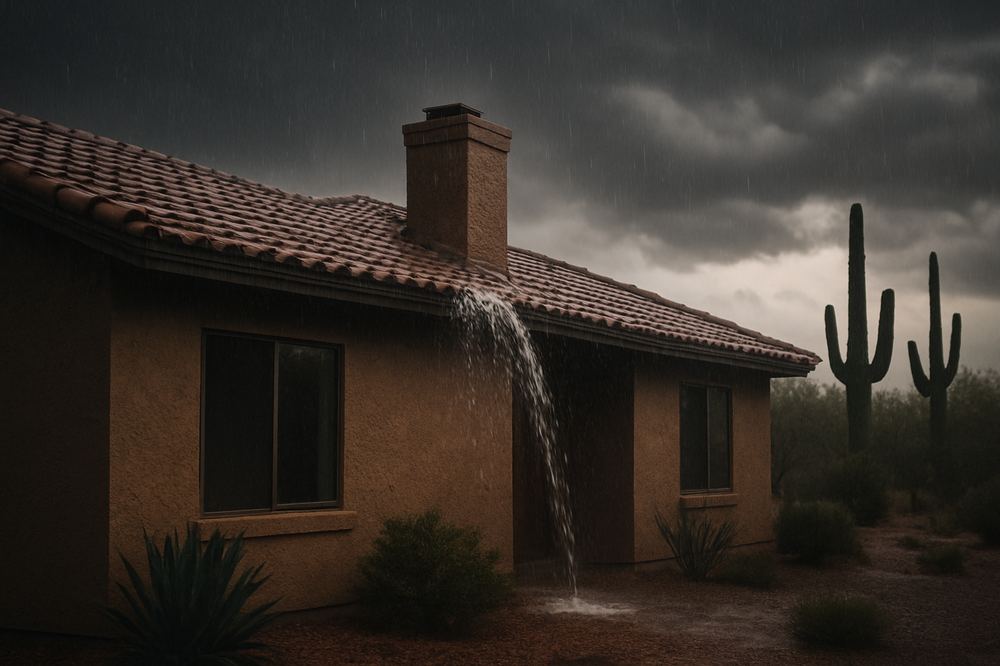
After the 2024 monsoon season, chimney flashing calls spiked across every Phoenix zip code we serve — the combination of driving rain and thermal cycling cracks silicone seals that were put on ten years ago. Almost every one of those callers said the same thing: “It only leaks when it rains.”
Why a chimney leaks only when it rains
Water needs a path. A chimney leak isn’t a hole that opened overnight — it’s a defect that’s been sitting there for months, dry and invisible, until enough rain falls to find it.
That’s why the leak feels sudden. The crack or the lifted flashing was there all spring. Dust and soot pack hairline gaps closed during the dry months. The first heavy storm flushes them open and water starts moving. In Phoenix that first real test usually comes with monsoon season — which is exactly when our phone starts ringing.
The four places water actually gets in
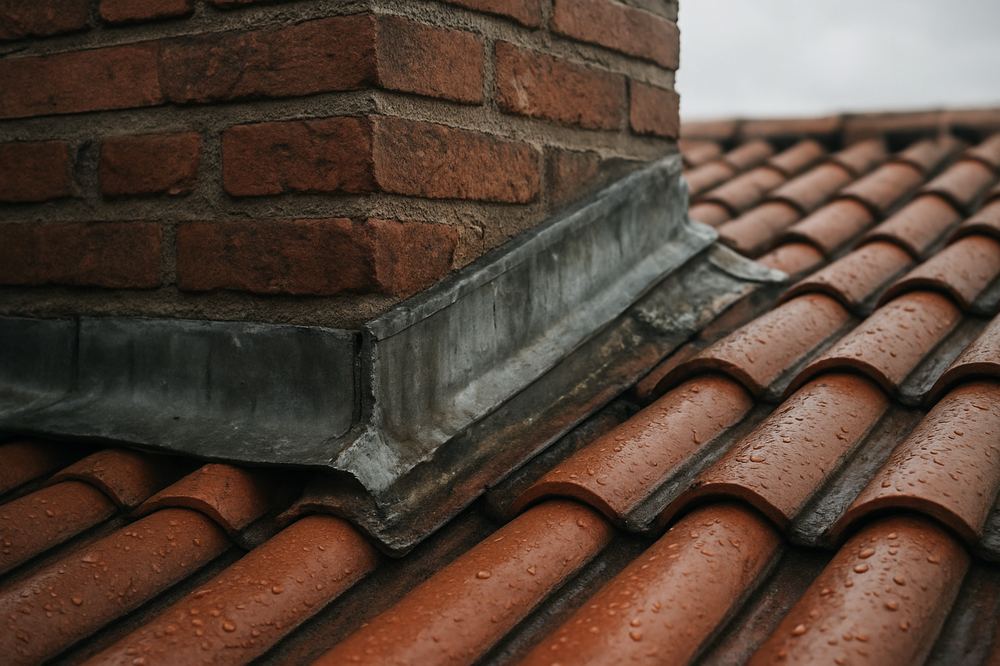
When we get a leak call, we’re looking for one of four failure points. They fail in different ways and they cost different amounts to fix.
- The crown. The concrete or mortar slab on top of the stack. Its one job is to shed water away from the masonry. When it cracks — and Arizona heat-and-rain cycling cracks crowns hard — water runs straight down inside the chimney.
- The cap. The metal-and-mesh fixture above the flue opening. A missing or storm-damaged cap lets rain fall directly down the flue. It also lets animals in, which is its own problem.
- The flashing. The metal seal where the chimney meets the roof plane. This is the single most common leak source we find. Old silicone dries out, lifts, and cracks — and the water sneaks in under the shingles or tiles, not down the flue at all.
- The masonry itself. Brick and mortar are porous. Sun-baked, cracked masonry soaks up driving rain like a sponge, and the water tracks down inside the wall cavity.
How we tell a crown leak from a flashing leak
The diagnostic order on the roof is top-down: crown, then cap, then flashing, then liner. We don’t guess — we follow the water.
In Phoenix, a chimney that leaks during monsoon rain but stays dry in winter is almost always a crown or flashing issue, not a liner issue. We chase the water path from the top down in that exact order, and most leaks reveal themselves before we ever get to the liner.
The tell that separates the two: a crown leak usually shows up as water inside the firebox or down the flue, while a flashing leak shows up as a stain on the ceiling next to the chimney, where the roof line is. Same storm, two very different repairs.
What the leak looks like from inside the house
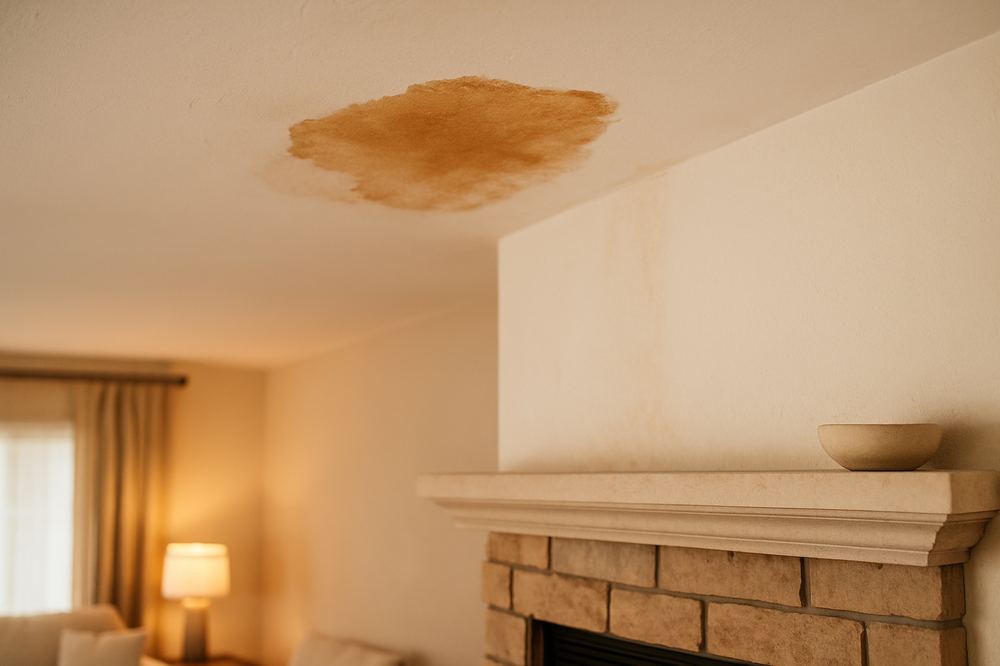
Most homeowners never see the actual defect — they see what it does inside. A brown ring on the ceiling near the mantel. A damp patch on the drywall beside the fireplace. A musty smell after a storm that fades by mid-week.
Those interior signs tell us where to look outside. A stain directly above the firebox points us at the crown or cap. A stain off to the side, where the chimney passes through the roof, points us at the flashing. We match the inside picture to the outside path before anyone climbs up.
One thing worth saying plainly: a small stain is cheaper to chase than a big one. The leak doesn’t fix itself, and every storm makes the water path a little wider.
Why monsoon season exposes leaks the rest of the year hides
Arizona monsoons drive water sideways into masonry that the sun has already cracked. That’s a different kind of stress than a steady drizzle — the rain comes hard, fast, and at an angle, and it hits a stack that’s been baking at 110° all afternoon.
Fountain Hills hillside homes take the full brunt of those monsoon gusts — we replace chimney caps there after every major storm season. The wind alone bends and lifts caps and flashing that were fine in June. By August, the rain finds what the wind loosened.
This is also why a leak that “just started” usually didn’t. The defect was there. Monsoon season just turned it on.
What it costs to fix a leaking chimney in the Valley
The numbers below come from our own service-page anchors and FAQ bank. We don’t invent them, and we quote in writing before any work starts.
- Flashing repair — $300 to $900, depending on roof type, chimney size, and how much counter-flashing work is needed.
- Crown sealing — $250 to $400, and it extends the crown’s life by ten-plus years.
- Chimney cap, installed — $150 to $450 in the Phoenix area, depending on flue size and whether custom sizing is required.
- Waterproofing the stack — a breathable masonry sealer, recommended every five to seven years in Arizona.
Bundling matters. If an inspection turns up two or three small items — say a flashing reseal, a cap, and a crown coat — ask whether they can ship in one visit. Consolidating trips usually beats paying three separate trip charges.
For the wider context, see annual chimney maintenance cost in Arizona and our deeper guide on whether a cracked chimney crown is serious.
The repair that stops it from coming back
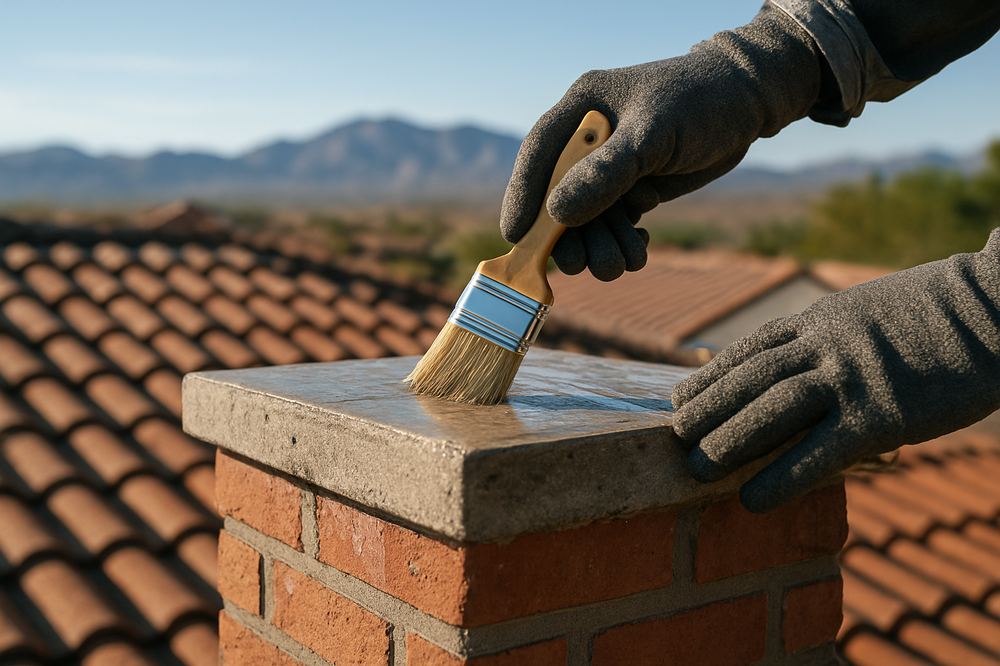
Fixing the defect is step one. Keeping it from happening again is step two, and it’s the part most contractors skip.
Chimney crown sealing with SaverSystems CrownCoat or ChimneySaver costs about $250 to $400 and extends the crown’s life by ten-plus years. It’s the single best preventive-maintenance dollar a homeowner with a masonry chimney spends. We pair it with a breathable masonry sealer on the brick — one that lets trapped moisture escape while repelling new rain.
That breathable part matters in Arizona. A sealer that traps moisture inside sun-cracked masonry does more harm than good. We use a vapor-permeable product so the stack can still dry out between storms.
What to do if your chimney is leaking during a storm
If water is actively coming in, deal with the inside first. Place a bucket or a towel to catch it. If the water is anywhere near a drywall ceiling or an electrical junction, shut off the breaker for that area before you do anything else.
Do not climb onto a wet tile roof to look. It’s slick, it’s steep, and the view from the ground won’t tell you much anyway. Call and we’ll dispatch a tarp-and-temporary-seal team — the permanent repair happens once the weather clears.
For active emergencies, see emergency chimney repair in Arizona. For storm-related damage, see storm-damage chimney repair.
How we’d handle your leak — and how to book
We diagnose first, top to bottom, and quote in writing. We never recommend a full rebuild when a $300 flashing reseal will stop the water. Most weeks we can be on a Valley roof within the same week outside the October–December peak.
Direct line: (602) 557-5071.
Jump to your city: Phoenix · Scottsdale · Mesa · Chandler · Gilbert · Paradise Valley.
Frequently Asked Questions
Why is my chimney leaking during rain?
Leaks during rain usually trace back to a cracked chimney crown, failed flashing where the chimney meets the roof, or a missing or damaged cap. Arizona monsoon rains expose these weaknesses fast — water enters along whichever path offers the least resistance.
Why is water leaking down my chimney during monsoon season?
The three usual suspects are a cracked crown, a missing or damaged cap, and failed flashing where the chimney meets the roof. Monsoon storms expose existing defects — leaks don’t start in July; they just become visible then. Most leaks are fixable for $300-$900.
What do I do if my chimney is leaking right now?
If water is actively coming in, place a bucket or towel, and if it’s reaching electrical or drywall, shut off the breaker for that area. Don’t try to climb onto a wet roof. Call us and we’ll dispatch a tarp-and-temporary-seal team — permanent repair happens once the weather clears.
How much does chimney flashing repair cost?
Flashing repair in the Phoenix area typically runs $300 to $900 depending on roof type, chimney size, and how much sealant and counter-flashing work is required. If the underlying step flashing is compromised, costs rise.
Should my chimney be waterproofed in Arizona?
Arizona monsoons drive water into masonry that sun exposure has already cracked — waterproofing every 5 to 7 years protects the stack from progressive moisture damage. We use a breathable sealer that lets trapped moisture escape while repelling new intrusion.
When should I replace my chimney cap?
Chimney caps typically last 15 to 25 years depending on material. Signs it’s time: rust through the mesh, bent or missing sections after a storm, missing cap entirely, or evidence of animal intrusion. Arizona summer heat and monsoon winds accelerate wear.
How much does a chimney cap cost installed?
Standard stainless-steel chimney caps installed run $150 to $450 in the Phoenix area, depending on flue size and whether custom sizing is needed. Copper or decorative caps cost more. Installation is typically one hour.