Chimney Inspection in Gilbert, AZ
Firebox cracking in Arizona is a real pattern — the temperature swings between 115°F summer and active burn exceed what most firebrick is specified for. We’ve seen entire firebrick floors that need replacement after twenty years.
Or you're buying a home and the inspector flagged the fireplace as something to have checked before closing. Either way, you're not panicking. You're being smart. You want to know what you're working with before you light the first fire of the season.
That's exactly the kind of call we get all the time from Gilbert homeowners, and it's the right instinct. Wood-burning fireplaces in Arizona sit unused for six, seven, sometimes eight months out of the year. During that stretch, dust accumulates, animals occasionally find their way into flues, and metal components inside factory-built chimney systems quietly corrode from summer monsoon humidity that most people never think about.
A chimney inspection in Gilbert isn't just a formality. It's how you find out whether your system is actually ready to burn — and whether it's been hiding a problem that's been slowly getting worse since last winter. Arizona Chimney Pros has been doing this work across the East Valley long enough to know what these homes tend to show us, and we're not here to sell you a repair you don't need. We're here to give you an honest picture of your system so you can make the right call.
Chimney Inspection in Gilbert
Gilbert is a newer city by Arizona standards, and most of the wood-burning fireplaces here reflect that. The majority are factory-built, zero-clearance metal systems installed during the construction boom of the 1990s through the 2010s — not the masonry fireboxes you'd find in older Chandler or Mesa homes. That matters, because prefabricated metal chimney systems have specific inspection requirements, finite lifespans, and components that behave differently under Arizona's seasonal extremes than the manufacturer's engineers may have anticipated when they designed them.
The heat cycles here are punishing. Summer attic temperatures in Gilbert can push past 160 degrees, and that relentless heat stresses the firestop spacers, flashing seals, and chase covers on these systems year after year. Then comes monsoon season — weeks of elevated humidity and blowing particulates that work their way into gaps and joints. By the time October arrives and someone's ready to use the fireplace, the system has been through a lot without anyone checking on it.
We've seen this pattern play out in real ways. Last spring we inspected a Gilbert home where the chimney crown had been patched multiple times over the years using whatever material was handy — none of it compatible, none of it lasting. The homeowner had dealt with a slow leak for years and assumed it was the roof. We rebuilt the crown properly using Crown-Coat, sealed it correctly, and that was the end of the leak. It's the kind of thing a proper inspection finds before it causes ceiling or drywall damage. First-time homeowners in Gilbert especially benefit from getting a baseline inspection before that first burn — you simply want to know what you have.
Signs Your Chimney Inspection Needs Attention
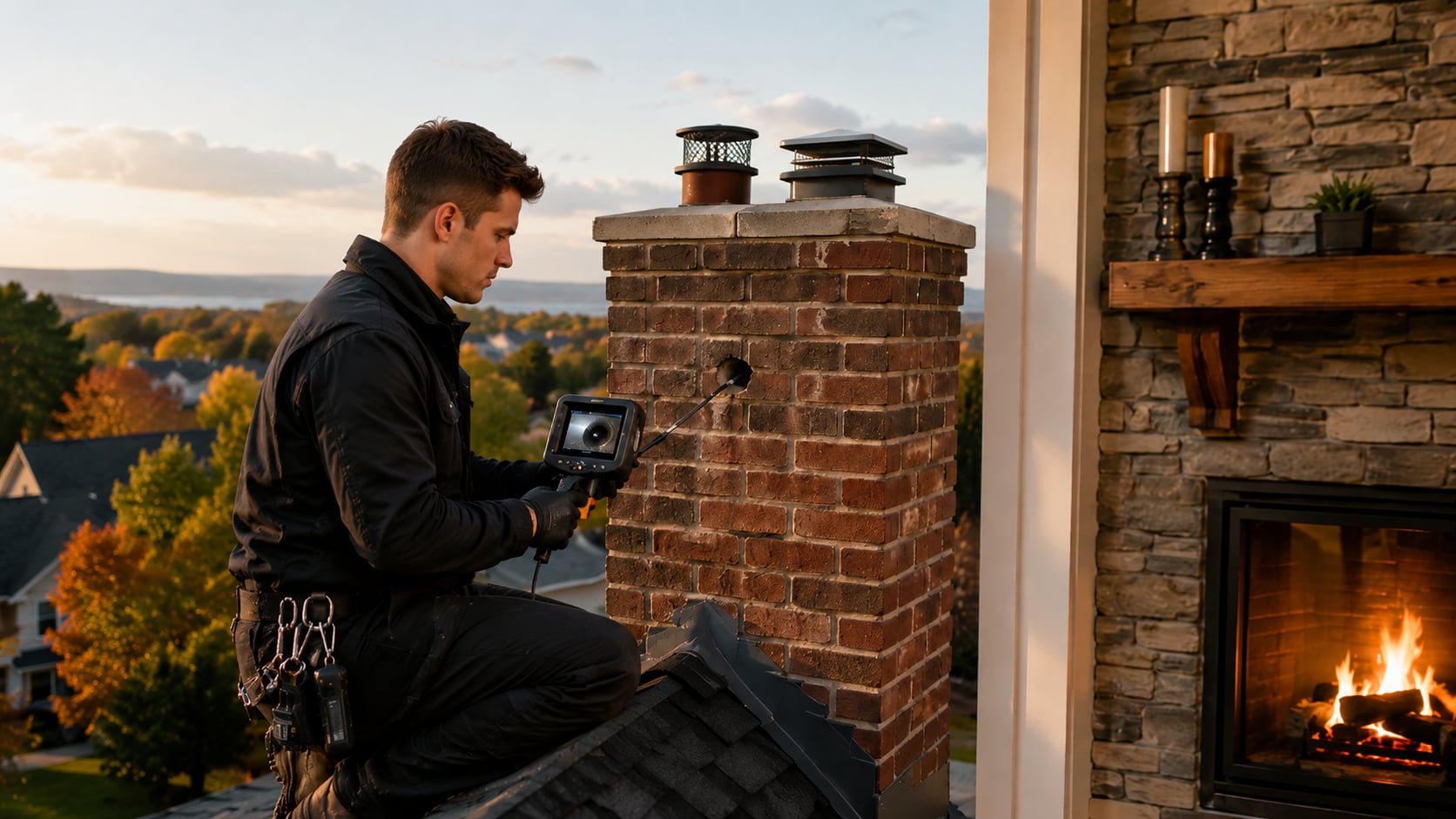
Your chimney won't always announce a problem loudly. More often it gives you small, easy-to-dismiss signals that something isn't right. Here are the signs that tell us — and should tell you — that it's time to have the system looked at before using it again.
- White staining on the exterior chase or firebox surround — efflorescence from water intrusion working its way through masonry or the chase cover seam
- Smoke entering the room when you start a fire — points to a blocked or damaged flue, a closed damper, or a draft problem from negative house pressure
- Visible rust on the damper plate or firebox walls — tells us moisture has been sitting inside the system long enough to do real damage
- Animal sounds or debris inside the firebox — birds and rodents nest in uncapped or damaged chimney tops during the off-season
- Cracked or crumbling mortar joints around the firebox opening — in factory-built systems, this often means the refractory panels need replacement
- A persistent musty or burning smell even when the fireplace isn't in use — residual creosote or moisture buildup sitting inside the flue
- The chase cover showing rust streaks or visible warping — galvanized covers corrode in Arizona's heat; once they fail, water enters freely
- It's been more than two years since anyone looked at it — even a lightly used system deserves an annual check per NFPA 211
If two or more of these sound familiar, don't wait until mid-December to find out there's a problem. Scheduling a proper look now takes less than an hour and gives you clear answers before you commit to a fire.
Common Chimney Inspection Problems We Repair
A chimney inspection is really a diagnostic process. We're not just checking boxes — we're looking at how your specific system has held up and identifying what, if anything, needs attention. Here are the actual issues we find and address on wood-burning chimney inspections across Gilbert.
- Deteriorated or missing chase cover — the top cap that keeps water and animals out; galvanized versions typically fail within 10–15 years in Arizona heat
- Cracked refractory panels in the firebox — hairline cracks are common and monitorable; deep or widening cracks need replacement before burning
- Damaged or seized damper — a damper that won't open fully restricts draw; one that won't seal lets conditioned air escape year-round
- Creosote buildup in the flue liner — even moderate Arizona use can produce Stage 1 or Stage 2 creosote that needs removal before the next season
- Failed or improperly patched chimney crown — patchwork repairs with incompatible products fail quickly; proper crown coating is the fix
- Flashing separation or missing sealant — where the chimney meets the roofline is one of the most common water entry points on Gilbert homes
- Animal nesting material in the flue — dry debris from bird or rodent nests is a serious fire hazard and must be cleared before any burn
- Missing or improperly sized chimney cap — caps keep sparks in and weather out; wrong sizing causes draft problems
- Deteriorated firestop or attic insulation shield — critical clearance components in factory-built systems that are often overlooked
- Smoke chamber and smoke shelf damage — spalling or cracking here compromises the system's ability to direct combustion gases properly
Chimney Inspection Costs in Gilbert
A chimney inspection in Gilbert typically runs between $109 and $219 — where you fall in that range depends on the type of inspection needed, the accessibility of your system, and whether your home has a single or double-flue setup. Most standard single-flue inspections on factory-built systems come in at the lower end.
| Service | Typical Cost |
|---|---|
| Level 1 Visual Inspection (standard annual) | $109 – $149 |
| Level 2 Inspection (home sale, change of use, after damage event) | $169 – $219 |
| Inspection + Chimney Cleaning (combined) | $229 – $319 |
| Chase Cover Replacement (if needed after inspection) | $180 – $320 |
| Refractory Panel Replacement (per panel, if flagged) | $85 – $175 |
What pushes the cost toward the higher end: two-story homes where rooftop access requires additional setup time, systems that haven't been inspected in several years and require more thorough documentation, or homes going through a real estate transaction where a full Level 2 written report is required for the file. Level 2 inspections include a more detailed examination of accessible portions of the system and are what most real estate transactions in the East Valley require.
If our inspection uncovers something that needs repair, the inspection fee is credited toward that work when you book with us on the same visit or within 14 days. No surprises, no double billing.
How We Work
We don't show up, glance at the firebox, and hand you a report. A real chimney inspection is methodical — each step builds on the last, and by the end you have a complete picture of exactly where your system stands.
- Arrival and homeowner walkthrough — We ask a few quick questions before we touch anything: when was it last used, any smoke issues, any visible changes since last year. Your answers help us know where to look first.
- Exterior assessment — We examine the chimney cap, crown, chase cover, flashing, and visible portions of the exterior structure from ground level and, when needed, from the roofline. We're looking for water damage, physical deterioration, and any signs of animal intrusion.
- Firebox and damper inspection — Inside, we check the firebox walls and floor for cracks, spalling, or heat damage. We test the damper for full range of motion and a proper seal. We look at the smoke shelf and smoke chamber for buildup or damage.
- Flue liner inspection — Using a high-powered flashlight and, where warranted, a camera system, we inspect the accessible portions of the flue for creosote accumulation, blockages, liner cracks, and proper clearances.
- Written findings review with you — We walk you through exactly what we found — in plain language. If something needs attention, we explain why and what the fix involves. If everything looks good, we tell you that clearly too.
- Report and recommendations — You receive a written inspection summary. If you're going through a real estate transaction, this document is what your agent and escrow need. If we found items that need repair, we provide a written estimate before we leave.
Arizona Chimney Pros
We've been working in Gilbert long enough to know the difference between a 1998 prefab system in a Val Vista Lakes home and a newer build out near Sossaman Road — and those differences actually matter for how an inspection gets done. The East Valley is a significant part of our weekly schedule, not an aftermarket service area we cover when it's convenient.
Wood-burning chimney work carries real safety stakes. Creosote fires, carbon monoxide from incomplete combustion, and structural failures in aging prefab systems are all preventable — but only if someone actually looks at the system before it's used. We take that seriously. Our inspectors are CSIA-trained chimney professionals, not general handymen who picked up a flashlight. We carry full liability insurance, operate under Arizona ROC licensing, and we document everything in writing so you're never guessing about what we found or what we recommended.
For Gilbert homeowners, our typical scheduling window is two to four business days for standard inspections, with priority availability during the September through November pre-season window when booking demand increases. We cover neighboring communities like Chandler, Mesa, and Queen Creek as well, but Gilbert is home turf — we know the neighborhoods, the home styles, and the chimney systems that are common here.
Brands We Service
We service most major fireplace and chimney brands across Gilbert — OEM parts stocked for the most common issues, and we can source almost anything we don't have on the truck. Below are the brands we see most often:
- Regency
- Lopi
- Pacific Energy
- Napoleon
- Jotul
- Vermont Castings
- Quadra-Fire
- Blaze King
- Morso
- Fireplace Xtrordinair
- Osburn
- Buck Stove
Our Guarantee
Every inspection we complete is backed by our documentation guarantee — if our written report misses something that was reasonably accessible and visible during the inspection, we come back and make it right at no additional charge.
On any repair work that follows an inspection, we provide a one-year labor warranty. If a repair we made fails within that window under normal use conditions, we return and fix it. Parts we install carry the manufacturer's warranty — typically one to five years depending on the component — and we handle the paperwork if a warranty claim is needed.
Our technicians are CSIA-trained, background-checked, and operate under Arizona ROC licensing and full liability insurance. We don't subcontract inspection or repair work out to unlicensed crews. If something feels off within 30 days of any service we performed, call us. We'd rather spend an hour verifying our work than have a Gilbert homeowner left with a question mark about their fireplace.
Frequently Asked Questions
The NFPA 211 standard recommends an annual inspection regardless of how often you use the fireplace — and in Arizona, that guidance is especially relevant. Chimneys here sit idle for six to eight months, exposed to intense heat cycles and monsoon moisture without anyone checking on them. Even light use during the winter season can produce enough creosote to warrant attention. If you burned more than five or six fires last season, you likely need a cleaning along with the inspection. Once a year before the season starts is the right rhythm for most Gilbert homeowners.
A Level 1 inspection covers all readily accessible portions of the chimney — the firebox, damper, visible flue interior, exterior cap, crown, and chase. It's the standard annual checkup for a system that hasn't changed and has been operating normally. A Level 2 inspection is required when there's been a change of use, after a chimney fire or significant weather event, or when a home is being sold. It includes more thorough documentation and often involves camera inspection of the flue liner. Most real estate transactions in Gilbert and the East Valley require a Level 2 report for the file. Level 2 inspections run $169 to $219 with us.
Yes, and this is one situation where it genuinely pays to know before you close. A standard home inspection gives the fireplace a brief visual check but doesn't go inside the flue or assess the condition of the liner, crown, or flashing in any detail. We regularly find issues on pre-purchase inspections that weren't flagged by the general inspector — cracked refractory panels, failing chase covers, creosote that the previous owners never had cleaned. A Level 2 inspection gives you documented findings you can use in negotiations or at minimum go into closing with clear eyes about what the system actually needs.
A few different things cause this. The most common in newer, well-sealed Gilbert homes is negative air pressure — modern tight construction creates a slight vacuum that pulls air down the chimney instead of letting it draft upward. Cracking a window near the fireplace before you start the fire often resolves it immediately. Other causes include a cold flue that needs warming before it draws properly, a damper that isn't opening fully, or a blockage from debris or nesting material. If smoke consistently backs into the room after the fire is established, that points to a structural or clearance issue that an inspection will identify.
Our standard Level 1 inspection runs $109 to $149 for most single-flue, factory-built systems — which covers the majority of homes in Gilbert. A Level 2 inspection for real estate transactions or more detailed assessment runs $169 to $219. If you also need a cleaning, we offer a combined inspection and cleaning service that's priced more efficiently than booking them separately. There are no hidden fees — the price we quote before arrival is what you pay, and if repair work is needed, we provide a written estimate before touching anything.
For Arizona homeowners burning wood regularly from October through March — say, two to four fires per week — annual cleaning is the right call. That level of use builds up enough Stage 1 creosote over a season to matter. If you're a lighter user, every other year may be sufficient, but you won't know where you stand without an inspection first. The NFPA recommends at minimum an annual inspection even for infrequent use, so that's always the starting point. We include a thorough visual inspection with every cleaning, so you're never just getting a sweep — you're getting a real status report on the system.
What Our Customers Say
Great experience from start to finish. Easy to schedule, tech showed up in the booking window, quote was the quote. The chimney cleaning was more thorough than anyone we've had before.
We bought an older home with an unused wood fireplace. They inspected it, found creosote buildup and a cracked liner, gave us options honestly priced from repair to conversion. Ended up converting to gas — they handled everything.
Monsoon dumped water down our flue and we had a mess. They came out, identified the crown was cracked, sealed it properly, and installed a new cap. Three years later, zero leaks. Solid work.
Serving Gilbert & Surrounding Areas
Arizona Chimney Pros serves Gilbert and surrounding Phoenix metro communities. Our technicians are on the road daily with same-day and next-day availability across:
- Chandler
- Mesa
- Queen Creek
- Phoenix
- Scottsdale
- Tempe
- Glendale
- Peoria
Don't see your neighborhood? Call us — our service radius covers about 40 miles of the Valley.
More Services in Gilbert
- Chimney Cleaning Gilbert
- Chimney Inspection Chandler
- Chimney Inspection Queen Creek
- Fireplace Remodeling Gilbert
- Gas Log Replacement Gilbert
- Chimney Repair Gilbert
- Chimney Inspection Mesa
- Gas Fireplace Installation Cost Phoenix
- Chimney Inspection Paradise Valley
- Gas Fireplace Repair Gilbert
- Gas Fireplace Installation Gilbert
- Annual Chimney Maintenance Arizona
Schedule Your Gilbert Chimney Inspection Today
We offer straightforward scheduling, honest written findings, and no-pressure recommendations. Inspections run $109–$219 depending on what your system needs — and if repairs come out of it, the inspection fee comes off the bill. Arizona Chimney Pros is ROC-licensed, insured, and working in Gilbert every week. Call or book online to get on the calendar before the season starts.
Sun–Fri 8am–7pm · Emergency service available
Explore More Topics
Helpful guides and related services for Phoenix-area homeowners.