
Creosote Buildup in Your Chimney: What It Is, Why It Matters, and How We Clear It
Creosote is the tar-like residue wood smoke leaves behind inside the flue. A thin film is normal. A hard, shiny glaze is a fire waiting for a spark. Here is what creosote actually is, how to read the warning signs from your own firebox, and the honest cost of having it cleared in the Valley.
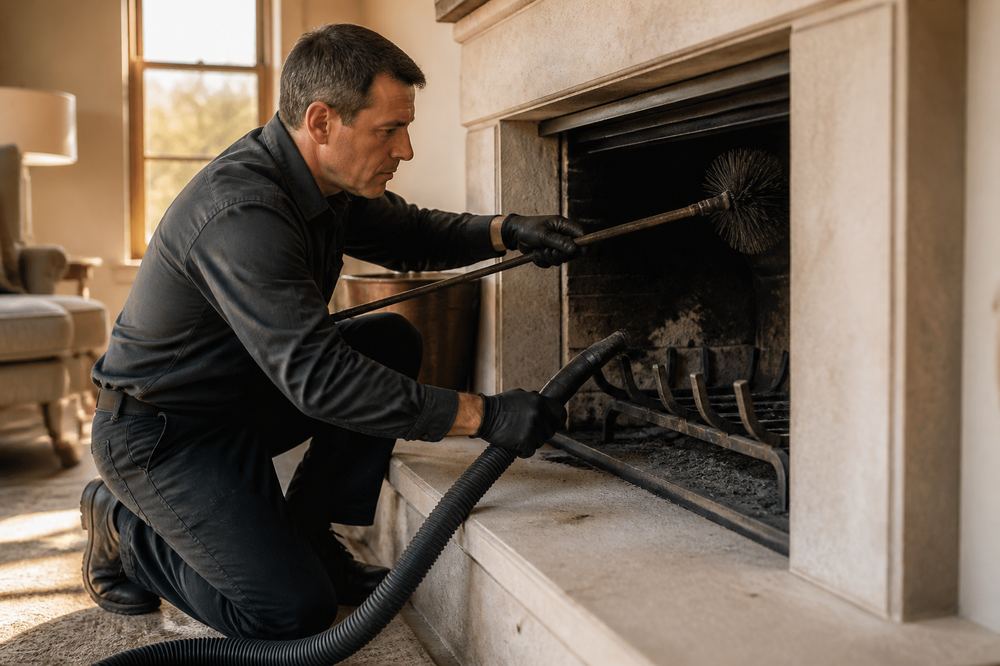
Out in Surprise and the west-valley retirement communities, we run into the same story constantly: a home that hasn’t burned wood in a decade, a flue that was never cleaned before the family switched to gas, and a first sweep that turns up creosote glaze and the occasional animal nest. On a dormant flue like that, we tell people to budget for a Level 2 inspection the first time — you don’t know what a decade of old buildup is hiding until you look.
What creosote actually is
When wood burns, it never burns completely. The unburned gases, tar droplets, and fine particles ride up the flue with the smoke, and as that smoke cools on the way out, the residue condenses onto the cool inner walls of the chimney. That residue is creosote. Every wood fire makes some of it — there is no such thing as a wood-burning fireplace that stays clean on its own.
The trouble is that creosote is highly flammable. It is essentially concentrated fuel coating the one part of your house that routinely gets hot. A little is harmless and comes off easily. Left to accumulate fire after fire, season after season, it turns into the single most common cause of chimney fires.
The three stages — and why Stage 3 is the dangerous one
Creosote shows up in three forms, and they tell us how serious the problem is the moment we look inside the flue. Stage 1 is a light, dusty soot — flaky, easy to brush away, and exactly what a routine sweep handles. Stage 2 is harder: black, crunchy flakes that look like cornflakes stuck to the flue wall, the result of restricted air or cooler smoke. Stage 3 is the one we worry about — a thick, shiny, tar-like glaze that has hardened onto the masonry like spilled syrup that dried in place.
Stage 3 glaze is what feeds a real chimney fire, and it is the hardest to remove. A standard brush won’t touch it; it takes specialized tools or chemical treatment, and in bad cases the only safe answer is relining. The takeaway is simple: the longer creosote sits, the further down this ladder it climbs, and the more it costs to deal with.

Why Valley wood-burners build it faster than they expect
Most Phoenix homeowners assume that because they only light a handful of fires on cold winter nights, creosote can’t be a problem for them. It is the opposite that’s true. Short, cool fires — the kind people light for ambiance rather than heat — produce more creosote than long, hot ones, because the smoke never gets hot enough to burn cleanly and instead condenses on the flue.
Add in the Valley habit of burning whatever is on hand — construction scraps, soft or unseasoned wood, the odd cardboard box — and buildup accelerates. Up at altitude in Flagstaff and Prescott, where wood is the primary heat source, creosote builds faster still and we schedule annual cleanings as a matter of course. Down here, the danger is the false sense of security: a fireplace that looks barely used can still be carrying years of glaze.
The warning signs you can spot from your firebox
You don’t need to get on the roof to catch creosote early. The signs show up where you can see them. A strong, campfire-like smell when the fireplace is cold — worst in summer when the air conditioning pulls air down the flue — is one of the clearest tells. So are dark flakes or a shiny black coating on the damper plate and the upper firebox, fires that are stubborn to start, and smoke that lingers in the room more than it used to.
If you reach up to the damper and your fingers come back with a tarry black film rather than dry gray dust, that’s past Stage 1. Any of these is a reason to book a sweep before the next burning season rather than after, when a chimney cleaning in Phoenix is a quick job instead of an emergency one.
Why creosote is a genuine fire hazard, not just grime
It is easy to treat a sooty flue as a cosmetic problem. It isn’t. Creosote ignites, and when a thick glaze catches, the result is a chimney fire that burns hot enough to crack flue liners, work its way into the home’s framing, and in the worst cases destroy the house. These fires can roar like a freight train, or they can smolder silently and do their damage without anyone noticing until later.
After any suspected chimney fire, a Level 2 inspection — the kind that includes a camera scan of the flue interior — is mandatory before the chimney is used again, because the heat may have cracked the liner in ways you can’t see from below. That is the whole argument for clearing creosote on a schedule: a $200 sweep is cheap insurance against a five-figure repair, or worse.

How a professional sweep actually removes it
A proper sweep is methodical, not just a brush down the chimney. We seal off the firebox and run a vacuum at the opening so soot doesn’t end up in your living room, then work the flue with rotary or rod-and-brush tools sized to your liner, scrubbing the buildup loose from top to bottom. Stage 1 and Stage 2 come off this way. Stage 3 glaze needs more — specialized rotary heads or a chemical modifier that turns the glaze brittle so it can be brushed away.
We run a Level 1 visual inspection with every cleaning, so while the flue is open we’re also checking the liner, the damper, the crown, and the cap. That’s how a routine sweep doubles as an early-warning system: a cracked liner or a worn damper gets caught before it becomes chimney repair in Phoenix, and a damaged cap gets flagged before the next monsoon drops debris — or a pack rat — down the stack. A sweep is a cleaning; a deeper assessment is an inspection, and our guide on the cost of a chimney inspection walks through where the two part ways.

How often you need a sweep in the Valley
For most wood-burning fireplaces in the Phoenix metro, the answer is every one to two years of active use. The National Fire Protection Association recommends a chimney inspection every year regardless of how often you burn, because animal nests, cap damage, and liner cracks don’t care how many fires you’ve lit. Creosote is the main driver of cleaning frequency — if you burn frequently through winter, annual cleaning is the safer call.
If you’ve switched to gas but never had the old wood flue cleaned, get it swept and inspected once before you rely on it — gas units still vent through that chimney, and old creosote plus a bird nest is a problem either way. Our full breakdown of how often a chimney should be cleaned covers the edge cases, and a smoky-smelling but rarely-used fireplace often ties back to the same buildup we cover in why a fireplace smokes into the house.
What a sweep costs in the Phoenix metro
Honest numbers: a standard chimney sweep in the Valley runs $189 to $349, which includes the sweep plus a Level 1 visual inspection. Heavy creosote buildup, masonry flues with offsets, or very tall stacks can push that to $400 to $550, and annual sweep subscriptions save 10 to 15 percent. A straightforward chimney cleaning sits in the $149 to $299 range depending on access, flue size, and how much creosote is present.
The expensive outcomes come from waiting. Stage 3 glaze that needs chemical treatment or relining, a chimney fire that cracks the liner, water damage that rides in through a cap nobody checked — those are the bills that hurt. The honest move is the $99 diagnostic: it tells you exactly what stage you’re dealing with, and it credits toward the work. While we’re there we can also handle a chimney cap installation or flag a crown repair, and homeowners in the north Valley can book a chimney inspection in Scottsdale the same week. If the firebox itself is scorched or spalling, that’s a separate firebox repair conversation, and anything combustion-related on a gas unit belongs with gas fireplace repair.
Frequently Asked Questions
How do I know if I have creosote buildup?
Signs include a strong smoky smell even when not in use, dark flakes or glaze visible inside the flue or on the damper, difficulty starting fires, or increased smoke in the room. A professional inspection confirms both presence and stage — Stage 3 creosote is a fire hazard.
How often should I have my chimney cleaned?
Most wood-burning fireplaces in Arizona need cleaning every one to two years of active use. The NFPA recommends an inspection annually regardless of usage. Creosote buildup is the main driver — if you burn frequently through winter, annual cleaning is safer.
How dangerous is a chimney fire?
Very. Chimney fires burn at 2,000°F+ and can crack flue liners, spread to framing, and destroy homes. If you suspect one is happening — loud roaring, intense heat, sparks from the cap — get out and call 911. After any suspected chimney fire, a Level 2 inspection is mandatory before the next use.
What’s the difference between a chimney sweep and a chimney inspection?
A sweep is a cleaning service — removing soot, creosote, and debris. An inspection is an assessment of the chimney’s condition and safety. A professional sweep typically includes a Level 1 visual inspection; deeper inspections are a separate scope.
How much does chimney cleaning cost?
Standard chimney cleaning in the Phoenix metro runs $149 to $299 depending on access, flue size, and how much creosote is present. We include a Level 1 visual inspection with every cleaning.
How much does a chimney sweep cost in the Phoenix metro?
Most standard chimney sweeps run $189-$349 in the Valley, including the sweep plus a Level 1 inspection. Heavy creosote buildup, masonry flues with offsets, or very tall stacks can push $400-$550. Annual sweep subscriptions save 10-15%.
Do I need a chimney sweep if I only use a gas fireplace?
You don’t need a creosote sweep, but you still need an annual inspection. Gas fireplaces exhaust combustion byproducts through the chimney, and venting issues, bird nests, and cap damage affect gas units just like wood-burning ones.