Pre-Burning Season Chimney Inspection in Arizona
A Scottsdale HOA last year required documented chimney inspection records for every home before listing — we got thirty inspection calls in two weeks from that single neighborhood.
The weather dips, the evenings cool off, and for the first time in seven or eight months someone reaches for the damper handle. That gap — nearly half a year of sitting idle — is exactly when problems hide. Dust settles into the flue. Critters find their way into uncapped chimneys. Mortar joints that looked fine in March have quietly shifted through a brutal summer of 110-degree heat cycles.
If you're thinking about a pre-burning season chimney inspection in Arizona before you light that first fire, you're thinking about it at exactly the right time. September through November is when we're busiest, and for good reason — homeowners who get ahead of it burn the whole season without worry. The ones who don't sometimes discover problems mid-December when wait times are longer and the issue has been sitting unaddressed all along.
Arizona Chimney Pros has been doing this work across the state long enough to know what Arizona fireplaces actually go through. We're not a national call center dispatching a random tech — we're a local crew that knows these homes, these climates, and the specific ways wood-burning fireplaces age here. We'll give you a straight answer, a clear report, and honest recommendations. Nothing more than what you need.
Chimney Inspection in Arizona
Chimney inspections in Arizona aren't quite the same as they are in wetter, colder climates — and that's not always obvious until you've actually worked on a few hundred of them here. The burning season is compressed. From roughly October through March, fireplaces that have been completely unused since spring suddenly see heavy weekly use. That cycle — long dormancy, then active burning — creates its own specific wear patterns that a tech from out of state might not immediately recognize.
The summer heat alone does real work on masonry. Thermal expansion through those long hot months stresses mortar joints, and by the time fall rolls around, small cracks that weren't there in spring have opened up. Then monsoon season hits before the burning season even starts — and water that gets into an unprotected flue or a compromised crown doesn't just evaporate. It works its way deeper into the structure.
We also see meaningful differences by region. Up in Prescott and Flagstaff, chimneys work harder and burn longer — elevation and genuine winter temperatures mean heavier creosote accumulation and a real need for annual cleaning. Down in the Valley — Phoenix, Scottsdale, Mesa — many fireplaces are more decorative, used a handful of times per season, but they still develop issues that a visual inspection catches early.
One thing we see consistently in Scottsdale: homes that go on the market often haven't had chimney work done in years. A buyer's home inspector flags the fireplace, the escrow clock starts ticking, and we get an urgent call. That's a stressful situation for everyone. An annual inspection means you're never in that position — whether you're selling next spring or staying put for a decade.
Signs Your Chimney Inspection Needs Attention
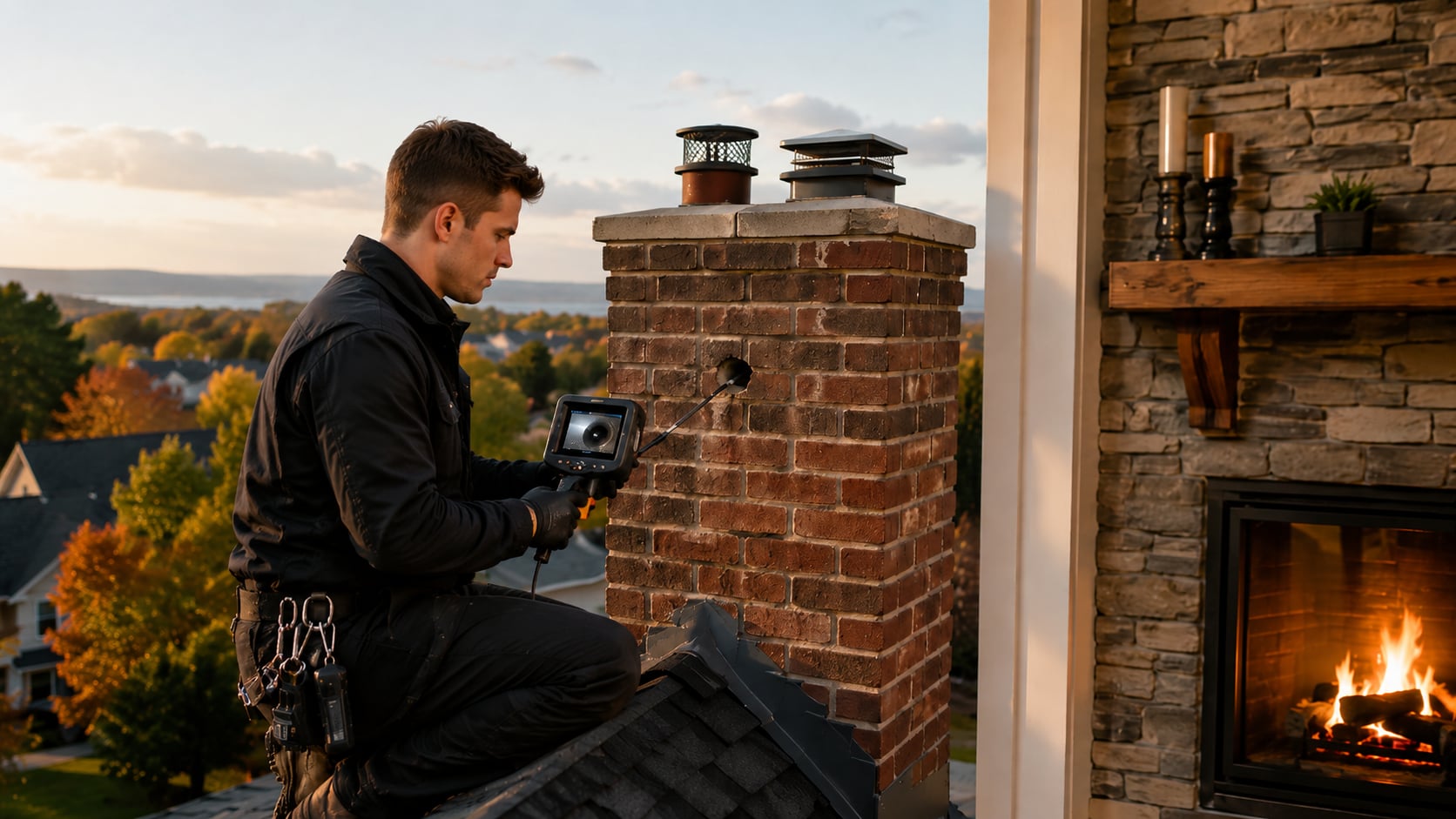
Most of these signs show up before a fireplace fails completely — and if you catch them now, before you've lit a single fire this season, a straightforward inspection almost always resolves things faster and cheaper than waiting. Walk through this list and be honest with yourself about what you've noticed.
- White staining on the outside of the chimney — called efflorescence, this means water is moving through the masonry and carrying mineral deposits with it.
- Visible cracks in the chimney crown or mortar joints — even hairline cracks let water in, and Arizona's heat-then-rain cycle turns small cracks into larger ones quickly.
- A strong musty or smoky smell when the fireplace isn't in use — often a sign of creosote buildup, moisture intrusion, or both.
- Smoke that enters the room when you open the damper — can signal a blockage, a damaged damper plate, or a draft issue that wasn't there before.
- Visible debris or nesting material at the firebox floor — birds and squirrels find their way into uncapped flues during the off-season more often than homeowners expect.
- A damper that's stiff, won't seal fully, or feels different than it used to — warped or corroded dampers are common after years of heat cycling.
- Dark staining around the firebox opening on the facing — indicates smoke isn't being drawn up the flue cleanly and hasn't been for some time.
- Any crumbling or flaking material inside the firebox — deteriorating refractory panels or firebrick need evaluation before you burn.
If two or more of these describe what you're seeing, don't light a fire until a certified technician has taken a look. The inspection itself is straightforward — what we're preventing is a situation that becomes a real problem mid-season.
Common Chimney Inspection Problems We Repair
A pre-season inspection isn't just a visual pass — it's a full diagnostic of everything in the system. When we find issues, we tell you exactly what they are and what it takes to fix them. Here's a representative list of what we actually find and repair on chimney inspection calls across Arizona.
- Heavy creosote buildup in the flue — stage 2 or stage 3 glazed deposits require more than a standard sweep and need immediate attention before burning.
- Cracked or spalled flue tiles — damaged liner sections compromise the structural integrity of the flue and are a fire safety issue.
- Deteriorated chimney crown — the crown is the first line of defense against water intrusion and takes serious abuse from Arizona weather.
- Failed or improperly installed chimney cap — missing caps are an open invitation for nesting, moisture, and debris accumulation during the off-season.
- Damaged or warped damper assembly — a damper that doesn't seal costs you energy and lets conditioned air escape all year long.
- Mortar joint erosion between flue tiles — gaps in the liner allow heat and combustion gases to reach surrounding framing materials.
- Smoke chamber parging failures — the smoke chamber should be smooth; rough or deteriorated surfaces disrupt draft and accumulate creosote faster.
- Water damage to the firebox floor or back wall — often the result of a crown or cap failure that went unaddressed through monsoon season.
- Obstructed flue from nesting or debris — requires clearing before any fire is lit, regardless of how minor the blockage appears.
- Flashing separation at the roofline — where the chimney meets the roof is one of the most common water entry points on Arizona homes.
Chimney Inspection Costs in Arizona
Chimney inspection services in Arizona typically run $149 to $349 — that range reflects real differences in what a given inspection involves, not arbitrary pricing. A straightforward Level 1 visual inspection on an accessible, single-story home with a clean flue sits at the lower end. A Level 2 inspection with camera documentation, required for real estate transactions or after any chimney event, is priced higher because it takes more time and equipment.
| Service | Typical Cost |
|---|---|
| Level 1 Chimney Inspection (visual, accessible flue) | $149 – $199 |
| Level 2 Chimney Inspection (with video scan documentation) | $249 – $349 |
| Chimney Cleaning + Level 1 Inspection (combined) | $199 – $299 |
| Pre-Sale Inspection with Written Report | $299 – $349 |
| Seasonal Tune-Up (damper, cap check, firebox assessment) | $149 – $199 |
What moves the number up: multi-story homes with limited roof access, heavily soiled flues that require extended cleaning time, older homes with non-standard liner configurations, or situations where the Level 2 scope reveals damage that needs to be documented in detail. What keeps it at the lower end: single-story homes, flues that have been maintained regularly, and inspections bundled with cleaning in the same visit. We don't charge extra for honest findings — if we discover something during the inspection, we'll document it and give you repair options without pressure. Our $99 diagnostic fee for repair calls applies toward the cost of work if you proceed the same day.
How We Work
We run every inspection the same way — methodical, documented, and explained to the homeowner before we leave. There are no surprises on the report that we didn't already walk you through in person. Here's what an inspection visit actually looks like from start to finish.
- Arrival and homeowner walkthrough — We ask a few questions before we touch anything: When did you last use the fireplace? Have you noticed any odors, smoke, or changes in how it drafts? Any recent storms or roof work? Your answers help us know where to look first.
- Exterior assessment — We inspect the chimney crown, cap, flashing, and visible masonry from the ground and, where needed, from the roof. We're looking for water damage, structural movement, and anything that changed since the fireplace last ran.
- Firebox and damper inspection — We examine the firebox floor, walls, and back panel for cracks, spalling, and moisture damage. The damper gets tested for proper seating and full range of motion.
- Flue inspection — On a Level 1, we use a high-powered light and mirror to assess the flue from the firebox opening and the top. On a Level 2, we run a camera the full length of the flue and record the footage so you have a permanent visual record.
- Findings review with the homeowner — Before we pack up, we sit down and go through what we found. If there are issues, we explain what they are in plain language, why they matter, and what the repair involves. You'll receive a written summary.
- Cleaning or repair scheduling — If cleaning or repairs are needed and you want to proceed, we can often handle straightforward work the same visit or schedule a follow-up at a time that works for you before the burning season opens.
Arizona Chimney Pros
Arizona Chimney Pros has been working on wood-burning fireplaces across this state for years — from single-story tract homes in Mesa to multi-chimney estates in north Scottsdale to older adobe-style homes in the Phoenix core that present their own structural quirks. We're CSIA-certified chimney sweeps and NFI-credentialed technicians, which means the standards we work to aren't self-imposed — they're set by the national bodies that govern chimney safety and solid fuel appliance service.
On wood-burning systems specifically, we take fire safety seriously without being alarmist about it. Creosote accumulation, liner integrity, and proper draft are the three pillars of a safe wood-burning fireplace — and all three get a full evaluation on every inspection we run. We document our findings in writing so you have a record, not just a verbal summary you're supposed to remember six months later.
For homeowners in Prescott, Flagstaff, or anywhere in the higher-elevation communities, we understand that your system works harder and needs more frequent attention than Valley fireplaces. We schedule accordingly and don't apply a one-size approach to inspection intervals. In the Phoenix metro, our typical response window for inspection appointments is three to five business days — during the September-November pre-season window, booking early is genuinely the right move. We're honest about that because it's true.
Brands We Service
We service most major fireplace and chimney brands across Arizona — OEM parts stocked for the most common issues, and we can source almost anything we don't have on the truck. Below are the brands we see most often:
- Regency
- Lopi
- Pacific Energy
- Napoleon
- Jotul
- Vermont Castings
- Quadra-Fire
- Blaze King
- Morso
- Fireplace Xtrordinair
- Osburn
- Buck Stove
Our Guarantee
Every inspection we conduct is backed by our commitment to accuracy — if we tell you the flue is clear and properly lined, we mean it and we stand behind it. For any repair work that follows an inspection, we provide a one-year labor warranty on all workmanship. Parts and components we install carry the manufacturer's warranty, which typically runs one to five years depending on the product.
If anything feels off within 30 days of our visit — a smell you didn't notice before, a draft that seems different — call us. We come back. No diagnostic fee, no argument. Our technicians are CSIA-certified, fully insured, and background-checked. We're ROC-licensed in Arizona, which means you have a real avenue for recourse if something ever isn't right — though in our experience, the warranty call is rare when the work is done correctly the first time.
Frequently Asked Questions
A Level 1 inspection is a visual assessment of the accessible portions of your chimney — the firebox, damper, visible flue interior, and exterior crown and cap. It's appropriate for a fireplace that's been in regular use with no known issues and no changes to the appliance or fuel type. A Level 2 inspection includes everything in Level 1 plus a full camera scan of the flue interior with recorded documentation. You need a Level 2 if you're buying or selling a home, if there's been a chimney fire (even a small one), after any seismic activity, or if we find something during a Level 1 that warrants a closer look. In Arizona, real estate transactions almost always require a Level 2 because buyers' inspectors routinely flag fireplaces and lenders want documentation. If you're not sure which applies to your situation, a quick phone call is all it takes to figure that out before you book.
The NFPA recommends an annual inspection for every wood-burning fireplace regardless of how often it's used — and that's a standard we agree with, not just repeat. In Arizona, the reasoning is straightforward: even a fireplace used only a handful of times per season sits idle for seven or eight months in extreme heat, then gets exposed to monsoon moisture before it ever sees a fire. That cycle creates conditions that a quick pre-season look catches early. If you burn regularly through the full October-March season — meaning multiple fires per week — we'd also recommend a professional cleaning annually, because creosote builds faster with frequent use than most homeowners expect. Light users may go two seasons between cleanings but should still have the inspection every year.
Inspections in Arizona run $149 to $349 depending on the scope. A Level 1 visual inspection on a straightforward, accessible chimney typically falls between $149 and $199. A Level 2 with full camera documentation — required for real estate transactions and recommended any time there's a known concern — runs $249 to $349. When you combine an inspection with a cleaning in the same visit, the bundled price is usually more cost-effective than scheduling them separately. What's included: a complete assessment of the firebox, damper, flue interior, crown, cap, and exterior masonry, plus a written summary of findings. We don't charge extra for honest answers — if we find something, we document it and explain your options without any pressure to commit on the spot.
September and early October is the practical sweet spot. Arizona's burning season runs October through March, and the window before it opens is when you have the most scheduling flexibility and the most time to address anything we find before you want to use the fireplace. By mid-October, our schedule fills quickly — homeowners who waited until the first cold snap call around the same time, and turnaround times stretch. If you're in Prescott or Flagstaff where winter arrives earlier and harder, late August or early September is not too early. For Valley homeowners in Phoenix, Scottsdale, and Mesa, September is ideal. Waiting until November means you're competing with everyone else who waited, and if repairs are needed, you may be looking at a delayed start to your season.
That depends on what's happened in those years — and that's exactly what an inspection determines. The honest answer is: we can't tell you it's safe without looking at it, and neither can you. Creosote deposits that seem minor can ignite at temperatures wood fires reach regularly. A cracked flue tile that wasn't there three years ago means combustion gases can reach framing materials. A compromised cap or crown after Arizona monsoon seasons means moisture damage that isn't visible from the firebox. None of these are hypothetical — they're things we find routinely on fireplaces that have gone a few seasons without attention. The inspection cost is a small number relative to what a chimney fire or carbon monoxide situation costs, financially and otherwise. Get it looked at before the first fire of the season.
Yes — we serve communities throughout Arizona, including Prescott, Flagstaff, Scottsdale, Mesa, and surrounding areas. Higher-elevation communities like Prescott and Flagstaff actually make up a meaningful part of our inspection work because those systems run harder and longer than Valley fireplaces and genuinely benefit from annual attention. Travel fees may apply for locations significantly outside our primary service zones, and we'll always be upfront about that before you book — no surprises on the invoice. If you're unsure whether your location falls within our range, call or send us a message with your zip code and we'll give you a straight answer within a few hours.
Late September through early November in Arizona. Three reasons: (1) monsoon damage is visible by then; (2) repairs can be completed before peak burn season (Thanksgiving-February); (3) inspection slots fill fast in October — call mid-September to lock in a flexible date.
A Level 1 inspection covers: exterior masonry, crown and chase top, cap, flashing seal, flue interior (visual scope), damper operation, smoke chamber, firebox refractory panels, gasket seals, and clearance to combustibles. We also verify the carbon monoxide detector is operational. Takes 45-75 minutes.
Required by NFPA 211 (annually), not by Arizona law. Required by most homeowners insurance policies after a chimney fire, lightning strike, or claim. Required by every reputable home-sale transaction in Phoenix — buyers' agents now ask for a current Level 2 report routinely.
We give you a written quote with photos before any work happens. Most pre-season findings are minor — sealant top-coat, mortar repairs, gasket replacement, cap install — and resolve in the $189-$650 range. Bigger issues (crown rebuild, liner replacement) get scheduled around your fireplace use plans.
What Our Customers Say
We bought an older home with an unused wood fireplace. They inspected it, found creosote buildup and a cracked liner, gave us options honestly priced from repair to conversion. Ended up converting to gas — they handled everything.
We had them do an annual inspection plus cleaning on our wood fireplace. The tech showed me photos of the flue before and after — I could see exactly what was going on up there. Honest, thorough, and punctual.
Great experience from start to finish. Easy to schedule, tech showed up in the booking window, quote was the quote. The chimney cleaning was more thorough than anyone we've had before.
Serving Arizona & Surrounding Areas
Arizona Chimney Pros serves Arizona and surrounding Phoenix metro communities. Our technicians are on the road daily with same-day and next-day availability across:
- Phoenix
- Scottsdale
- Mesa
- Prescott
- Flagstaff
- Gilbert
- Chandler
- Tempe
- Glendale
- Peoria
Don't see your neighborhood? Call us — our service radius covers about 40 miles of the Valley.
More Services in Arizona
- Chimney Inspection Tempe
- Chimney Inspection Mesa
- Chimney Inspection Peoria
- Chimney Inspection Cave Creek
- Chimney Inspection Phoenix
- Chimney Inspection Queen Creek
- When To Replace Chimney Liner Arizona
- Gas Log Vs Real Log Fireplace Comparison
- Chimney Inspection Scottsdale
- Chimney Inspection Fountain Hills
- Chimney Inspection Gilbert
- Chimney Inspection Glendale
Get Your Chimney Cleared Before the Season Starts
Appointments fill fast between September and November across Arizona — if you're planning to use your fireplace this season, now is the right time to get it inspected. Arizona Chimney Pros is ROC-licensed, fully insured, and certified to handle wood-burning chimney inspections from the Valley up to the high country. Pricing starts at $149 and we give you a written report with every visit. Call us today or book online and we'll get you scheduled before the first cold night catches you off guard.
Sun–Fri 8am–7pm · Emergency service available
Explore More Topics
Helpful guides and related services for Phoenix-area homeowners.